
SAN FRANCISCO, October 14, 2026 — An OpenAI engineer has been arrested after federal investigators alleged that he secretly installed an encrypted audio-recording device inside an executive conference room at the company’s San Francisco offices, potentially exposing confidential discussions about advanced artificial intelligence technology.

Abdulrahman Alfozan, 35, a Saudi national, was arrested on October 9 and appeared in federal court on October 13. The FBI investigation involves security footage, suspicious chatbot searches and a second recording device discovered in his unattended bag.
The case has raised concerns about insider surveillance at major technology companies, although authorities have not confirmed that proprietary information was stolen.
Hidden Recording Device Found Behind OpenAI Conference Room TV
According to the U.S. Department of Justice, OpenAI personnel discovered the concealed recording device on September 30.
The equipment was plugged into a USB port behind a television, wrapped in toilet paper and configured with encrypted storage. Investigators believe it was installed around September 28.
The conference room regularly hosted sensitive discussions involving proprietary AI research, upcoming products, government engagements, commercial partnerships and corporate strategy.
Alfozan had worked as an OpenAI engineer since July 2025, according to federal prosecutors.
Security Cameras and Second Recording Device Raise Questions
Investigators reviewed surveillance footage showing Alfozan near the executive conference room on multiple occasions despite lacking authorization to access it.
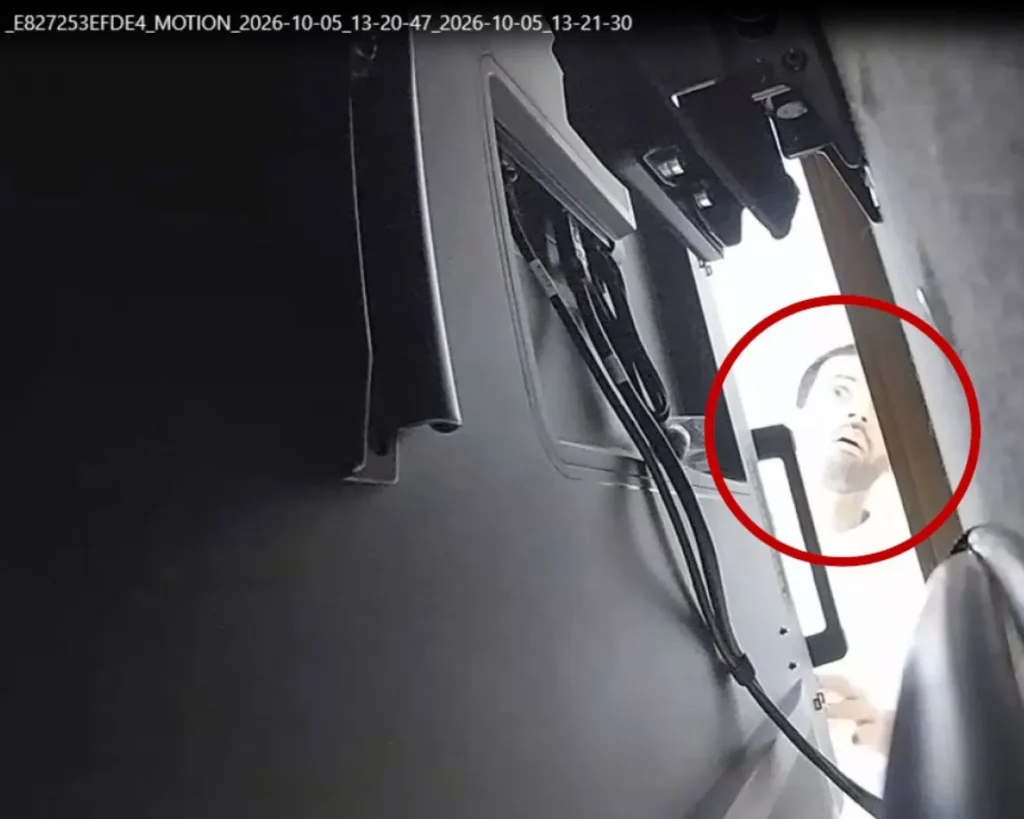
On October 5, cameras allegedly captured him entering the room and looking behind the television where the recording device had previously been discovered.
That same day, OpenAI security personnel examined an unattended bag belonging to Alfozan. Investigators said it contained his identification, wallet and another recording device resembling the first.
Chatbot Searches Become Key Evidence in FBI Investigation
The federal complaint describes digital searches allegedly connected to preparations for the recording equipment.
Before September 28, Alfozan reportedly used a workplace productivity tool to search for OpenAI building addresses, executive meeting locations, conference-room capacities and external partner meetings.
Investigators also identified a chatbot account associated with his spouse that shared several identifiers with his account.
Between September 24 and September 30, the account allegedly submitted questions about continuous audio recording, Wi-Fi connectivity, live listening, encrypted storage and remote access.
Some searches referenced technical identifiers associated with the device found at OpenAI. The complaint does not establish that his spouse knowingly participated in wrongdoing.
OpenAI Hacked Anthropic Claude: Latest Reports and Details
OpenAI ChatGPT for Financial Services: Latest Wall Street AI Developments
OpenAI Security Incident Highlights Insider Surveillance Risks
The allegations illustrate a security risk different from conventional hacking. A concealed microphone can potentially capture confidential conversations without accessing company servers or stealing passwords.
That distinction matters because an attempted interception does not necessarily mean sensitive information was successfully obtained.
Other recent technology security incidents, including the ASOS customer data breach, have demonstrated how internal access can become a vulnerability, although the circumstances differ substantially.
For AI developers, confidential conversations may involve unpublished research, commercial negotiations and product decisions that are not available through public announcements.
FBI Investigates Alleged Attempt to Obtain Sensitive AI Information
Federal authorities are investigating whether the equipment was intended to capture confidential OpenAI discussions.
U.S. Attorney Craig Missakian described protecting Silicon Valley innovation as a national security priority, while FBI Director Kash Patel emphasized the importance of safeguarding advanced American AI technology.
However, investigators have not publicly confirmed whether recordings were successfully captured, transmitted or shared with another party.
No foreign government or intelligence organization has been publicly identified as directing the alleged activity.
The case also comes amid wider scrutiny of technology companies’ security practices, including concerns raised by the unauthorized browser-based GTA 5 project over the protection and distribution of proprietary software. That separate incident has no established connection to OpenAI.
OpenAI Engineer Faces Five Years in Prison if Convicted
Alfozan faces a federal charge under 18 U.S.C. Section 2511(1)(b), involving the interception or attempted interception of oral communications.
If convicted, he could receive up to five years in prison, a $250,000 fine and three years of supervised release.
He remains in federal custody, with a detention hearing scheduled for October 19, 2026, before U.S. Magistrate Judge Alex G. Tse.
The FBI investigation remains ongoing. Authorities have not established whether the devices captured confidential conversations or whether additional individuals were involved.
Alfozan is presumed innocent unless proven guilty beyond a reasonable doubt.

Make Swikblog your go-to source on Google for reliable updates, smart insights, and daily trends.