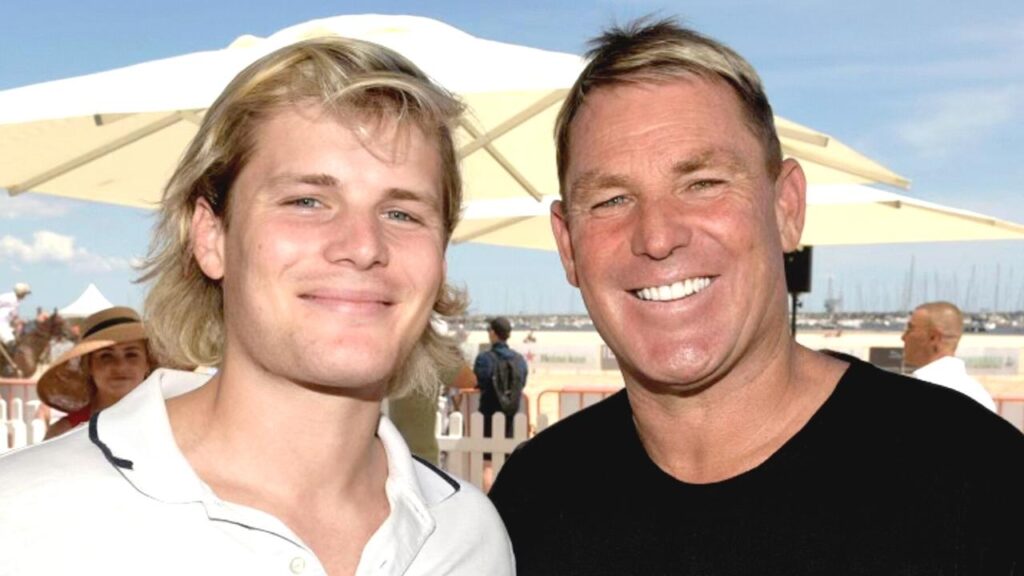

Shane Warne’s death has returned to the spotlight after his son, Jackson Warne, publicly claimed the COVID-19 vaccine may have contributed to the cricket legend’s sudden passing — despite official findings that ruled it as natural causes.
The comments, made on the 2 Worlds Collide podcast, come more than four years after Warne died of a heart attack while holidaying on Thailand’s Koh Samui in March 2022. The 52-year-old was found unresponsive in his villa, and an autopsy later confirmed congenital heart disease as the cause of death, closing the case at the time.
Now, Jackson Warne says he believes the vaccine “was involved”, adding that even if his father had underlying health issues, the shot may have “brought it straight to the surface”. His remarks have reignited debate online and across media platforms, placing a personal perspective against an established medical conclusion.
“As soon as I hung up the phone, I instantly blamed the government, I instantly blamed COVID and the vaccine,” he said, reflecting on the moment he learned of his father’s death. He also claimed Shane Warne had taken multiple COVID vaccine doses, reportedly required for his work in broadcasting with networks that mandated vaccination at the time.
The renewed attention comes with added context about Warne’s health and lifestyle. Known for smoking and drinking, he had also been following a strict liquid diet in the weeks leading up to his death. Reports later indicated medications including forms of Viagra and other substances were found in his villa room, adding further layers to discussions around his condition at the time.
Jackson Warne acknowledged that “we’ll never ever know” the exact role of different factors, but said he had not changed his views in the years since. He also revealed he considered expressing similar sentiments during his father’s widely attended state memorial at the Melbourne Cricket Ground, but chose not to speak out publicly at the time.
Claims, facts and an unresolved tension
The central issue remains a clear divide between personal belief and documented medical findings. Thai authorities concluded Shane Warne died from natural causes, specifically congenital heart disease — a condition that can increase the risk of sudden cardiac events even in individuals who appear outwardly healthy.
Jackson’s comments do not introduce new clinical evidence but instead reflect a broader sentiment shared by some individuals globally who question the long-term effects of COVID-19 vaccines. Public health bodies, however, have consistently maintained that vaccines are safe and effective, with rare side effects monitored through ongoing studies such as those outlined by the World Health Organization.
This contrast between official science and personal interpretation is a key reason the story is trending again. It taps into lingering divisions from the pandemic era, where policies like mandatory vaccination created both compliance and resistance across different sectors, including professional sport and media.
Legacy, lifestyle and broader impact
Beyond the controversy, the Warne family has focused on promoting heart health awareness through the Shane Warne Legacy initiative, encouraging Australians to undergo regular health checks. Jackson Warne said the goal is to prevent other families from experiencing a similar loss, shifting attention from blame to prevention.
Shane Warne’s sudden death remains one of the most shocking moments in modern sport. A cricketer widely regarded as one of the greatest leg-spinners in history, he was also known for his larger-than-life personality and demanding lifestyle, which often drew as much attention as his achievements on the field.
The resurfacing of debate around his death highlights how public figures can become focal points for wider societal discussions. In this case, it is not only about how Warne died, but about how people interpret risk, responsibility and health in the aftermath of a global crisis.
While the official cause of death remains unchanged, Jackson Warne’s comments have ensured that questions — whether grounded in evidence or emotion — continue to shape the narrative around his father’s passing, keeping the story relevant years after the initial shock faded.
You may also like: Mount Ibu eruption sends ash 7,000ft into sky, triggers aviation alert.

Make Swikblog your go-to source on Google for reliable updates, smart insights, and daily trends.