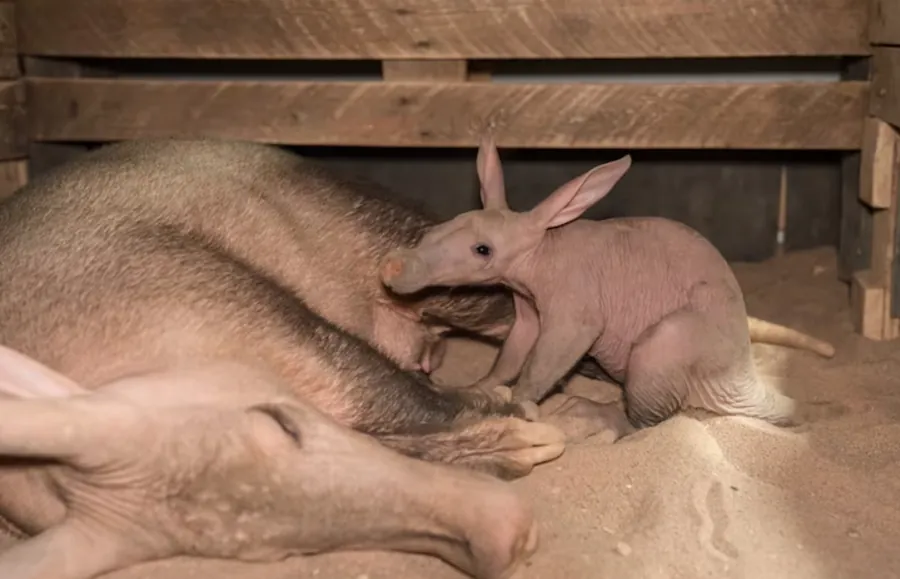

A rare baby aardvark born at Chester Zoo has been keeping zookeepers awake through the night after staff stepped in to hand-rear the tiny calf with warm bottle feeds every few hours. The newborn, affectionately nicknamed Womble, is only the second aardvark ever born at Chester Zoo since the attraction opened in 1931, making the arrival an important moment for international conservation efforts.
The calf was born healthy on 3 April 2026 to parents Oni and Koos, but keepers quickly realised Oni was not producing enough milk to fully support the youngster. Because aardvarks are naturally nocturnal animals, zoo staff faced weeks of overnight care while mum headed off to forage for food.
During the first weeks, keepers placed the calf into a cosy incubator each evening before bottle-feeding it warm milk throughout the night. Each morning, Womble was carefully reunited with Oni. Chester Zoo says the extra care helped the youngster grow stronger and develop normally.
Why Womble became a special arrival for Chester Zoo
The calf’s nickname came from its unusual appearance, including giant ears, wrinkly hairless skin, long snout and huge claws that reminded staff of the famous Wombles characters from children’s television and books. The animal’s sex is still unknown because keepers say it is too young to determine.
Zookeeper Sophie Tyson described Womble as playful and full of personality. She said the calf has “gone from strength to strength” and now lives full-time back with mum Oni after weeks of careful monitoring and overnight feeding sessions.
According to Chester Zoo, the birth is highly significant because there are currently only 68 aardvarks living in European zoos and just 114 worldwide. Womble is also believed to be the only aardvark calf born in the UK since 2024.
The species is native to sub-Saharan Africa, where aardvarks face increasing threats from habitat loss caused by agricultural expansion. In some regions, they are also hunted for meat. Conservation breeding programmes in zoos are therefore considered important for protecting healthy populations.
Read More
Aardvarks are one of the animal kingdom’s strangest mammals
Aardvarks are nocturnal mammals specially adapted for underground life. Their name means “earth pig” in Afrikaans, although they are not closely related to pigs, anteaters or armadillos. They use their powerful claws to dig large burrows and break into termite mounds while searching for food.
The animals rely heavily on smell to find ants and termites in the dark. Their sticky tongue can grow up to 25 centimetres long, allowing them to quickly lap up insects underground. They can even close their nostrils while digging to stop dust and dirt entering their nose.
Adult aardvarks can weigh up to 60kg, while calves stay close to their mothers during the early months of life. Chester Zoo’s team says Womble is now doing well and continues to grow stronger each week.
Rare animal births often attract huge public attention, especially when conservation efforts are involved. Swikblog recently covered another unusual wildlife story involving a rare animal discovery in the UK. Read more here: Rare Axolotl Found in Wales After Child’s Unexpected Discovery.
For Chester Zoo’s conservationists, Womble’s survival is more than just a heartwarming animal story. It highlights the demanding work involved in protecting rare species and the dedication required behind the scenes to help vulnerable animals survive and thrive.

Make Swikblog your go-to source on Google for reliable updates, smart insights, and daily trends.