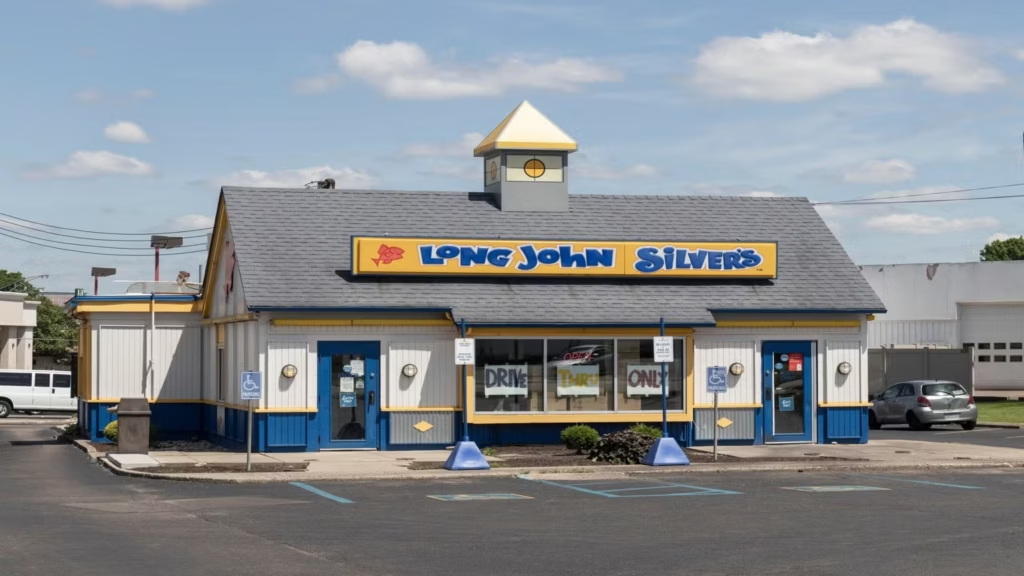

Long John Silver’s remains one of the most recognizable names in fast-food seafood, but the chain’s nationwide footprint has changed dramatically over the past two decades. Once operating more than 1,000 restaurants across the United States, the 57-year-old brand now has about 375 locations remaining, highlighting the challenges facing legacy restaurant chains in an increasingly competitive market.
Founded in Lexington, Kentucky, in 1969, Long John Silver’s built a loyal customer base around seafood-focused quick-service meals. At its peak in 2007, the company operated 1,081 locations. Since then, more than 700 restaurants have disappeared from its system, making it one of the most significant long-term contractions among major U.S. restaurant brands.
How Long John Silver’s footprint shrank
The chain’s decline did not happen suddenly. The first major wave of closures began during the 2008 financial crisis, when consumers cut discretionary spending and restaurant operators faced declining traffic. Long John Silver’s closed 59 restaurants in 2008 and continued trimming locations in subsequent years.
Store reductions persisted throughout the following decade. By the end of 2014, the company had approximately 815 locations remaining. Over the next ten years, another 330 restaurants closed, leaving the chain with around 485 units at the end of 2024. Reports indicate that roughly 110 additional locations have closed since then, reducing the current footprint to about 375 restaurants.
The Great Recession was not the only challenge. The restaurant industry has spent the past several years dealing with elevated labor expenses, higher food costs and changing customer spending habits. According to the National Restaurant Association, menu prices increased significantly between 2020 and 2025 as operators attempted to offset inflation-driven cost increases.
For seafood-focused chains, those pressures can be even more difficult to manage. Seafood products generally carry higher sourcing, transportation and storage costs than many traditional fast-food ingredients. As consumers become more price-sensitive, maintaining profitability becomes increasingly challenging.
Franchise struggles reflect wider industry pressure
While Long John Silver’s itself has not filed for bankruptcy, some franchise operators have encountered financial difficulties. One recent example involved Uplifted Foods LLC, a Minnesota-based franchisee that reportedly filed for Chapter 7 bankruptcy after closing its Long John Silver’s location at the Mall of America.
The bankruptcy filing reportedly listed assets of up to $100,000 and liabilities between $100,000 and $1 million. The case shows how individual franchise operators can face severe pressure even when the parent brand continues operating.
Long John Silver’s is not alone in reducing its footprint. Several major restaurant brands have been reevaluating store portfolios as operating costs remain elevated and consumer spending patterns shift. Similar trends have been visible across the industry, with Subway closing hundreds of U.S. restaurants while facing increased competition from larger fast-food rivals.
Read More
Pizza Hut has also moved to close underperforming restaurants as part of its broader turnaround plans, while Papa John’s has announced plans to shutter hundreds of weaker-performing locations. These moves suggest restaurant companies are increasingly focused on profitability rather than simply maintaining large store counts.
For Long John Silver’s, the story is less about a sudden collapse and more about a long reset. The brand still has loyal customers and a distinctive position in seafood fast food, but its drop from 1,081 restaurants to around 375 shows how much the market has changed. Name recognition alone is no longer enough. Chains need strong traffic, disciplined franchise economics and menu pricing that still feels reasonable to customers facing higher everyday costs.

Make Swikblog your go-to source on Google for reliable updates, smart insights, and daily trends.