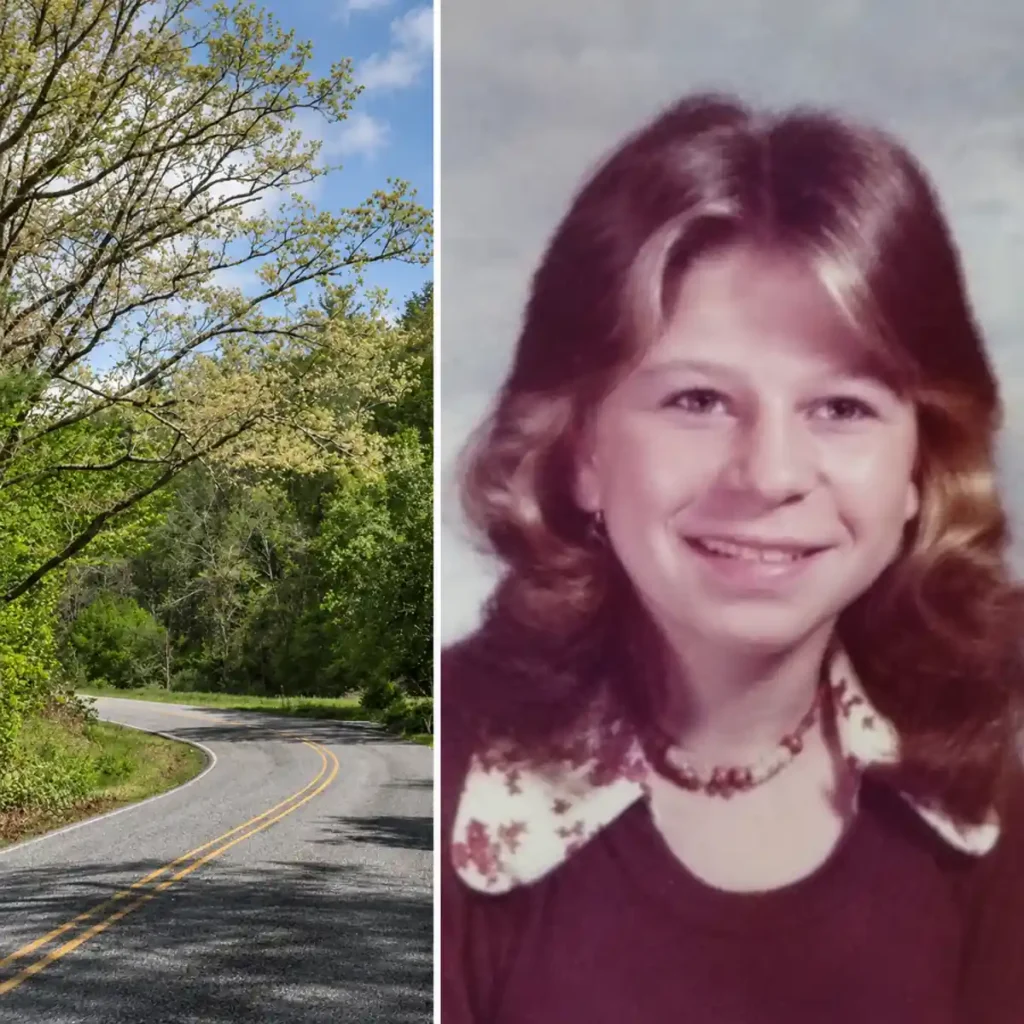

WILSON, North Carolina — Skeletal remains discovered in a wooded area nearly five decades ago have been identified as Cindy Marcell Blizzard, a 15-year-old Maryland girl who disappeared in 1977.
The identification gives Cindy her name back after 49 years, but it has also reopened the central question surrounding the case: how did a teenager who left her home in Monkton, Maryland, end up dead hundreds of miles away in North Carolina?
Last updated: September 9, 2026
- Cindy was 15 when she ran away from her Maryland home in spring 1977.
- Skeletal remains and clothing were found in Wilson, North Carolina, on December 29, 1977.
- Advanced DNA testing and genetic genealogy identified the remains nearly 49 years later.
- The official cause and manner of death remain undetermined.
- Investigators are treating the case as a homicide, but no suspect has been publicly identified.
How Cindy Marcell Blizzard Was Finally Identified
Cindy disappeared after running away from her home in Monkton, an area of Baltimore County, during the spring of 1977. Authorities have not publicly released an exact date for her disappearance or explained how she may have travelled to North Carolina.
On December 29 of that year, skeletal remains and clothing were recovered from woods near the former Firestone tire plant at 3001 Firestone Parkway in Wilson.
The location was approximately 320 miles from Cindy’s Maryland home.
The condition of the remains made visual identification impossible. A medical examiner initially estimated that they belonged to a White female between 16 and 23 years old who had been at the location for between six months and two years.
Cindy was only 15 when she disappeared, placing her just outside the estimated age range.
The cause and manner of death were recorded as undetermined. However, authorities said the circumstances surrounding the location and recovery of the remains raised the possibility of foul play. Investigators therefore continue to approach the case as a homicide investigation.
For years, detectives compared dental records with missing-person cases but failed to find a match. The unidentified remains were eventually entered in the National Missing and Unidentified Persons System under case number UP6681.
A state anthropologist reopened the case in 2010. DNA obtained from the victim’s teeth was uploaded to the Combined DNA Index System, commonly known as CODIS, and compared against other databases. Those searches did not identify her.
The case received another review in 2024 when Special Investigator Andy Murr of the North Carolina State Bureau of Investigation’s Cold Case Investigative Team determined that the remains qualified for more advanced testing.
A bone sample was sent to the forensic laboratory Othram in The Woodlands, Texas. Scientists extracted preserved genetic material and used forensic genome sequencing to construct a detailed single-nucleotide polymorphism, or SNP, profile.
According to an account of the forensic investigation, genealogical research produced potential family connections. Investigators then collected reference DNA from possible relatives and compared it with the profile developed from the remains.
The results confirmed that the unidentified girl was Cindy Marcell Blizzard.
The breakthrough is similar to the use of forensic genealogy in the identification of remains found in an Olympic National Park sleeping bag, where modern DNA analysis solved an identity mystery that had remained unanswered for decades.
What Investigators Still Need to Learn About Cindy’s Death
Identifying Cindy has resolved one part of the mystery, but it has not established what happened after she left Maryland.
Authorities have not announced where Cindy was seen after leaving home, who she may have travelled with or how long she survived after her disappearance. They have also not disclosed whether investigators have identified any former associates or persons of interest.
No suspect has been named, and no arrest has been announced. The available forensic evidence has identified Cindy, but it has not yet publicly established who may have been responsible for her death.
The investigation brought together the Wilson County Sheriff’s Office, the North Carolina SBI Cold Case Investigative Team, the North Carolina Office of the Chief Medical Examiner and Othram. Assistance was also provided by the FBI, the Maryland State Police Homicide Unit and the Raleigh Police Department’s intelligence unit.
This became the 18th publicly announced North Carolina case in which Othram’s technology was used to identify an individual.
Investigators are now seeking information from anyone who knew Cindy in 1977 or may remember her friends, associates, movements or activities after she left Monkton.
Information can be provided to the North Carolina SBI Cold Case Tip Line at 919-582-TIPS, by email at coldcases@ncsbi.gov, or to the Wilson County Sheriff’s Office at 252-237-2118.
After almost half a century, the girl once known only as the Wilson County Jane Doe has been identified. The investigation must now determine what brought Cindy to North Carolina and what happened during the final months of her life.

Make Swikblog your go-to source on Google for reliable updates, smart insights, and daily trends.