
Reaching the top of Everest is the part of Tenzing Norgay’s story most people already know. Getting a place on the climbing team, rather than being expected to carry its supplies, is where Jennifer Peedom’s Tenzing finds its more revealing struggle.
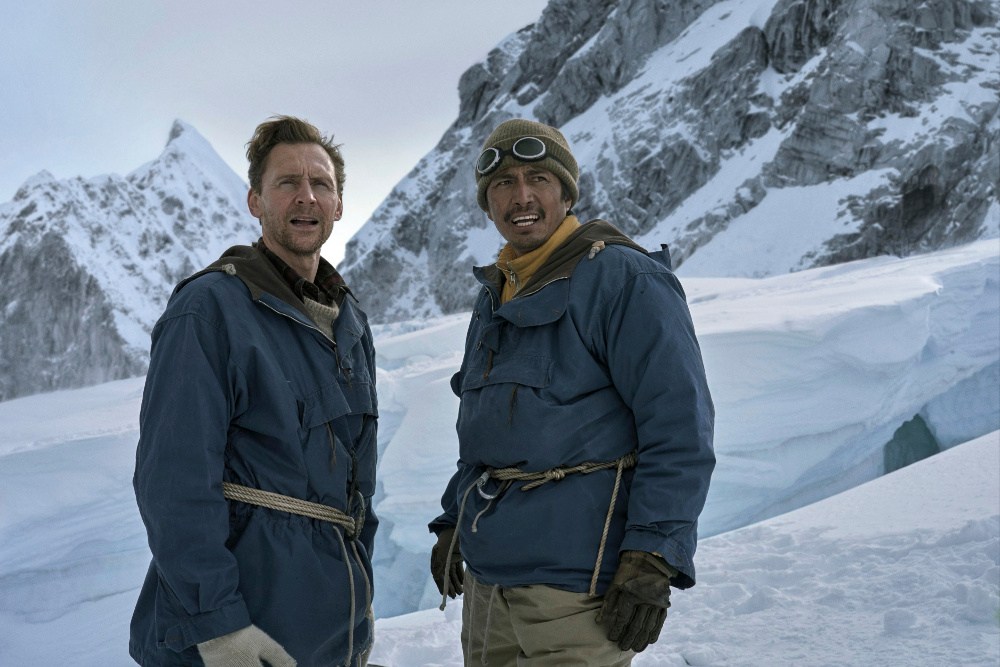
The Apple TV film follows a man whose knowledge of the mountain makes him indispensable, yet whose standing within a British expedition remains something he must negotiate. Genden Phuntsok plays Tenzing opposite Tom Hiddleston’s Edmund Hillary and Willem Dafoe’s expedition leader John Hunt. Those familiar names might draw attention, but the published reviews repeatedly return to Phuntsok as the reason the story holds together.
There is a compelling tension here. The destination is famous. The person at the centre of this telling is someone many viewers know far less about.
Genden Phuntsok gives the climb its human weight
As the 1953 expedition takes shape, Tenzing wants his ability recognised with a place among the climbers. That leaves him navigating expectations from the British team while remaining responsible to the Sherpas whose labour makes the expedition possible.
Phuntsok’s performance has drawn praise for conveying that pressure without turning Tenzing into a figure who exists only to suffer. In the attached Esquire review, Josh Rosenberg finds much of the emotion in his face: the strain of the journey, but also the warmth and pleasure that survive it.
Hiddleston’s Hillary offers a different relationship. Their partnership grows through the work of climbing and the gradual recognition of each other’s skill. TheWrap’s William Bibbiani praises the film for allowing Phuntsok to carry his own story, with Hiddleston comfortable sharing the screen without taking it over.
There is an interesting detail behind that rapport. Peedom told Variety India that the actors trekked towards Everest Base Camp together during preparation, spending time in Khumjung with mountaineer Phurba Tashi. Their acquaintance began away from the cameras, before they had to portray two men trusting each other with their lives.
That trust sits alongside Tenzing’s relationship with Chomolungma, the mountain he regards with spiritual reverence. His ambition has a personal meaning beyond reaching a geographical point. This is the distinction that gives the film its strongest claim to revisiting such a familiar achievement.
The mountain impresses, but the storytelling divides reviewers
Peedom’s background in documentaries including Sherpa helps explain the attention paid to the landscape and the people working within it. She described filming in real crevasses and difficult weather, with the actors facing physical demands that could not be supplied by dialogue alone.
The mountain sequences have become a consistent point of praise. The Financial Times, which awarded the film three stars out of five, found the final ascent considerably more gripping than the earlier passages of Tenzing’s life.
Those earlier passages are also where reservations gather. The film moves between the expedition and memories of childhood and young adulthood. The intention is understandable: the summit should mean more once the years leading towards it have been established. But Alaka Sahani’s three-star Indian Express review argues that the frequent returns to the past interrupt the climb’s momentum.
Slant raises a related concern: the physical journey is immersive, while the portrait of Tenzing remains less searching than it could have been. Respect for a remarkable person does not automatically reveal all his complexity.
The question of whether beautiful images carry enough dramatic weight also surfaced in Swikblog’s coverage of the divided reviews for Avatar: Fire and Ash. Here, the discussion is more intimate, resting on how fully the film brings one man into view.
Early viewer responses offer a warmer counterpoint. In an Apple TV discussion on Reddit, several commenters describe being surprised by how moving they found the film, singling out Phuntsok, the photography and Tenzing’s devotion to the mountain. These are individual responses, but they suggest its emotional directness is connecting with some viewers.
Tenzing emerges from these reviews as a handsome, sincere adventure with a strong central performance and a familiar biographical structure. Its most persuasive idea is also its simplest: before remembering the famous summit photograph, spend some time considering the man standing in it.
Tenzing is streaming on Apple TV. This article draws on published reviews, filmmaker interviews and viewer reactions.

Make Swikblog your go-to source on Google for reliable updates, smart insights, and daily trends.