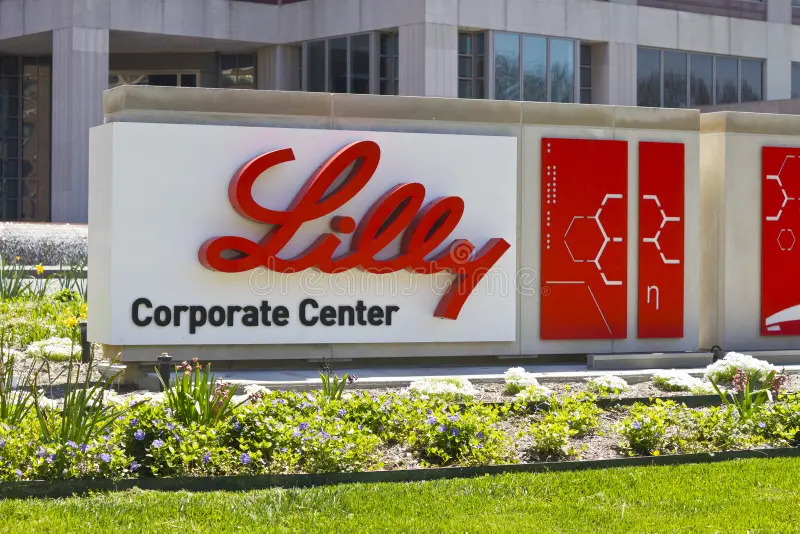

NEW YORK, November 18, 2026 — Eli Lilly (NYSE: LLY) shares remained under pressure Wednesday as a cyber-extortion group’s claims involving 1.2 million patient records drew attention to the pharmaceutical giant’s third-party data relationships. The stock traded below $1,410 before the opening bell, extending its retreat from a recent record high despite strong quarterly earnings and billions of dollars in newly announced cancer-research deals.
LLY closed Tuesday at $1,415.55, down $16.12 or 1.13%, following a 0.82% decline on Monday. A verified premarket quote showed the shares at $1,408.06 at 9:14 a.m. Eastern Time on November 18, down approximately 0.53% from the previous close.
The shares have pulled back approximately 4.6% from Monday’s intraday high of $1,475.25, putting Lilly’s valuation, pricing outlook and drug-development spending under renewed scrutiny.
Eli Lilly Vendor Cyberattack: Hackers Claim 1.2 Million Patient Records
A cyber-extortion group called n0n claims to possess anonymized records relating to 1.2 million patients obtained from an outside information provider associated with Eli Lilly, according to a report published by Barron’s.
The alleged records include diagnosis, insurance payer and copayment information. The group also claims to hold a separate prescriber file containing contact information and approximately 7.6 million healthcare-provider identifiers.
The reported incident concerns a third-party information provider, rather than Lilly’s internal computer network. The anonymized records are not identified as Lilly patient records.
Lilly said its internal investigation found no unauthorized access to the company’s own systems.
Other drugmakers named in connection with the alleged vendor incident include Vertex Pharmaceuticals, Vir Biotechnology and Verastem. Vertex and Vir reported finding no evidence that their own systems or patient information were compromised.
The group has threatened to publish stolen information unless settlements are reached. The claims add a cybersecurity issue to Lilly’s investment outlook, although the company’s share-price decline has not been directly attributed to the alleged incident.
LLY Stock Price and Wall Street Reaction
Lilly shares have retreated since reaching $1,475.25 on November 16. The stock fell for two consecutive sessions before Wednesday’s opening bell.
| Market Indicator | Value |
|---|---|
| November 16 Close | $1,431.67 |
| November 17 Close | $1,415.55 |
| November 17 Change | -1.13% |
| November 18 Premarket, 9:14 a.m. ET | $1,408.06 |
| 52-Week High | $1,475.25 |
November 18 market figures are from a timestamped premarket quotation, not the regular-session closing price. Latest quotations are available on Yahoo Finance.
Wall Street’s longer-term outlook remains positive. RBC Capital reiterated its Outperform rating and $1,600 price target on November 17, highlighting Lilly’s experimental treatment pipeline and upcoming December 7 Innovation Day.
Citi and BMO Capital have maintained $1,650 targets, while Barclays’ target stands at $1,550. The analyst recommendations reflect Lilly’s broader earnings and research outlook rather than direct reactions to the vendor-security allegations.
Valuation concerns are also influencing trading across growth-oriented sectors. Swikblog recently covered the Salesforce stock sell-off amid changing Wall Street expectations, another example of investors reassessing companies with substantial future-growth assumptions.
Eli Lilly Reports $24.4 Billion Quarterly Revenue
Lilly’s latest earnings underline the strength of its diabetes and weight-loss businesses.
Third-quarter revenue rose 39% to $24.4 billion, driven by a 53% increase in sales volume that more than offset a 15% decline in realized prices.
Net income increased 16% to $6.45 billion, while adjusted earnings per share climbed 7% to $7.48.
| Q3 2026 Metric | Result |
|---|---|
| Total Revenue | $24.4B (+39%) |
| Net Income | $6.45B (+16%) |
| Adjusted EPS | $7.48 (+7%) |
| Mounjaro Revenue | $10.72B (+65%) |
| Zepbound Revenue | $5.35B (+49%) |
Chief executive David Ricks said Lilly had exceeded its earlier expectations, allowing it to raise its full-year outlook. The company now forecasts $91 billion to $92 billion in 2026 revenue, compared with its earlier projection of $85 billion to $87 billion.
The results also included research and development expenditure of approximately $4.25 billion, up 23% from a year earlier.
Read Lilly’s official third-quarter earnings release.
New Cancer Agreements Carry Potential $7.4 Billion Value
On November 16, Lilly announced two significant oncology transactions as it expanded its research investments beyond obesity and diabetes.
The company entered a collaboration with Stipple Bio involving potential research, development and commercialization milestone payments of up to $5.9 billion. Stipple’s technology is designed to identify targets on cancer cells that may allow therapies to distinguish tumors from healthy tissue.
Lilly also agreed to acquire Calytrix Bio for up to $1.5 billion, including milestone-contingent payments. Its experimental antibody program targets rare blood disorders, including essential thrombocythemia and myelofibrosis.
These agreements represent potential transaction values, with substantial payments dependent on future development milestones rather than immediate expenditure.
Together, they demonstrate Lilly’s continuing investment in oncology as Mounjaro and Zepbound generate most of its recent revenue growth.
As trading continues Wednesday, investors are weighing those expansion plans against Lilly’s premium valuation, pressure on realized drug prices and the third-party cybersecurity allegations. The company’s December 7 Innovation Day will provide another opportunity for management to explain the financial potential of its broader drug pipeline.
Disclaimer: This article is for informational purposes and does not constitute investment advice. Market prices and analyst forecasts may change. Cybersecurity claims are attributed to the reporting and parties identified above and do not establish a breach of Eli Lilly’s internal systems.

Make Swikblog your go-to source on Google for reliable updates, smart insights, and daily trends.