
JAKARTA, Indonesia — Indonesia extended airport closures on Sunday, September 6, after volcanic ash from Anak Krakatau spread across major flight corridors, disrupting hundreds of services and affecting tens of thousands of passengers at Jakarta’s main airport and elsewhere.
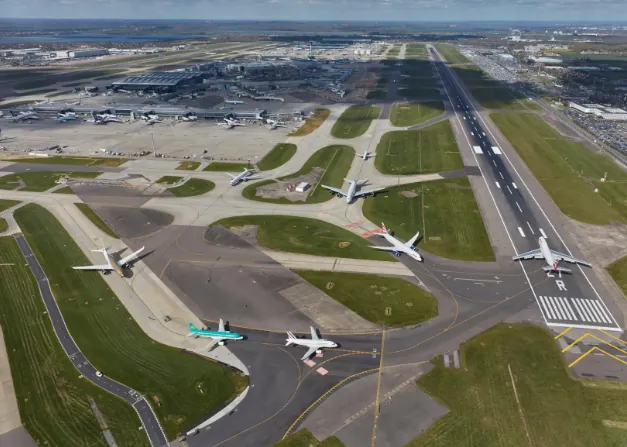
Soekarno-Hatta International Airport was temporarily closed after volcanic ash was detected around the airport. Indonesia’s Directorate General of Civil Aviation said 209 flight movements and 22,798 passengers were affected during the documented closure period from 1:30 a.m. to 9:30 a.m. WIB.
Soekarno-Hatta airport closure extended
Authorities initially planned to reopen Soekarno-Hatta earlier Sunday, but repeated ash tests remained positive and the closure was extended as aviation officials continued assessing conditions.
AirNav Indonesia said Soekarno-Hatta remained closed under an updated NOTAM from 8:36 a.m. WIB, with an estimated reopening time of 1:30 p.m. WIB. That timing was subject to further changes depending on the movement of volcanic ash.
Officials said 170 aircraft parked overnight at Soekarno-Hatta remained safe. These included 66 aircraft at Terminal 1, 51 at Terminal 2, 49 at Terminal 3 and four in the cargo area.
International and domestic flights disrupted
The disruption affected both domestic and international routes. Earlier Transportation Ministry data recorded cancellations, delays and rescheduled international flights serving destinations including Singapore, Hong Kong, Sydney, Seoul-Incheon, Doha, Amsterdam and Kuala Lumpur.
Domestic disruption included flights linked to Lampung, Denpasar and Surabaya.
Authorities urged passengers not to travel to airports without first checking their flight status with their airline because reopening times and schedules could change rapidly.
Volcanic ash is a major aviation hazard because fine particles can damage jet engines, interfere with aircraft systems and reduce visibility. A similar issue occurred when Whakaari volcanic ash caused flight cancellations at Tauranga Airport, demonstrating why airlines avoid ash-contaminated airspace even when airports are far from the crater.
More Indonesian airports temporarily closed
The impact was not limited to Soekarno-Hatta. AirNav Indonesia also extended temporary closures at Halim Perdanakusuma Airport in Jakarta and Radin Inten II Airport in Lampung.
Halim Perdanakusuma was expected to remain closed until approximately 2 p.m. WIB, while Radin Inten II had a similar estimated reopening time. Budiarto Airport had also been temporarily affected.
Later Sunday, Husein Sastranegara Airport in Bandung was temporarily closed after indications of Anak Krakatau ash were detected. Its closure was scheduled from 12:07 p.m. until 4 p.m. WIB, subject to safety conditions.
Anak Krakatau ash reaches 50,000 feet
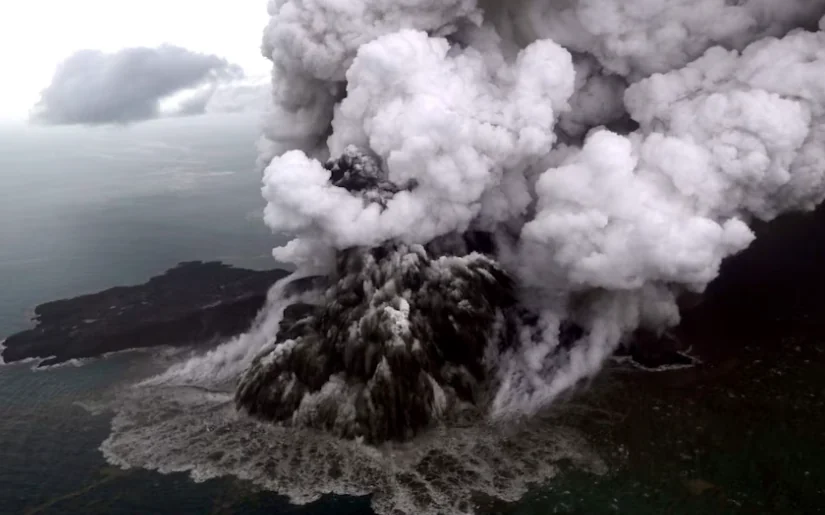
Indonesia’s meteorological agency BMKG said satellite analysis identified two large volcanic ash clusters spreading from Anak Krakatau.
One plume reached approximately 20,000 feet and moved eastward and northeastward across parts of Banten, Jakarta, West Java and surrounding waters.
A higher plume climbed to around 50,000 feet, or roughly 15 kilometres, spreading westward across Banten, Lampung, Bengkulu, the southern Sunda Strait and parts of the Indian Ocean.
BMKG said it had issued 50 SIGMET aviation warnings since the initial eruption began late Friday, providing airlines and pilots with updated warnings about hazardous volcanic ash.
Eruption activity continues
Anak Krakatau began erupting late Friday, with authorities reporting sustained seismic activity, explosions, rumbling and lava fountains around the volcano in the Sunda Strait between Java and Sumatra.
Further eruptive activity was recorded early Sunday, keeping authorities on alert for additional ash emissions that could affect nearby communities and aviation.
Anak Krakatau remains at Level III, or Siaga, Indonesia’s second-highest volcanic alert level. Authorities continue to enforce a three-kilometre exclusion zone around the active crater.
Ashfall affects communities
Ashfall has disrupted daily life in parts of Banten and Lampung. Some schools suspended activities after students and residents reported eye irritation, while some fishermen reportedly halted trips because of ash exposure and poor conditions.
Health authorities have advised residents in affected areas to use face masks and eye protection, limit unnecessary outdoor activity and protect food and water supplies from volcanic ash.
Volcanic eruptions can affect communities far beyond the crater itself. During the Fuego volcano eruption in Guatemala, ashfall and access restrictions similarly became a major part of the wider emergency response.
No tsunami warning issued
The eruption has renewed concern because part of Anak Krakatau collapsed in December 2018, generating a deadly Sunda Strait tsunami that killed more than 400 people.
However, no tsunami warning has been issued in connection with the latest eruption. BMKG said its monitoring network had not detected abnormal sea-level changes around the Sunda Strait in its latest assessment.
Officials continue to monitor the atmosphere, aviation conditions and surrounding waters around the clock as the volcanic situation develops.
Passengers urged to check flights before travelling
Passengers booked on flights through Jakarta, Bandung, Lampung or other potentially affected airports should check directly with their airline before travelling to the terminal.
Airport reopening times remain dependent on volcanic ash observations and safety assessments. Even after restrictions are lifted, earlier cancellations and aircraft displacement could continue causing delays across Indonesia’s domestic and international network.

Make Swikblog your go-to source on Google for reliable updates, smart insights, and daily trends.