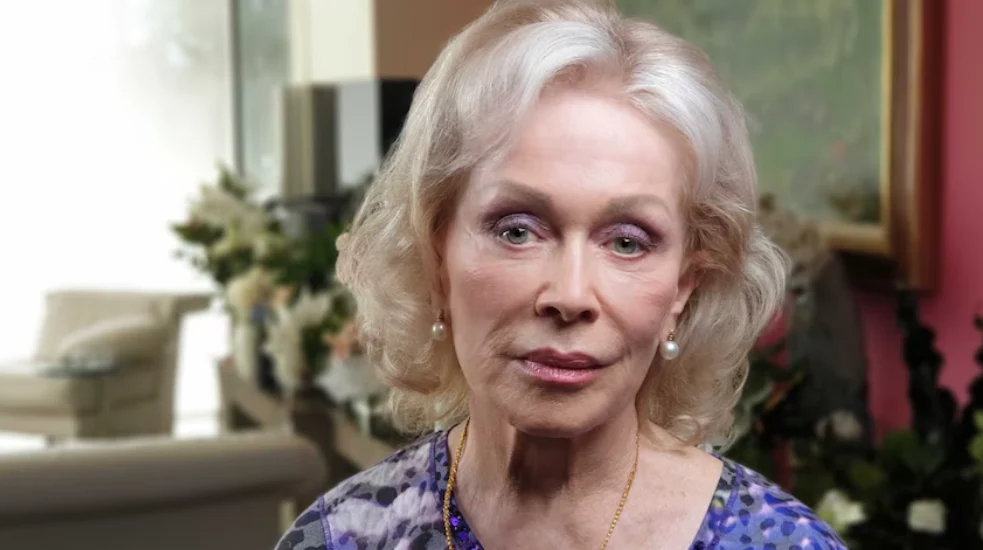

Blanche d’Alpuget, the award-winning Australian author, biographer and widow of former prime minister Bob Hawke, has died at the age of 82. Her family said she died following complications from influenza, bringing tributes for a writer whose career spanned novels, political biography, essays and historical fiction.
D’Alpuget is survived by her son Louis Pratt from her first marriage, three Hawke stepchildren and a number of step-grandchildren. While her marriage to Hawke made her a familiar figure in Australian political life, she had established a significant literary career of her own decades earlier.
Blanche d’Alpuget’s final message focused on love
D’Alpuget had asked her loved ones to share a final message after her death. It reflected a personal theme rather than her public achievements.
“Our highest calling and greatest achievement is love, the rule of life. Love one another.”
Her family said they would miss her force, humour, curiosity and love beyond measure. The family confirmed her death and influenza complications in a statement reported by ABC News.
From journalism to an acclaimed literary career
D’Alpuget grew up as an only child in Sydney’s eastern suburbs. She spent time in journalism before travelling extensively and living in England, France, Indonesia and Malaysia.
She returned to Australia at the age of 30 and began developing her career as a novelist. Questions of power, politics and personal relationships became recurring themes in her work.
Her 1977 biography of Australian arbitrator, academic and diplomat Sir Richard Kirby received critical acclaim. She later published novels, essays and political biographies, earning honours including the PEN Golden Jubilee Award, The Age Book of the Year and the Australasian Prize for Commonwealth Literature.
Her place among Australian writers and cultural figures gives her death a broader significance beyond politics. Australia has recently also remembered writer, broadcaster and cultural leader Rhoda Roberts, whose career likewise crossed storytelling and national public life.
Historical fiction became a major later project
In later years, d’Alpuget turned to historical fiction, producing a five-part series centred on Henry II and Eleanor of Aquitaine. The books examined their rise to power and turbulent family relationships.
The subject fitted naturally with themes that had interested her throughout her career: ambition, authority, loyalty and the tensions between private relationships and public power.
How Blanche d’Alpuget and Bob Hawke met
D’Alpuget first met Bob Hawke in Jakarta in 1970. They later reconnected when Hawke enlisted her to write his biography, which became one of her best-known works.
Her political biography of Hawke won the New South Wales Premier’s Award. The work placed her close to a defining period of Australian politics while strengthening her reputation as a biographer.
Their professional relationship eventually became personal. Hawke later acknowledged that their romance began before his divorce from his first wife, Hazel Hawke, in 1995. Hawke and d’Alpuget married soon after the divorce.
The relationship drew years of public attention
The affair attracted criticism and contributed to tensions involving members of the Hawke family. Those relationships improved over time, and Hawke later spoke about being grateful for an easing of tensions between his children and d’Alpuget.
Hawke remained married to d’Alpuget until his death in 2019. Her connection to that political era also places her story alongside figures such as former Labor senator Nick Bolkus, whose public career was closely associated with the Hawke and Keating years.
She remained visible after Hawke’s death
D’Alpuget continued making public appearances after losing her husband. In November 2025, she spoke on ABC’s Nightlife about her public image and her life after Hawke’s death.
A month later, she attended the state funeral of former federal Labor minister Graham Richardson, who had played an important role in Hawke’s rise to the Labor leadership.
Her continued public presence reinforced that she was not simply remembered through her marriage. She continued to speak about literature, relationships and the way her public reputation had changed over time.
Her legacy extends beyond Bob Hawke
For readers who primarily knew d’Alpuget as Hawke’s wife, her death has renewed attention on the independent career she built before and during their relationship. She moved between journalism, biography, novels, essays and historical fiction across several decades.
Her work repeatedly examined how power shapes both public institutions and private lives, giving a consistent thread to writing that otherwise ranged from Australian political biography to medieval historical fiction.
Jamie Dunn Dies Aged 76: Brisbane TV Legend Remembered
Matt Dee Dies: Bondi Rescue Star’s Cause of Death and Tributes
Anthony Albanese leads tributes
Prime Minister Anthony Albanese led tributes following news of d’Alpuget’s death, describing her as “a true one-off.”
He praised the originality of her novels and the depth of her biographies, particularly her work about Hawke, who later became her husband. Albanese also described her final message about love as fitting and offered his thoughts to her family and loved ones.
D’Alpuget’s family remembered her for her humour, curiosity and fearless approach to life. Her final words leave a notably simple personal message alongside a public record shaped by books, political history and decades of Australian cultural life.

Make Swikblog your go-to source on Google for reliable updates, smart insights, and daily trends.