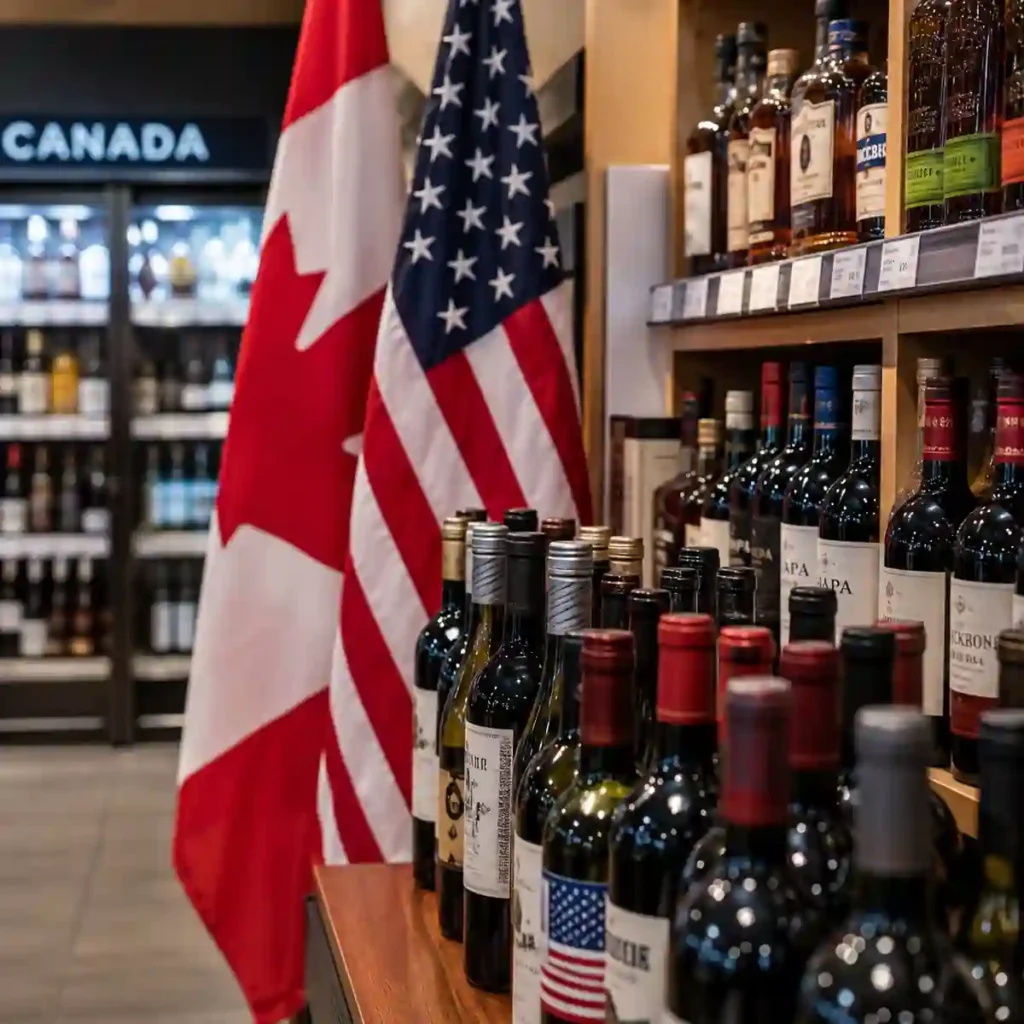

Canada may need to put American wine, beer and spirits back on provincial liquor-store shelves to secure a trade agreement with the United States, as negotiators race to resolve disputes involving tariffs, dairy and automobiles.
Canada’s ambassador to the U.S., Mark Wiseman, told roughly 100 members of the Canada-U.S. trade council that restoring American alcohol is a prerequisite for locking in a deal, according to sources familiar with the private briefing. Canada is seeking relief from steep U.S. tariffs while trying to prevent additional 50% duties from hitting billions of dollars of exports.
What could be in the Canada-U.S. deal?
About 35 Canadian officials were working from Canada’s embassy in Washington to finalize the language of a potential agreement. During the briefing, Wiseman said officials hoped to complete that work within 24 to 48 hours, according to sources.
The emerging framework could lower U.S. tariffs on Canadian steel and aluminum from 50% to 25%. The headline tariff on Canadian-built cars and trucks could fall from 25% to 15%, with an exemption for American content.
An agreement could also prevent the threatened additional 50% duties from taking effect. The White House order on the tariff dispute identifies alcoholic beverages, dairy and motor vehicles as key areas of disagreement.
An earlier delay to Trump’s 50% Canada tariffs gave Ottawa and Washington additional negotiating time before the higher duties were due to take effect.
Why U.S. alcohol matters to the negotiations
Most Canadian provinces removed U.S. alcoholic beverages from their government-controlled distribution systems in response to earlier American tariffs. Washington argues that provincial purchasing, listing and distribution policies unfairly restrict U.S. producers.
Prime Minister Mark Carney has asked premiers to reconsider the restrictions. Some provincial leaders have indicated they could restore American products if the overall agreement benefits their provinces, while others want more details before surrendering what they regard as negotiating leverage.
The restrictions have already hurt U.S. producers. U.S. Census Bureau data cited in reporting showed American wine exports to Canada fell by about $343 million US between 2024 and 2025 — a 77% year-over-year decline.
California winemaker Bill Easton, founder of Terre Rouge Wines, estimated the restrictions cost him about $500,000 in income last year. Meanwhile, Phillips Distilling moved production of Sour Puss liqueur from Minnesota to Montreal under a multi-year arrangement and plans to keep production there regardless of future trade policy.
Dairy and auto rules remain sensitive
Canada could also change how dairy import licences are allocated under its tariff-rate quota system. Such changes could provide American dairy suppliers with greater access to Canadian retailers, making the final terms important for Canada’s supply-managed dairy sector.
The auto industry faces a different issue. Canadian manufacturers wanted Canadian-made content exempted from U.S. tariffs, but Washington has not agreed to that demand under the proposed framework, according to information shared with the council.
The issue could instead be deferred to the upcoming CUSMA review. That matters because vehicles and components routinely cross the border during production, making the treatment of Canadian versus American content financially significant.
The wider tariff standoff has repeatedly created uncertainty for exporters, including during the earlier threat of 50% U.S. tariffs on Canadian goods.
CUSMA Collapse Could Put 316,000 Jobs at Risk as Trump Tariff Deadline Nears
Former negotiators warn about Canada’s leverage
Former Canadian chief trade negotiator Steve Verheul reportedly warned the trade council that Canada could weaken its position before the CUSMA review by making major concessions now.
His concern is that cutting steel and aluminum tariffs to 25% and auto tariffs to 15% provides immediate relief but leaves substantial barriers in place. Canada could therefore give up leverage without restoring the duty-free trade its exporters ultimately want.
Former finance minister and deputy prime minister Chrystia Freeland also reportedly questioned whether accepting tariffs now could make them harder to eliminate later, including under a future U.S. administration.
Will Canadians buy American alcohol again?
Even if provinces put American products back on shelves, U.S. producers face another challenge: winning Canadian consumers back.
A Nanos Research poll cited in reporting found 69% of Canadians surveyed said they would continue avoiding American alcohol even if it became available again. Some consumers have switched to Canadian brands or imports from other countries during the dispute.
That means ending provincial restrictions could satisfy an important U.S. negotiating demand without immediately restoring American alcohol sales to previous levels.
The biggest questions are whether the additional 50% tariffs are withdrawn, whether the reported 25% metals and 15% auto rates become final, and which provinces agree to restore American alcohol.
The details on dairy access, Canadian automotive content and CUSMA will also matter. A deal could provide immediate protection from a damaging tariff escalation, but the terms Canada accepts now could shape its bargaining position when the wider North American trade agreement comes up for review.

Make Swikblog your go-to source on Google for reliable updates, smart insights, and daily trends.