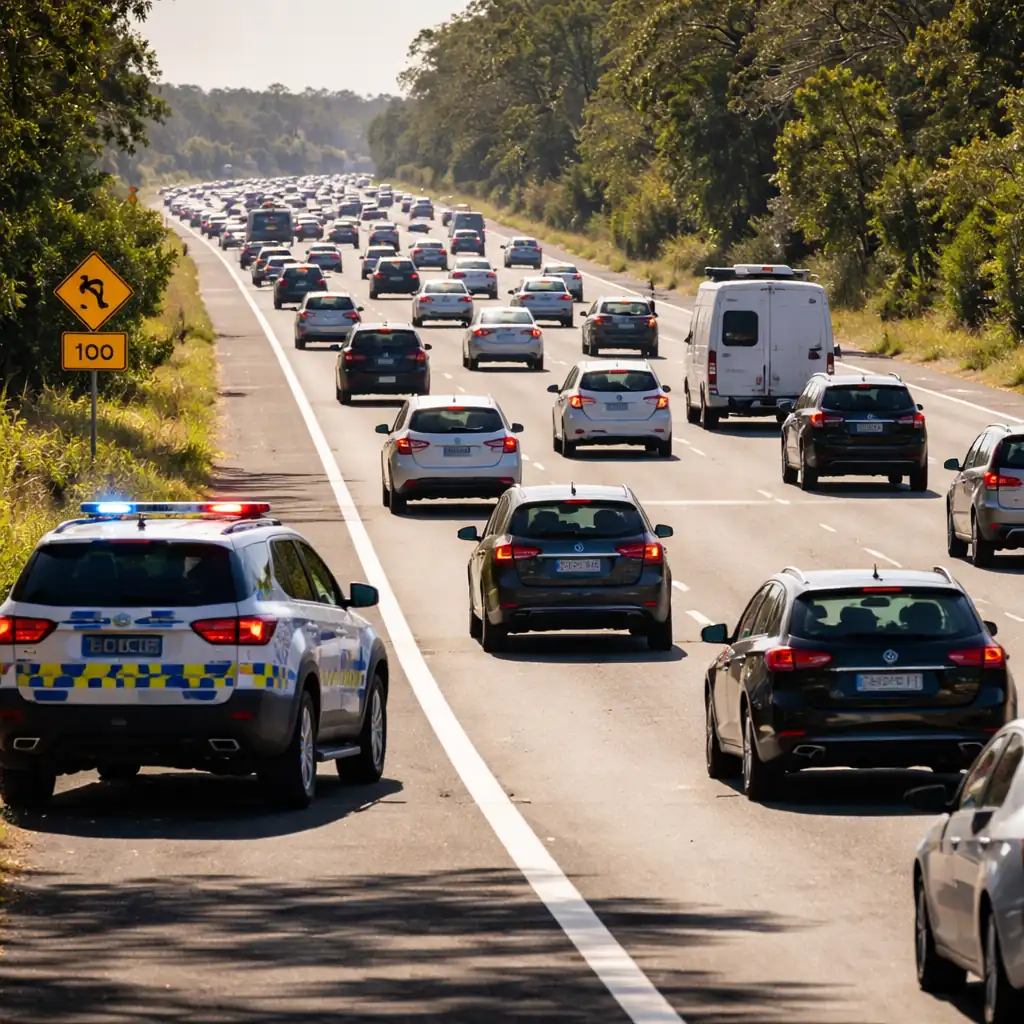

Millions of motorists across Australia are being urged to stay alert as strict double demerit penalties come into force for the Easter travel period, turning even minor driving offences into licence-threatening risks.
The five-day enforcement window has now officially begun across New South Wales (NSW), the Australian Capital Territory (ACT), and Western Australia (WA), coinciding with one of the busiest travel periods of the year as families take to highways and regional roads for the long weekend.
Authorities have made it clear that this is not just routine enforcement. With traffic volumes expected to surge significantly, the double demerit system is designed to act as a strong deterrent against dangerous driving behaviour during peak travel days.
Five-Day High-Risk Enforcement Period Begins
The current double demerit period runs from Thursday, April 2 through Monday, April 6, covering the entire Easter long weekend. During this time, police patrols are significantly increased, with a visible presence across highways, urban roads, and popular holiday routes.
For drivers, this means that any traffic offence committed during this window carries twice the usual demerit points, dramatically increasing the risk of licence suspension.
Offences That Now Carry Double Points
In NSW and the ACT, the penalties apply to some of the most common — yet dangerous — driving behaviours. These include:
Speeding, mobile phone use while driving, failure to wear a seatbelt, and riding without a helmet all fall under the double demerit system.
In Western Australia, enforcement is even broader, extending to drink or drug driving, running red lights, and reckless driving offences, making the system more comprehensive in scope.
Importantly, while demerit points are doubled, financial fines remain unchanged. However, the real impact lies in how quickly drivers can reach their licence limits.
Licence Risk Increases Sharply
For many drivers, the biggest concern is how rapidly points can accumulate under the double system. A single mobile phone offence, for example, can now attract up to 10 demerit points, putting drivers dangerously close to suspension thresholds.
With a standard full licence in NSW capped at 13 points, just one additional minor offence during this period could result in a suspension. For provisional and learner drivers, the margin is even tighter, meaning a single mistake could have immediate consequences.
Authorities are particularly concerned about distraction-related offences, which continue to be a leading cause of road incidents during holiday travel periods.
Easter Travel Surge Drives Strict Enforcement
The Easter long weekend is historically one of the busiest times on Australian roads, with millions travelling to coastal regions, countryside destinations, and major cities. Increased traffic density naturally raises the risk of collisions, prompting stricter enforcement measures.
Police are focusing heavily on high-risk behaviours, especially speeding and mobile phone use, both of which have been identified as key contributors to serious accidents.
Drivers are being reminded to take extra precautions, including maintaining safe speeds, staying focused, and taking regular breaks on long journeys.
More details on enforcement policies and road safety measures can be found through official NSW road safety guidelines, which outline how demerit systems are applied across different offences.
As the Easter travel rush continues, the message from authorities remains clear: even a momentary lapse behind the wheel during this period could carry consequences that last far beyond the holiday weekend.

Make Swikblog your go-to source on Google for reliable updates, smart insights, and daily trends.