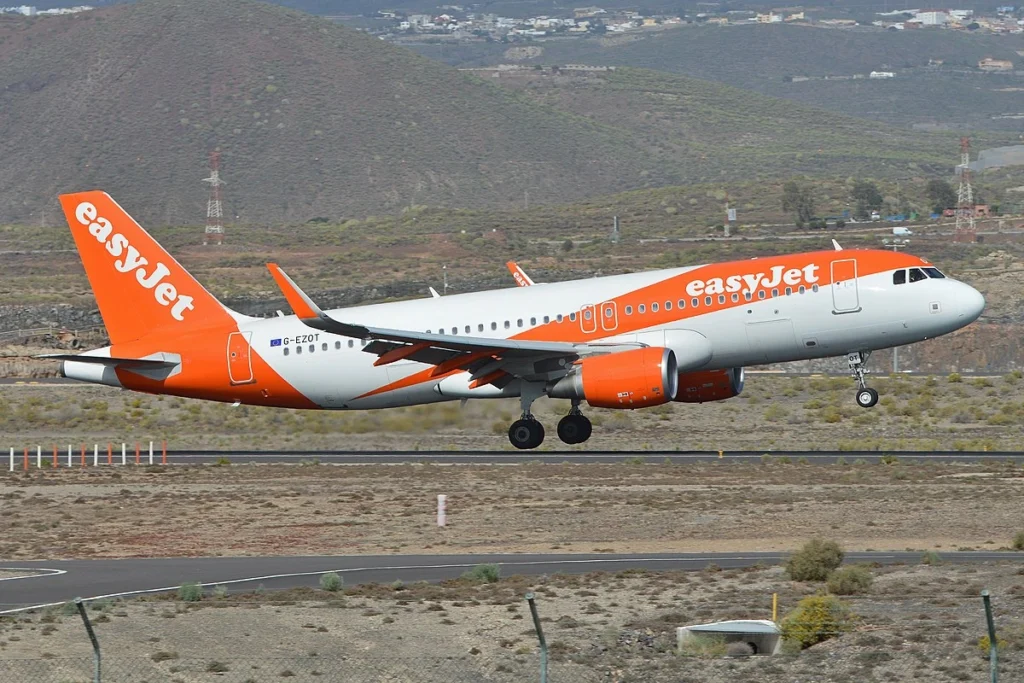

LONDON, October 19, 2026 — An easyJet flight from Tenerife to London Gatwick declared a mid-air emergency at approximately 30,000 feet before landing safely on Monday morning. Fire engines and other emergency vehicles met the Airbus A320 after the airline reported a technical issue during its arrival.
Flight EZY8040, also listed as U28040, transmitted the international Squawk 7700 emergency code while approaching London. Despite the alert, the pilots continued towards Gatwick, where the aircraft landed normally.
EasyJet confirmed that emergency services attended as a precaution. The airline has not disclosed the exact nature of the technical problem.
EasyJet Flight EZY8040 Declares Emergency Near London
The aircraft departed Tenerife, Spain, on Sunday night, October 18, for an overnight flight to London Gatwick.
According to reports, the service left the Spanish island at approximately 10:10 p.m. local time and completed the journey in just over four hours.
Flight-tracking information identified the aircraft as an Airbus A320-200, registration G-EJCO, operating under the callsign EZY58XM.
The emergency alert was reportedly transmitted at approximately 29,900 feet as the aircraft approached the London area.
Although the pilots declared an emergency, the aircraft continued to its scheduled destination rather than diverting to another airport.
Passengers and aviation followers can review the service’s published history through Flightradar24’s flight U28040 tracking page.
Fire Engines Respond at London Gatwick Airport
Emergency vehicles, including airport fire engines, attended the aircraft after it landed at Gatwick.
Reports on social media indicated that emergency crews were waiting on the airfield. EasyJet subsequently confirmed that the response was a precautionary measure carried out under established procedures.
Airport emergency teams may be deployed when pilots report technical problems, allowing rescue and firefighting personnel to respond immediately if assistance becomes necessary.
The presence of fire engines does not establish that a fire occurred onboard. There have been no confirmed reports of a fire, emergency evacuation or injuries associated with this flight.
EasyJet Confirms Technical Issue During Arrival
In a statement reported by the Manchester Evening News, easyJet confirmed that flight EZY8040 experienced a technical issue while arriving at Gatwick on Monday morning.
The airline said the aircraft landed normally and was met by emergency services as a precaution.
EasyJet also reiterated that passenger and crew safety remained its highest priority and that its fleet operates in accordance with aircraft manufacturers’ guidelines.
However, the carrier did not identify the affected aircraft system or explain whether further inspections were required following the landing.
There is currently no verified evidence linking the emergency to an engine failure, cabin pressure problem or onboard fire.
Delta Passenger Steals Airport Tug: Latest Airport Incident Details
Philadelphia Airport Ground Stop: FAA Radio Outage and Newark Flight Disruptions
Squawk 7700 Emergency Code Explained
The incident attracted attention after the aircraft transmitted Squawk 7700, an internationally recognised transponder code used by pilots to indicate a general emergency.
The signal alerts air traffic controllers that an aircraft may require assistance or priority handling. It can be used for several situations, including technical malfunctions and medical emergencies.
However, Squawk 7700 does not reveal the specific problem or indicate that a crash is imminent.
In a separate aviation incident, a British Airways flight declared an emergency over Ireland before reportedly descending and returning towards London Heathrow.
Unlike that reported incident, the easyJet flight continued to Gatwick and completed its scheduled arrival. The two events are unrelated.
Passenger Safety and Possible Flight Disruption
The number of passengers and crew aboard the Tenerife flight has not been confirmed.
Although the original reporting referred to passengers becoming emotional after an announcement, detailed accounts of what happened inside the cabin have not been independently established.
No injuries or medical emergencies involving passengers have been confirmed.
Technical problems can sometimes require aircraft inspections or affect later departures, but there is no confirmed information establishing whether this aircraft experienced subsequent operational disruption.
Another recent aviation report involving a Lufthansa Boeing 747 landing scare at Los Angeles International Airport highlights how flight crews may take different precautionary measures during an approach.
For travellers, an emergency declaration should not automatically be interpreted as evidence of an unsafe landing. Pilots can request emergency assistance while retaining normal control of the aircraft.
Latest Update on EasyJet Flight Emergency at Gatwick
As of October 19, easyJet has confirmed that its Tenerife-to-Gatwick flight experienced a technical issue and landed normally after declaring an emergency.
Emergency services attended as a precaution, and no injuries or evacuation have been confirmed in the available reporting.
The precise cause of the technical problem, the number of passengers onboard and the aircraft’s subsequent maintenance status remain undisclosed.
Any further clarification will depend on additional information from easyJet or the relevant aviation authorities.

Make Swikblog your go-to source on Google for reliable updates, smart insights, and daily trends.