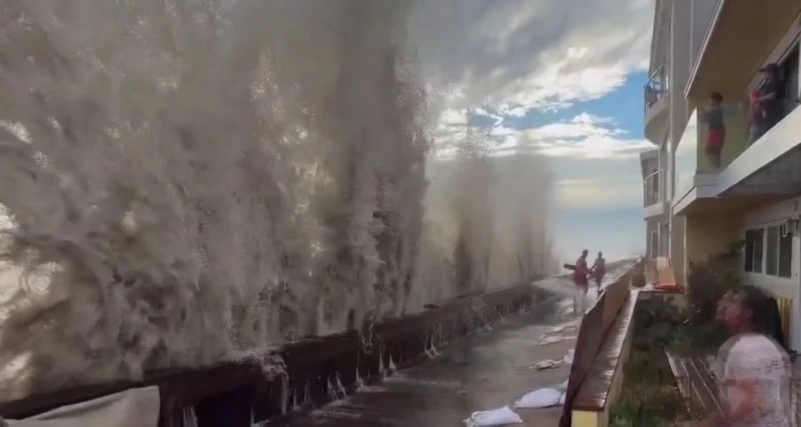

LAGUNA BEACH, Calif. — Hurricane Marie’s aftermath has turned into a widening coastal emergency across Southern California, where powerful swells have stripped sand from beaches, damaged seawalls and left dozens of oceanfront properties facing restrictions or evacuations. Laguna Beach has declared a local emergency as officials race to protect vulnerable shoreline before another round of damaging surf or winter storms.
Laguna Beach has declared a local emergency after powerful swells from Hurricane Marie caused significant coastal erosion, damaged seawalls and threatened oceanfront homes, with city officials warning that an unusually strong El Niño could bring additional damage in the months… pic.twitter.com/A9QC4GhszW
— KTLA (@KTLA) September 11, 2026
🇺🇸 Wild footage out of Laguna Beach right now.
— Mario Nawfal (@MarioNawfal) September 11, 2026
Hurricane Marie’s leftover swells have been hammering the coast since early September and they’ve stripped huge amounts of sand, wrecked seawalls, and left several oceanfront homes yellow-tagged.
The city just declared a local…
The latest emergency centers on severe erosion that Laguna Beach officials say has been reshaping the coastline since September 2. Six oceanfront homes have been yellow-tagged, public areas are closed, and part of the Aliso Beach parking lot has failed. Dana Point and Malibu are dealing with their own emergencies, making the damage a regional problem rather than an isolated beach event.
Laguna Beach emergency follows severe sand loss
Laguna Beach declared the emergency on September 10, giving officials greater flexibility to accelerate shoreline protection, sand placement, debris removal and structural repairs.
Six homes on Ocean Way and Lagunita Drive were yellow-tagged after erosion compromised seawalls. A yellow tag typically restricts use or access because of safety concerns and does not necessarily mean a structure is destroyed.
The south end of Lagunita Beach, Pearl Street Beach, the Christmas Cove footpath and Aliso Beach parking lot have also been temporarily closed as officials monitor rapidly changing conditions.
The scale of sand loss is a particular concern. Beaches provide a natural buffer that absorbs wave energy before it reaches seawalls, roads and homes. A narrower beach can leave those structures more exposed during the next high tide or major swell.
Marie caused damage despite remaining far offshore
Hurricane Marie did not make landfall in California. Its impact demonstrates how a powerful tropical cyclone can threaten the coast from hundreds of miles away.
On September 6, the National Hurricane Center tracked Marie well offshore while warning that swells generated by the hurricane would create dangerous beach conditions in Southern California.
Long-period swells traveled north and arrived alongside elevated tides, allowing waves to reach farther inland. Forecasts warned of dangerous swimming and surfing conditions, strong rip currents, coastal flooding and significant erosion.
The episode follows another recent Pacific storm threat, when Hurricane Lowell brought dangerous wind, flooding and surf concerns to Hawaii.
Dana Point reports 16 homes with safety tags
Damage is also significant in Dana Point, where officials declared a local emergency following repeated wave impacts along Beach Road.
The first major residential damage was reported August 28, when waves destroyed a deck and undermined a home’s slab foundation.
By the latest reported assessment, nine homes had been red-tagged and seven yellow-tagged. Red tags indicate structures considered unsafe to occupy, while yellow tags impose restrictions because of identified hazards.
Emergency measures have included placing a boulder revetment behind threatened properties. Debris from damaged coastal structures has also reached nearby beach areas.
Getty Fire Near 405 Freeway Triggers Evacuation Warnings
Philippines Ferry Fire: 5 Dead, 86 Missing After MV June Aster Engulfed in Flames
Malibu evacuates 31 properties after road collapse
Malibu’s emergency developed after a beachfront driveway collapsed on Sea Level Drive at about 5:45 a.m. September 8 and the failure extended into the roadway.
The damage was especially serious because the neighborhood has only one entrance and exit. Emergency vehicles could no longer reliably reach the affected homes.
Malibu issued an evacuation order covering 31 properties, which were red-tagged because of hazardous conditions and the loss of emergency access. A gas leak was identified, prompting utility shutdowns while repairs began.
Officials later reported that the sinkhole and surrounding erosion had not significantly expanded overnight, but a firm timetable for removing all restrictions had not been established.
Long Beach homes evacuated as waves push inland
Marie-generated surf also hit Long Beach, where about 20 oceanfront homes were evacuated during the damaging conditions. Water entered two residences and multiple garages, while part of the beachfront boardwalk was closed.
Wave observations reached roughly 11.5 feet during the event, highlighting the reach of Marie’s swell across the Southern California coastline.
The emergency comes as California communities face other fast-moving natural hazards. Farther north, the Lucas Fire triggered expanding Northern California evacuations as officials responded to a rapidly growing wildfire.
Orange County activates regional emergency response
Orange County has activated its Emergency Operations Center to coordinate damage assessments, resources, mutual aid and assistance for Laguna Beach and Dana Point.
The coordinated response is significant because erosion and sand movement cross city boundaries. One powerful swell can simultaneously damage beaches, transportation infrastructure and private properties across several communities.
Winter weather is now the bigger concern
Marie is no longer the only issue officials are watching. The longer-term risk is whether damaged beaches and seawalls can recover before winter storms arrive.
Laguna Beach officials expect some displaced sand to return naturally but are not counting on a full recovery. The prospect of a strong El Niño adds urgency because additional rain, high surf and coastal flooding could put renewed pressure on already weakened shoreline defenses.
Residents and visitors are being urged to respect closures and stay away from unstable sand, compromised seawalls, damaged pavement and debris. Strong rip currents can also remain dangerous after the largest waves disappear.
There is no confirmed timetable yet for all repairs, reopening closed areas or removing every property safety tag. The focus has shifted from Marie itself to what the storm left behind: a diminished coastal buffer that communities now need to stabilize before the Pacific delivers its next major test.

Make Swikblog your go-to source on Google for reliable updates, smart insights, and daily trends.