
Practical ideas for schools, workplaces, creators and communities in 2025.
International Fraud Awareness Week 2025 is the perfect moment to turn technology into a powerful ally against scams. Criminals are already using artificial intelligence to send polished phishing emails, deepfake voice messages and fake investment pitches. The good news is that organisations, teachers, parents and content creators can use AI tools for good to spread fraud awareness faster and more creatively than ever before.
This guide shares practical, easy-to-implement ideas for using the latest AI video, image, chatbot and data tools to educate people about digital scams across the US, UK, Canada, Australia, New Zealand, Asia and Africa.
For a detailed explainer on why digital scams are rising and which countries report the highest fraud losses, you can also read our main feature: International Fraud Awareness Week 2025: Why Digital Scams Are Exploding This Year.
AI Tools Mentioned in This Article
These trusted AI tools can help create fraud-awareness content during International Fraud Awareness Week 2025:
- Runway Gen-2 – AI video creation for scam demos
- Pictory AI – convert scripts into short videos
- InVideo AI – create awareness clips fast
- HeyGen – face-swap demos for deepfake education
- Synthesia – avatar-style training videos
- ElevenLabs Voice AI – voice cloning awareness demos
- ChatGPT – phishing simulation, quizzes, translations
- Claude AI – writing long-form awareness content
- Microsoft Copilot – corporate security messaging
- Flowise / Botpress – build custom scam chatbots
- Canva AI – infographics, posters, fraud alert cards
- Visme AI – visual diagrams and flowcharts
- Gamma AI – interactive presentations
- Beautiful.ai – AI-powered corporate decks
- Midjourney – editorial warning illustrations
- DALL·E – feature images for Discover
- Adobe Firefly – commercial-safe image generation
- Typeform AI – fraud awareness quizzes
- Outgrow AI – scam risk calculators
- Power BI + AI – fraud dashboards
- Tableau AI – scam trend charts
- DeepL AI – multilingual fraud alerts
These tools must be used only for education and scam prevention.
1. Turn Scam Scenarios into Short AI Videos
Short vertical videos perform extremely well on Instagram Reels, YouTube Shorts, TikTok and LinkedIn. During International Fraud Awareness Week, you can create 30–60 second clips that show exactly how modern scams work.
Ideas for AI-powered awareness videos
- Deepfake call demo: show how a cloned voice pretends to be a family member asking for emergency money.
- Phishing in 5 seconds: side-by-side comparison of a genuine bank email vs. a fake one.
- Romance scam timeline: how a scammer slowly builds trust before asking for money.
- “Stop & Verify” rule: a simple three-step reminder before clicking links or sending payments.
Use AI video generators and text-to-speech tools to speed up production so you can publish several clips across the week instead of one long video.
2. Use AI Avatars and Voice Cloning to Demonstrate Deepfakes (Safely)
Many people have heard of deepfakes but do not truly understand how convincing they can look and sound. AI avatar and voice tools can help you create safe educational demos that show the danger without harming anyone.
Best practices for ethical demos
- Always label the video clearly as a simulation or educational deepfake.
- Use fictional names and characters instead of real individuals.
- End with a strong call to action: “Verify before you trust what you see or hear online.”
You can also combine avatar videos with official guidance from regulators or law-enforcement agencies, such as national cybercrime bureaus, to give viewers trustworthy next steps if they suspect fraud.
3. Build a Simple AI Chatbot That Simulates Scam Messages
An interactive chatbot can teach users how to respond to suspicious messages. You can design a bot that sends fake emails, SMS or WhatsApp-style prompts and lets people choose how they would react.
Example chatbot flows
- Fake delivery text: “Your parcel is waiting – click here to pay customs fees.” Users choose to ignore, verify, or click.
- Bank account alert: “Unusual login detected.” The chatbot explains why real banks never ask for full PINs or OTPs.
- Job offer scam: promises of high pay for simple work-from-home tasks, followed by a request for upfront fees.
Host the chatbot on your website, school portal or internal company page so staff and students can practice in a safe environment.
4. Create AI-Designed Infographics and Fraud Flowcharts
Long fraud reports are difficult for the public to read. AI design tools can instantly convert complex data and text into attractive infographics and one-page summaries.
Visual content ideas for Fraud Awareness Week
- “Anatomy of a Scam” flowchart: from first contact to money transfer.
- Top 5 red flags to watch for: urgency, secrecy, pressure to move off official platforms, payment in gift cards or crypto, and refusal to verify.
- Fraud losses by country: turning statistics into a colour-coded world map.
- Checklist poster: “Before you pay, always ask these three questions…”
These visuals can be shared across social media, WhatsApp groups, office noticeboards and school corridors to reach people who may never read a full article.
5. Design AI-Generated Posters, Banners and Social Media Cards
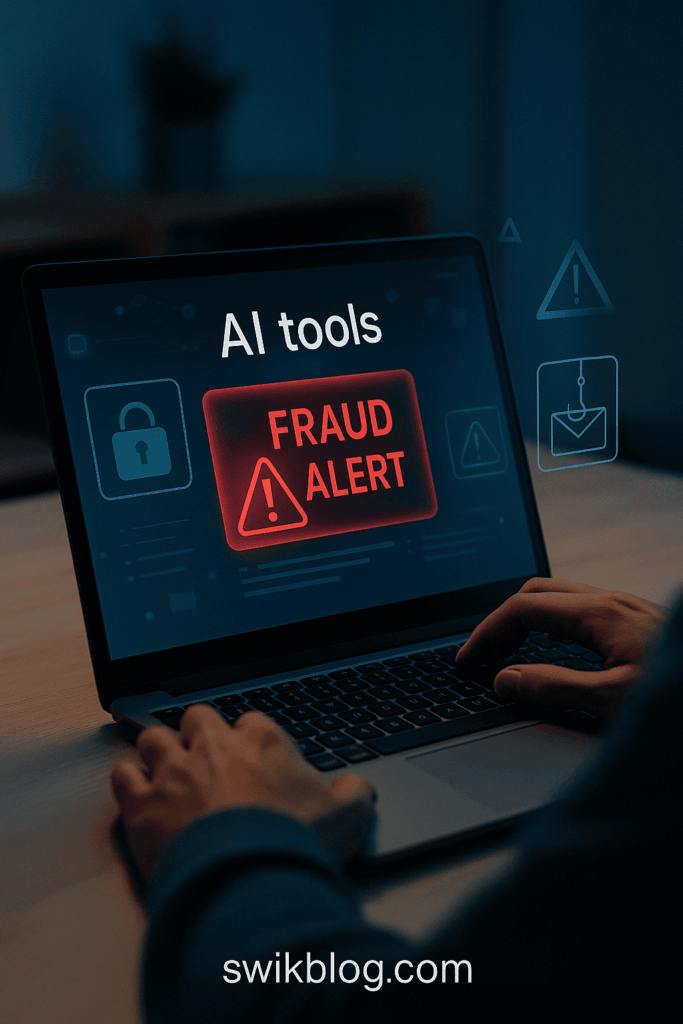
AI image generators are perfect for producing original editorial-style artwork that captures attention without using sensitive real-life photos. For example, you can create a cinematic vertical image of a person staring at a glowing “Fraud Alert” screen surrounded by warning icons and cybersecurity graphics.
Reuse these images across:
- Blog feature images optimised for Google Discover
- Facebook and LinkedIn post previews
- Instagram Stories and posters for community events
- Digital signage in banks, schools, universities and workplaces
6. Launch an AI-Powered Fraud Awareness Quiz
Quizzes are highly shareable and help people test their own knowledge. AI tools can write realistic scam scenarios, multiple-choice answers and instant explanations.
Quiz topic ideas
- “Spot the Scam” challenge: 10 messages, users must decide genuine vs fake.
- “Would you click?” quiz: screenshots of emails and ads with subtle red flags.
- Deepfake or real? Users guess whether a quote, image or voice clip is authentic.
You can embed the quiz on your site, share it with staff or students, and encourage people to post their scores as a way of spreading awareness.
7. Use AI to Turn Fraud Data into Clear Dashboards
Government agencies and fraud examiners often publish detailed statistics that are difficult to interpret. AI data tools can summarise raw numbers into easy charts and dashboards.
For example, you can create:
- A bar chart showing which age groups report the highest online scam losses.
- A timeline revealing how fraud complaints spike during holiday shopping or tax season.
- A pie chart of the most common scam types: phishing, romance, crypto, investment, and online shopping.
Sharing these visuals helps audiences understand that fraud is not rare or random – it is a predictable risk that can be managed with awareness and good habits.
8. Translate Fraud Alerts Into Multiple Languages Using AI
Many victims belong to migrant or multilingual communities who may not receive timely warnings in their primary language. AI translation tools make it simple to turn fraud alerts into Spanish, Hindi, Filipino, Arabic, French, Swahili and more.
During International Fraud Awareness Week 2025, you can:
- Publish multilingual versions of your scam alerts on your website.
- Share translated posters and carousels on social media.
- Send community emails in two or three key languages used by your audience.
Always have a native speaker or trusted community member review the final text when possible, especially for official or legal content.
9. Draft Weekly Fraud Bulletin Emails with AI
AI writing assistants can help you produce short, clear email bulletins so your community receives regular updates on new scam trends.
Suggested weekly email structure
- Headline: “This Week’s Top 3 Scam Alerts”
- Section 1 – New Scam: brief description, red flags, what to do.
- Section 2 – Real Story: anonymised case study from your organisation or country.
- Section 3 – Safety Tip: one habit to practise this week (e.g. enabling multi-factor authentication).
- Footer: link to an official fraud reporting website or national consumer protection page.
Combining AI writing tools with official advice from bodies such as national fraud reporting centres or consumer protection agencies helps your messages stay both engaging and accurate.
10. Combine AI Tools with Official Fraud Guidance
While AI is excellent for content creation, your advice should always align with trusted sources. Cross-check key facts with official organisations such as the Association of Certified Fraud Examiners, national police cybercrime units, financial regulators and consumer protection agencies in your country.
Linking to at least one trustworthy resource within your article or campaign improves both reader trust and search engine confidence. Make sure external links open in a new tab and are used naturally inside the content, not as a list at the end.
Conclusion: Use AI to Fight Back, Not to Fear
International Fraud Awareness Week 2025 proves that technology can be part of the solution, not just the problem. Scammers are quick to adopt AI – but schools, families, creators, banks and employers can move just as fast.
By using AI video tools, chatbots, quizzes, dashboards, translation and automated email helpers, you can reach thousands of people with practical, simple fraud prevention messages. Awareness will not stop every scam, but it dramatically reduces the odds that someone you care about becomes the next victim.

Make Swikblog your go-to source on Google for reliable updates, smart insights, and daily trends.