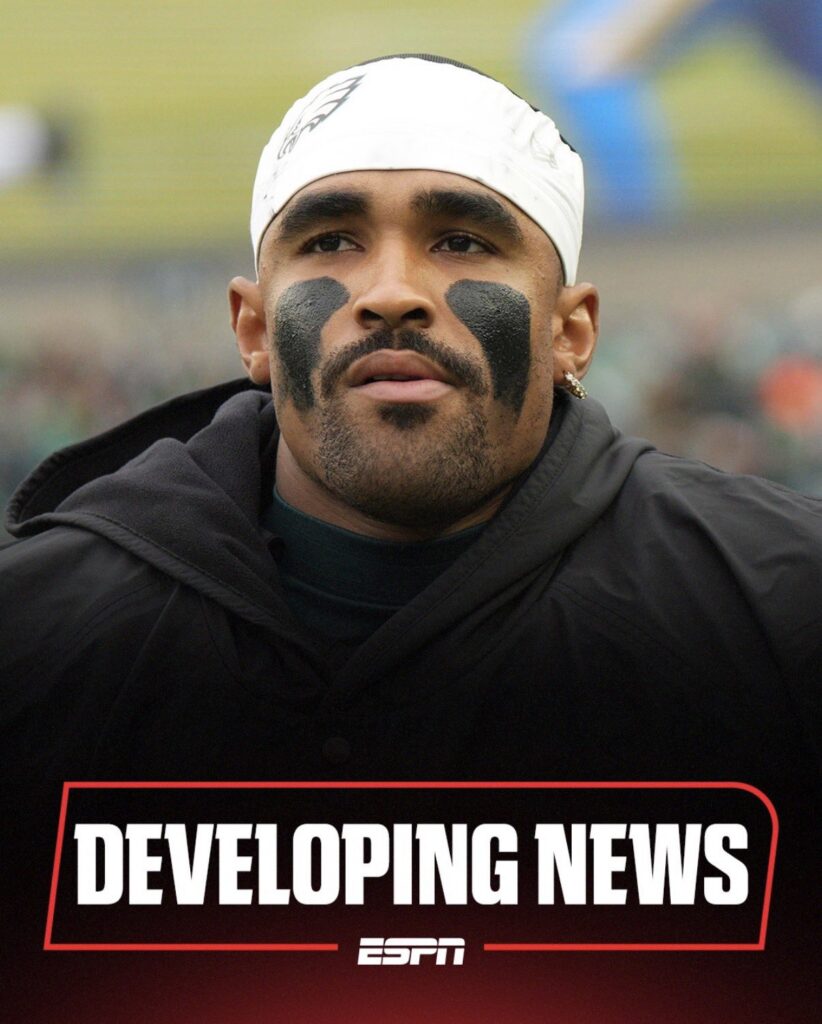

A week ago, Jalen Hurts was still practicing and trying to turn Philadelphia’s season around. Now, the Eagles quarterback faces a different kind of wait: treatment for blood clots in his lungs, with no contact football until doctors determine it is safe.
Hurts is expected to miss the remainder of the 2026 season after further testing revealed deep vein thrombosis and bilateral pulmonary emboli — blood clots affecting both lungs.
For supporters alarmed by that diagnosis, the October 19 statement from the Eagles and his agent, Nicole Lynn, contained a reassuring assessment: he is clinically stable, has no significant functional limitations and is expected to recover fully.
“Jalen’s prognosis is very good, and we expect a full recovery,” the statement said.
He will continue conditioning and remain around the team. But the blood-thinning medication used to treat his condition means he cannot participate in contact activities. For now, his involvement with the Eagles will continue away from the collisions that define his position.
How a calf injury led to a more serious diagnosis
The public timeline begins with a familiar football complaint: a sore calf after being caught by another player’s cleat.
According to the Eagles’ account published October 15, Hurts told medical staff on October 8 that he had been cleated during the October 4 game against the Los Angeles Rams. He requested treatment after practice, having participated fully that Wednesday and Thursday.
He received further treatment Friday, practiced fully and was added to the practice report. After the team reached London, a Saturday ultrasound detected a superficial blood clot.
The Eagles said their medical staff and doctors in London reviewed the findings and concluded he could safely play, with activity and mobility considered important. They recommended another ultrasound within 72 hours of the game and return flight.
Hurts played against Jacksonville on October 11 — the same London game that began with Jeremiah Trotter Jr. and Bryan Thomas Jr. being ejected after an opening-kickoff confrontation. Philadelphia lost 19-17.
After returning, Hurts received treatment Monday and Tuesday and practiced fully Wednesday. That evening, the follow-up ultrasound showed movement in the clot. Philadelphia subsequently ruled him out against Carolina and placed him on injured reserve.
Monday’s update established a more extensive diagnosis following additional testing and monitoring. The statements do not explain exactly when the lung clots developed or establish what caused them.
The sequence leaves an understandable question: why could Hurts play in London but cannot play now? The team’s explanation is that the initial clearance followed the findings available then; subsequent examinations changed the medical picture. The published information does not independently establish whether an earlier decision was inappropriate.
Head coach Nick Sirianni had already emphasized the personal concern inside the building. Speaking on October 16, he said: “Jalen’s health is of the utmost importance to all of us in this building.”
Why Hurts must wait — and what McKee now faces
The treatment explains why a player who can still exercise must step away from games. The American College of Cardiology identifies bleeding risk as a central concern for athletes taking anticoagulants, particularly in collision sports such as American football.
Feeling stronger or throwing comfortably therefore cannot settle his return date. The Eagles’ statement anticipates an opportunity to resume contact football after he comes off blood thinners, without promising a specific date.
There is a relevant NFL precedent. Former Eagles defensive end Vinny Curry missed the 2021 season with the Jets after developing blood clots following spleen surgery. Blood-thinning treatment prevented physical contact, and he returned to the field the following year, as Associated Press reported.
Curry’s underlying condition was different, so his recovery cannot predict Hurts’ timetable. His experience nevertheless shows how treatment can interrupt a football career without ending it.
Philadelphia must meanwhile prepare Tanner McKee for a longer assignment. His first start during Hurts’ absence ended in a 25-14 loss to Carolina, leaving the Eagles 2-4.
McKee completed 26 of 45 passes for 215 yards and a touchdown without a turnover. One promising completion — a 20-yard pass to Darius Cooper — was erased by a holding penalty, according to the team’s account of the performance.
“My team needs me to be better,” McKee said afterward. He identified communication, player positioning and making adjustments as areas to improve.
Those specifics matter more than expecting the backup to reproduce Hurts immediately. With three consecutive NFC East opponents ahead, Philadelphia needs an offense that communicates clearly and makes its opportunities count.
Hurts will remain part of that team while his recovery takes priority. The most encouraging detail in Monday’s announcement is the expectation that he can eventually return to it fully.

Make Swikblog your go-to source on Google for reliable updates, smart insights, and daily trends.