
Written by Michael R. Lawson
When Nicolás Maduro and his wife, Cilia Flores, were brought before a U.S. court to face federal criminal charges, the proceedings were overseen by a veteran judge with decades of experience handling some of America’s most complex and high-profile cases.
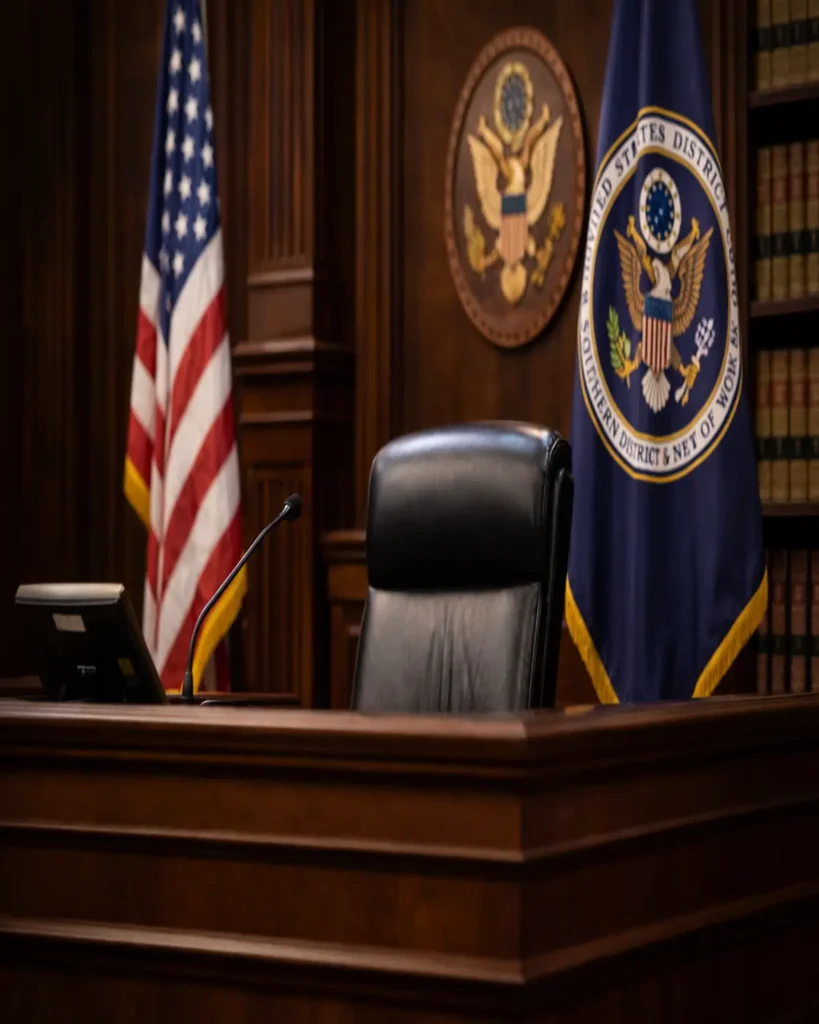
That judge is Alvin K. Hellerstein, a senior federal jurist serving on the United States District Court for the Southern District of New York, one of the most influential trial courts in the United States.
Hellerstein presided over the initial arraignment in Lower Manhattan, where Maduro and Flores entered not-guilty pleas to charges that include drug trafficking, narco-terrorism and conspiracy to import cocaine into the United States. The hearing marked the first time the former Venezuelan leader appeared before a U.S. judge following his capture and transfer to American custody.
Judge Alvin Hellerstein’s background and judicial career
Judge Hellerstein was appointed to the federal bench in 1998 after being nominated by President Bill Clinton. He later assumed senior status, a role that allows experienced judges to continue handling major cases while easing administrative duties.
Before joining the judiciary, Hellerstein built a lengthy legal career that included private practice and service in public-interest law. Over the years, he has become known for his methodical courtroom management, close attention to procedural rules, and willingness to assert firm control during contentious hearings.
Within the federal court system, he is regarded as a steady presence in cases involving national security, terrorism, international law, and large-scale criminal prosecutions. That background has positioned him to oversee proceedings that carry diplomatic and legal sensitivity.
Why the Southern District of New York matters
The Southern District of New York, often referred to as SDNY, is among the most powerful federal courts in the country. Based in Manhattan, it has jurisdiction over cases involving international crime, financial misconduct, terrorism, and cross-border drug trafficking.
Because many global financial institutions, shipping routes, and enforcement agencies intersect in New York, prosecutors frequently bring international cases to this court. Judges in the district regularly handle defendants with foreign citizenship and cases involving overseas conduct tied to U.S. law.
Legal analysts note that assigning the Maduro case to this court places it within a jurisdiction experienced in managing complex extradition issues, classified evidence, and politically sensitive prosecutions.
Hellerstein’s role in Maduro’s arraignment
During the arraignment, Judge Hellerstein confirmed the identities of the defendants, ensured translation services were provided, and formally asked for their pleas. Maduro addressed the court through an interpreter, while Hellerstein maintained tight procedural control over the hearing.
At several moments, the judge limited extended statements, emphasizing that the arraignment was a preliminary legal step rather than a forum for broader arguments. He also confirmed that the defendants had received the indictment and understood the charges.
Hellerstein scheduled the next court appearance for March, setting the framework for how the case will proceed in the months ahead. Under federal rules, pretrial motions, evidentiary disputes, and detention issues will now unfold under his supervision.
Why this judge was assigned the case
Senior judges in the Southern District of New York are often assigned cases that require judicial experience and institutional familiarity. Hellerstein’s background in handling terrorism-related prosecutions and international defendants makes him a logical choice for a case involving foreign leaders and allegations of cross-border criminal activity.
While prosecutors and defense attorneys may file motions challenging jurisdiction or aspects of the arrest, such disputes will be evaluated within the established federal framework overseen by the judge.
Court officials emphasize that assignments are based on internal procedures rather than political considerations, with the focus placed on judicial expertise and workload balance.
What happens next in the case
In the coming weeks, Judge Hellerstein is expected to oversee procedural hearings that could address detention conditions, defense access to evidence, and legal challenges related to international law.
Federal cases of this scale often move slowly, particularly when they involve foreign defendants, classified materials, or diplomatic sensitivities. Court officials have indicated that a trial, if it proceeds, could be many months away.
For now, the case remains firmly within the U.S. judicial system, under the authority of a senior judge whose role is to ensure that proceedings follow federal law and constitutional standards.
More information on the structure and role of the Southern District of New York can be found through the official U.S. federal courts system .

Make Swikblog your go-to source on Google for reliable updates, smart insights, and daily trends.