
LONDON, October 8, 2026 — Metropolitan Police officers are rearresting two or three early-release prisoners every week as electronic-tag breaches exceed 100 a day across London, Commissioner Sir Mark Rowley has revealed, raising fresh concerns about public safety and the pressure on Britain’s criminal justice system.
Met chief reveals over 100 tag breaches a day in London following early prisoner release scheme https://t.co/gw2KoBoQ7W
— LBC (@LBC) October 8, 2026
Rowley said monthly arrest warrants have nearly doubled from 800 to around 1,600, while more than 95% of people arrested over tagging breaches are subsequently bailed. His warning comes days after the government began releasing hundreds of prisoners early to ease overcrowding.
London Police Face More Than 100 Tag Breaches Daily
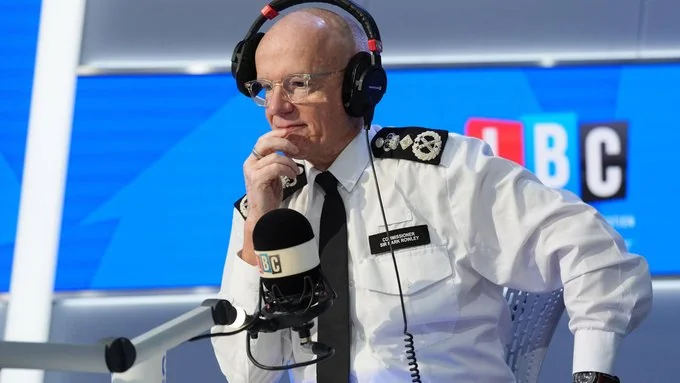
Speaking to LBC’s Nick Ferrari on Thursday, Rowley said probation services were referring more than 100 electronic-monitoring breaches to Metropolitan Police officers every day.
He questioned whether offenders face sufficient consequences when they repeatedly violate restrictions, describing a situation in which many are returned to the community under the same conditions.
Electronic tags can monitor curfews, movements and exclusion zones. However, a breach does not automatically constitute a new criminal offence, and the reported figures do not establish how many separate individuals are involved.
Early-Release Rearrests and Arrest Warrants Rise
Rowley reported that officers have been rearresting approximately two or three early-release offenders weekly since August.
He also linked rising arrest-warrant workloads to more defendants remaining in the community rather than being held in custody before trial.
According to the commissioner, monthly warrants have increased from approximately 800 to nearly 1,600, adding to demands on officers already handling emergency calls and criminal investigations.
These figures cover different parts of the justice system and should not all be attributed to the latest early-release programme.
Shoplifting Case Adds £1,587 in Police Costs
Detective Chief Superintendent Luke Williams reportedly highlighted a high-risk shoplifting offender whose return to police attention generated an estimated £1,587 in additional costs and 27 extra officer hours.
The example illustrates how repeat arrests can consume policing resources through investigations, custody procedures and coordination with probation authorities.
Those figures relate to one reported case and are not an established average for early-release offenders.
Domestic Abuse and Stalking Victims Raise Safety Concerns
Rowley expressed particular concern about repeat domestic abusers and persistent stalkers, warning that some offenders present serious risks after leaving custody.
During the LBC programme, a caller named Kirsty from Canterbury described fearing for her safety ahead of her convicted stalker’s expected release in January.
Her concerns highlight the importance of effective supervision, especially when offenders are prohibited from approaching victims or entering certain locations.
Electronic tags can help detect violations, but they cannot physically prevent an offender from contacting someone.
Jamaal Howard Executed in Texas for Vickie Swartout Murder After Final Appeals Fail
Mall of America ISIS Attack Plot: Sheikhdoon Mohamud Case and Latest Details
Government Releases Around 700 Prisoners Under New Rules
Approximately 700 prisoners were released on October 1 under changes associated with the Sentencing Act 2026. The government expects thousands more releases over the following year as it addresses prison overcrowding.
Justice Secretary Alex Norris has acknowledged that officials could not immediately confirm how many of the initial prisoners had received electronic tags.
The Ministry of Justice has defended the reforms, highlighting expanded monitoring, tighter movement restrictions and investment in probation services.
Its October 1 announcement outlined new restrictions, including limits on where certain offenders can travel and bans from designated venues.
Electronic Tagging Delays Add to Public Safety Debate
Separate reporting has identified thousands of electronic-monitoring orders awaiting equipment assignment, raising questions about how quickly restrictions can be enforced.
However, the monitoring backlog covers several offender categories and cannot be treated as the number of newly released prisoners without tags.
The wider issue of post-release supervision has also attracted attention following the Robert Sabat murder case after prison release, although that case is unrelated to the current scheme.
Separate questions about sentencing and accountability have featured in the Christian Zedig fatal assault case, which involved a different legal jurisdiction.
Police Enforcement and Victim Protection Remain Under Scrutiny
The central concern is whether police and probation services can respond effectively when monitored offenders breach restrictions.
For victims of stalking or domestic abuse, timely intervention may be critical. Anyone facing immediate danger should call 999, while non-emergency incidents can be reported on 101.
Rowley’s figures reveal substantial reported enforcement pressure, although further official data is needed to determine whether the latest prisoner release changes have increased reoffending.

Make Swikblog your go-to source on Google for reliable updates, smart insights, and daily trends.