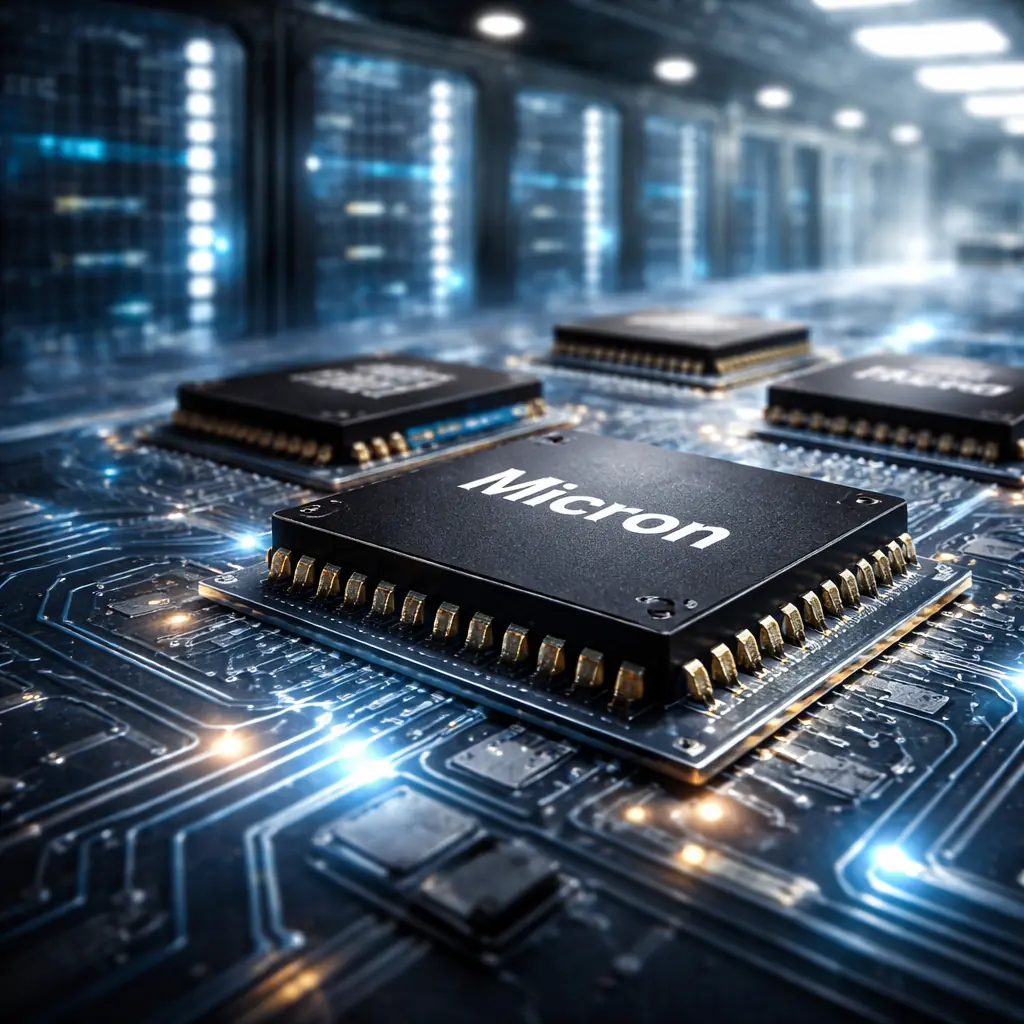

Micron Technology (MU) stock jumped 3.08% to $377.53 in early trading, as renewed optimism around AI memory demand pushed buyers back into the stock despite rising pressure from a potential $10 billion US listing by rival SK Hynix. The move signals that investors are still willing to bet on Micron’s role in the AI boom, even as competition in the high-bandwidth memory (HBM) market intensifies.
The latest gain comes after a volatile stretch where Micron had fallen nearly 20% from recent highs, making today’s rebound a key moment for sentiment. While the broader semiconductor sector has been driven by AI infrastructure spending, Micron now sits at the center of a growing valuation debate — balancing strong demand with emerging competitive threats.
Key trading snapshot: MU rose $11.29 to $377.53, after opening at $373.30, with an intraday range between $370.61 and $385.08.
AI memory demand continues to drive Micron’s momentum
The core bullish driver behind Micron remains the explosive growth in artificial intelligence infrastructure. Advanced AI systems require massive volumes of high-performance memory, particularly high-bandwidth memory (HBM), which has become critical for training large models and powering data centers.
This surge in demand has positioned memory chipmakers at the center of the AI trade. Micron, while not the market leader, is increasingly seen as a key beneficiary of this shift. The company is expanding its presence in HBM, aiming to capture a larger share of a market that is still supply-constrained.
Even after its recent volatility, Micron stock remains up significantly this year, highlighting how strongly investors are pricing in AI-related growth. The company’s relatively low valuation compared to the broader market also keeps it attractive for investors looking for exposure to AI without paying premium multiples.
$10 billion rival listing adds new pressure to the story
At the same time, Micron faces a new challenge that could reshape investor flows. South Korean chipmaker SK Hynix is reportedly planning a $10 billion US listing, which would give American investors direct access to another major player in the memory market.
This matters because SK Hynix currently holds a dominant position in HBM, a segment where Micron is still catching up. If US investors begin shifting capital toward SK Hynix, Micron’s valuation premium could come under pressure in the near term.
However, the competitive dynamic is not entirely negative. Increased visibility for the memory sector could also bring more capital into the space overall, potentially benefiting both companies as AI demand continues to expand.
Valuation, volatility, and investor sentiment
Micron’s current valuation remains a key part of the investment debate. Trading at around 4x forward earnings, the stock is still significantly cheaper than the broader market, reflecting both opportunity and risk.
The stock’s beta of 1.61 highlights its volatility, and recent price swings show how quickly sentiment can shift. While today’s gain suggests renewed confidence, trading volume remains below average levels, indicating that investors are still cautious.
Looking ahead, Micron’s next major catalyst will likely be its upcoming earnings report, expected in June 2026. Investors will be watching closely for updates on HBM production, AI-related revenue growth, and margins.
Recent coverage from Bloomberg highlights the same tension now shaping the stock: strong AI-driven demand on one side, and rising competition on the other.
For now, Micron’s move back toward $377 keeps the bullish narrative alive. But with its $471 52-week high still in view and a new rival entering the US market, the next phase of the rally will likely depend on execution, demand strength, and how the competitive landscape evolves in the AI memory race.
Author Bio
Swikriti is a Swikblog writer with 9 years of experience focusing on financial markets, stock analysis, and high-impact global news with a strong editorial perspective.

Make Swikblog your go-to source on Google for reliable updates, smart insights, and daily trends.