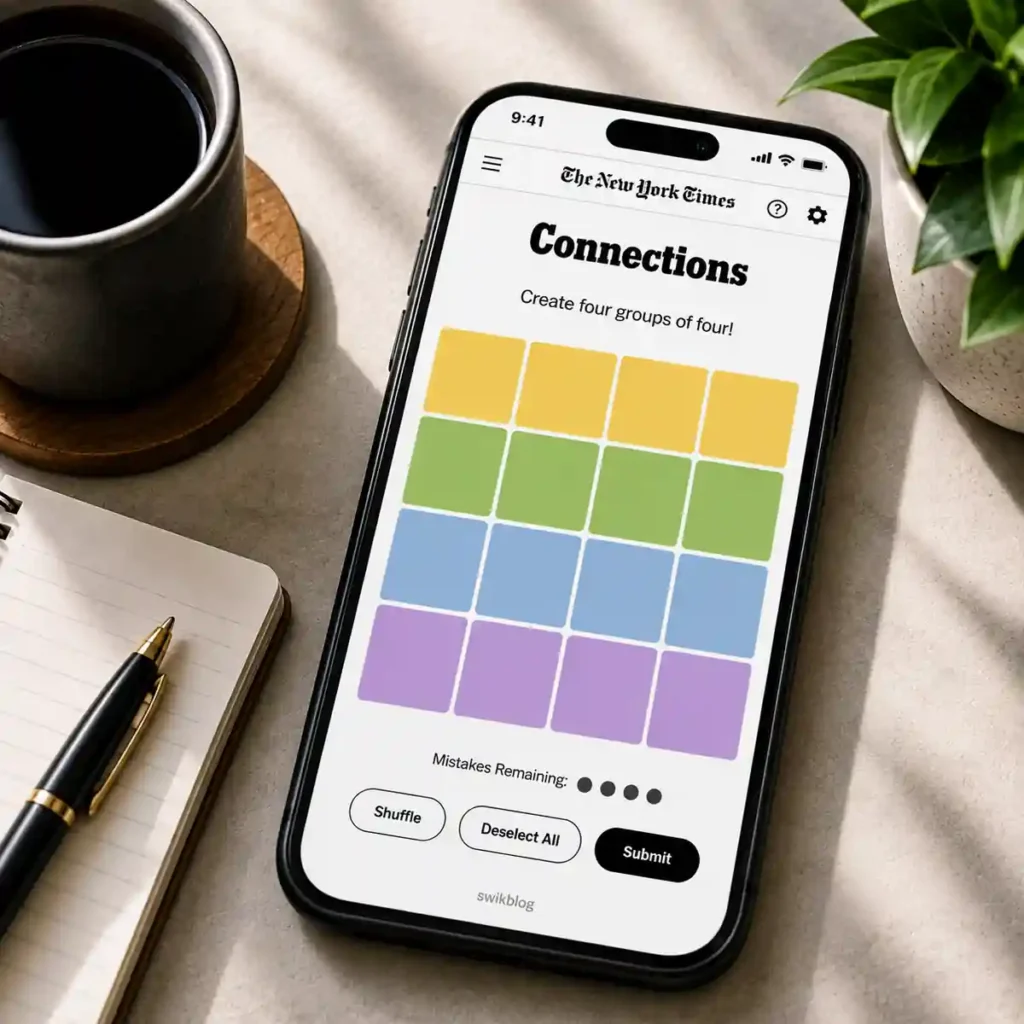

Stuck on NYT Connections #1226 for October 19, 2026? Get spoiler-free hints for all four groups, followed by today’s answers and explanations.
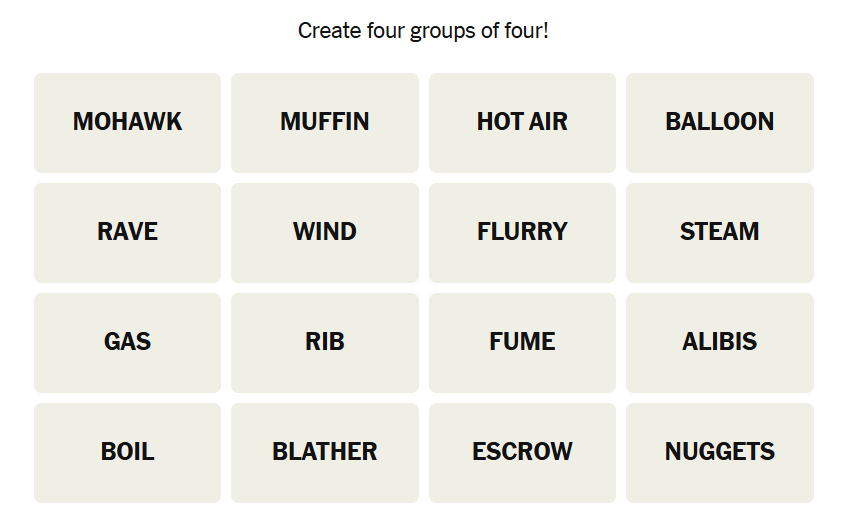
NYT Connections hints for October 19
- Yellow: Think about words used to describe intense anger or frustration. Some can also refer to heat, vapor or strong emotional reactions, but their shared meaning involves someone becoming extremely upset.
- Green: Look for words and expressions describing excessive talking that communicates very little. These terms can refer to empty conversation, exaggerated statements or speech that lacks meaningful substance.
- Blue: Focus on familiar products associated with a major fast-food restaurant. Each answer becomes the name of a recognizable menu item when the same two-letter prefix is added at the beginning.
- Purple: Examine the final letters of each word rather than its complete meaning. The endings form the names of different birds, although the full words belong to unrelated subjects.
Main trap: Today’s Connections puzzle #1226 uses familiar words that can easily lead players toward the wrong categories. BOIL and STEAM may suggest cooking, while GAS, HOT AIR and WIND appear connected through air or physical substances. FLURRY and MUFFIN might look unrelated to NUGGETS and RIB until players recognize a familiar restaurant’s naming convention. The purple group adds another complication because its answers contain hidden bird names at the end of longer words. The challenge is recognizing the intended relationships without being distracted by the most obvious meanings.
Blue clue: FLURRY and MUFFIN are useful starting points for players familiar with McDonald’s menu items. Adding “Mc” produces McFlurry and McMuffin. NUGGETS and RIB complete the group because McNuggets and McRib are also recognizable products. The important connection is not the type of food but the shared branding prefix.
Purple clue: ALIBIS and ESCROW may initially suggest legal or financial subjects, while BALLOON and MOHAWK seem unrelated. However, their endings reveal the pattern: IBIS in ALIBIS, LOON in BALLOON, CROW in ESCROW and HAWK in MOHAWK. Each ending is the name of a bird. Recognizing this hidden-word relationship is the key to solving the purple category.
Today’s NYT Connections answers
Reveal the Yellow Group
Category: Seethe
Answers: BOIL, FUME, RAVE, STEAM
Each answer can describe intense anger or frustration. Although these words have different everyday meanings, they all relate to strong emotional reactions, particularly when someone becomes extremely upset or struggles to control their anger.
BOIL normally describes heating a liquid until bubbles form and rise to the surface. Figuratively, it can describe intense anger building inside someone, as in the expression “boiling with rage.”
FUME means to feel or express strong anger, often because of something irritating, unfair or disappointing. Someone may fume silently after an argument or frustrating experience.
RAVE can describe speaking wildly or angrily, particularly during an emotional outburst. The word also has another common meaning involving enthusiastic praise, which makes its connection to anger less immediately obvious.
STEAM ordinarily refers to water vapor produced through heating. In figurative expressions, steam can suggest mounting anger, emotional pressure or frustration that is close to being released.
BOIL and STEAM are useful starting points because both are associated with heat and can also describe intense emotional reactions.
FUME strengthens the connection because it directly describes someone who is extremely angry.
RAVE may be slightly harder to identify because its most familiar modern uses often involve enthusiastic praise, excitement or music events.
BOIL may initially suggest cooking methods or kitchen activities rather than emotional states.
STEAM can also refer to vapor, machinery or cooking food using hot moisture.
FUME might lead players toward smoke, chemical emissions or gases because the word has a separate physical meaning.
These interpretations create distractions, particularly because the green group includes GAS and HOT AIR.
BOIL, FUME and STEAM can suggest anger building internally, while RAVE emphasizes a more openly expressed emotional reaction.
The four words therefore belong together because they describe different expressions or experiences of strong anger.
The central connection is straightforward: BOIL, FUME, RAVE and STEAM can all describe intense anger or frustration.
Reveal the Green Group
Category: All talk
Answers: BLATHER, GAS, HOT AIR, WIND
Each answer can refer to excessive, empty or meaningless speech. The four expressions have different literal meanings, but they share a figurative connection to conversation that communicates little useful information.
BLATHER means to talk at length in a foolish, rambling or unimportant manner. It often describes speech that continues without making a meaningful point.
GAS commonly refers to a substance in its gaseous state. Informally, it can also describe idle chatter, unnecessary conversation or boastful talking.
HOT AIR is an expression used to describe empty promises, exaggerated claims or statements that sound impressive but lack real substance.
WIND normally refers to air moving through the atmosphere. Figuratively, it can suggest empty speech, particularly through expressions associated with long-winded or unproductive talking.
BLATHER and HOT AIR are useful starting points because both directly suggest conversation that offers little meaningful information.
GAS may be harder to recognize because its most familiar meanings involve fuel, energy or physical substances.
WIND is another potentially misleading answer because people usually associate it with weather or moving air rather than speech.
GAS, HOT AIR and WIND might initially appear connected through their relationship with air or gaseous substances.
That interpretation becomes especially tempting because STEAM, one of the yellow answers, also has a physical connection to vapor.
However, BLATHER does not naturally fit a category involving atmospheric conditions or gases.
The intended relationship becomes clearer when the words are considered as descriptions of conversation.
HOT AIR commonly describes exaggerated claims or promises that are not supported by meaningful action.
BLATHER similarly suggests excessive speech without useful content.
GAS can describe idle chatter, while WIND can represent empty or unnecessary talking.
Unlike the yellow group, which focuses on emotional reactions, the green group concerns the substance and usefulness of communication.
The shared connection is straightforward: BLATHER, GAS, HOT AIR and WIND all relate to empty or meaningless talk.
Reveal the Blue Group
Category: “Mc” things at McDonald’s
Answers: FLURRY, MUFFIN, NUGGETS, RIB
Each answer becomes the name of a recognizable McDonald’s product when the prefix “Mc” is added. The challenge is recognizing the restaurant’s familiar branding rather than interpreting the words according to their ordinary meanings.
FLURRY becomes McFlurry, a frozen dessert sold by McDonald’s. It combines soft-serve ice cream with sweet mix-ins. Outside the restaurant context, flurry can describe a brief period of snowfall or a sudden burst of activity.
MUFFIN becomes McMuffin, a name associated with McDonald’s breakfast sandwiches. The Egg McMuffin is one of the chain’s established breakfast products, traditionally featuring egg, cheese and Canadian bacon on an English muffin in the United States.
NUGGETS becomes McNuggets, the branded name for McDonald’s bite-sized breaded chicken pieces. Chicken McNuggets are among the restaurant’s recognizable menu products and are commonly served with dipping sauces.
RIB becomes McRib, a McDonald’s sandwich featuring a boneless, rib-shaped pork patty with barbecue sauce, onions and pickles. The sandwich is particularly associated with limited-time returns in certain markets.
FLURRY and MUFFIN provide useful starting points because McFlurry and McMuffin are familiar product names associated with desserts and breakfast items.
NUGGETS may initially suggest general chicken dishes or fast-food snacks rather than a specific brand.
RIB could lead players toward anatomy, barbecue or cuts of meat.
FLURRY can also be misleading because its ordinary meaning involves snow or sudden movement rather than food.
MUFFIN and NUGGETS may appear connected through familiar food categories, but that interpretation does not fully explain all four answers.
RIB is particularly important because adding the same prefix creates McRib, confirming the shared naming pattern.
Unlike categories based on synonyms or similar objects, the blue group depends on recognizing a common prefix that transforms ordinary words into branded product names.
The shared prefix is “Mc,” which has become closely associated with McDonald’s menu naming.
Adding it produces McFLURRY, McMUFFIN, McNUGGETS and McRIB.
The products belong to different parts of the menu, including desserts, breakfast foods, chicken items and sandwiches.
That variety makes the category harder to recognize if players focus only on the type of food.
The key is identifying the shared branding rather than the ingredients or purposes of the products.
The four answers therefore belong together because FLURRY, MUFFIN, NUGGETS and RIB all become recognizable McDonald’s product names when preceded by “Mc.”
Reveal the Purple Group
Category: Ending in birds
Answers: ALIBIS, BALLOON, ESCROW, MOHAWK
Each answer ends with the name of a bird. Unlike the other categories, the purple group does not depend on the meaning of each complete word. Instead, players must identify a shorter bird name hidden at the end of a longer answer.
ALIBIS ends with IBIS, a long-legged wading bird recognized for its distinctive curved bill. Ibises are commonly found in wetlands and other environments where they search for food.
ALIBIS is the plural of alibi, a statement or evidence indicating that someone was somewhere else when an event occurred. Its connection to a bird comes entirely from its spelling.
BALLOON ends with LOON, a type of aquatic bird known for its diving abilities and distinctive calls. Loons are commonly associated with freshwater lakes and northern habitats.
BALLOON ordinarily refers to an inflatable object filled with air or gas. Its connection to a bird becomes visible only when players examine the final four letters.
ESCROW ends with CROW, a familiar bird belonging to the corvid family. Crows are recognized for their intelligence, adaptability and ability to live in urban and rural environments.
ESCROW refers to a legal or financial arrangement in which money, documents or other assets are held by a third party until specified conditions are satisfied.
MOHAWK ends with HAWK, a bird of prey known for its hunting abilities and sharp eyesight. Hawks are found in many different habitats and regions.
MOHAWK can describe a hairstyle featuring a strip of longer hair along the center of the head. The word also refers to the Mohawk people, an Indigenous nation with a distinct cultural and historical identity.
ALIBIS and ESCROW may initially appear connected because both words are frequently encountered in legal or formal contexts.
BALLOON may suggest celebrations, aviation or inflatable objects, while MOHAWK may suggest hairstyles or cultural identities.
These interpretations create deliberate distractions because the complete words do not share an obvious everyday meaning.
IBIS and LOON provide useful starting points because both can be identified as complete bird names within ALIBIS and BALLOON.
CROW adds a third connection through the ending of ESCROW, while HAWK completes the pattern within MOHAWK.
The hidden bird names are positioned at the end of each answer, making this a suffix-based wordplay category.
Unlike the blue group, which requires adding the prefix “Mc,” the purple group requires identifying complete words already contained within longer answers.
The four hidden endings are IBIS in ALIBIS, LOON in BALLOON, CROW in ESCROW and HAWK in MOHAWK.
The challenge is recognizing the smaller bird names without being distracted by the meanings of the complete words.
Once the shared pattern is recognized, the purple category becomes much easier to understand.
Players can attempt the official daily puzzle and check their results on the New York Times Connections page.

Make Swikblog your go-to source on Google for reliable updates, smart insights, and daily trends.