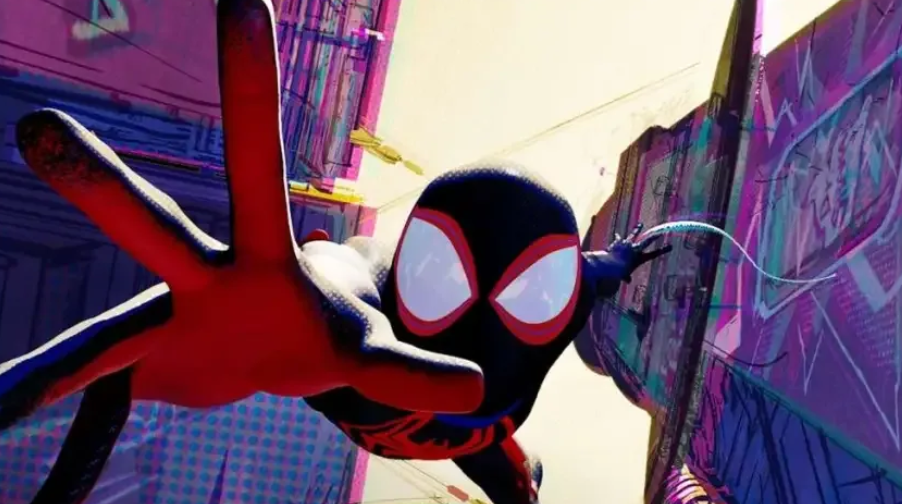

Sony’s decision to end the Spider-Verse era in 2027 is sending shockwaves across the entertainment world—but the reality behind the headlines is far more strategic than it appears. While phrases like “Spider-Man cancelled” are trending, Sony is not shutting down its most valuable superhero franchise. Instead, it is making a calculated move that could reshape Spider-Man’s future for the next decade.
The upcoming Spider-Man: Beyond the Spider-Verse will mark the final chapter of the Miles Morales trilogy, closing a storyline that began in 2018 and redefined superhero animation. But rather than signaling an ending, this move represents a pivot—one that could expand the Spider-Man universe in ways we haven’t seen before.
1. Sony Is Ending the Miles Morales Story at Its Peak
The biggest headline is clear: the Spider-Verse trilogy is ending in 2027. But unlike typical franchise fatigue or box office failure, this is a deliberate creative decision. Producers Phil Lord and Chris Miller have confirmed that Beyond the Spider-Verse is designed to conclude the Miles Morales arc, giving the story a definitive and emotional ending.
This matters because the Spider-Verse films weren’t just successful—they changed the industry. Into the Spider-Verse introduced a groundbreaking animation style blending 3D and hand-drawn techniques, while Across the Spider-Verse pushed storytelling and visual experimentation even further.
Instead of dragging the story across multiple sequels, Sony is choosing to end it on its own terms. That’s a rare move in modern Hollywood, where franchises are often stretched as long as possible. According to recent insights from producers, the goal is to deliver a powerful conclusion rather than dilute the impact of the trilogy (source).
For fans, this means one thing: expect Beyond the Spider-Verse to be the most emotional and high-stakes entry yet.
2. A Strategic Shift After Mixed Success in Sony’s Universe
To understand this decision fully, you have to look at Sony’s broader Spider-Man strategy over the past few years. While the animated Spider-Verse films became massive hits, Sony’s live-action spin-off universe struggled to maintain consistency.
Projects like Kraven the Hunter and Madame Web were intended to expand the Spider-Man world beyond Peter Parker. However, they faced criticism for weak storytelling, lack of cohesion, and difficulty connecting with audiences. Without a central emotional anchor like Spider-Man himself, these films failed to build lasting momentum.
At the same time, Sony saw success in select areas. The Venom films performed well commercially, and the Spider-Verse animation became a cultural phenomenon. This contrast made one thing clear: not every direction was working equally.
As a result, Sony appears to be refocusing on what audiences actually love—strong characters, emotional storytelling, and visually unique experiences. Ending the Miles Morales trilogy is part of that recalibration. It allows Sony to stop relying on one storyline and instead build a broader, more flexible universe.
3. The Rise of Spin-Offs and a Bigger Multiverse Future
While one chapter is ending, several new ones are already in development. Sony is not abandoning the Spider-Verse—it is expanding it.
Multiple spin-off projects are reportedly in the works, including films centered around Spider-Gwen and Spider-Punk. These characters gained strong fan followings in previous movies, making them natural candidates to lead their own stories.
Additionally, Sony is pushing into streaming with projects like Spider-Noir, starring Nicolas Cage, which is set to release in 2026. This marks a significant shift, as Spider-Man stories are no longer limited to theatrical releases but are expanding across platforms.
This approach gives Sony creative freedom. Instead of one linear storyline, the studio can explore multiple tones, timelines, and character arcs within the multiverse. It also reduces risk—if one project underperforms, others can still succeed.
At the same time, Beyond the Spider-Verse is still being developed with high expectations. Producers have hinted at deeper emotional storytelling and major visual upgrades, including enhancements to characters like the villain Spot (source).
4. Spider-Man’s Dual Strategy: Animation + MCU Collaboration
Another key detail often overlooked is that Sony is running two Spider-Man strategies at once. On one side, it controls its own animated and spin-off universe. On the other, it continues collaborating with Marvel Studios for the live-action Spider-Man films.
This means fans will still see Peter Parker on the big screen, with Spider-Man: Brand New Day scheduled for release in 2026. That film keeps the MCU-connected version of Spider-Man active, ensuring the character remains at the center of global pop culture.
By balancing animation, spin-offs, streaming projects, and MCU collaborations, Sony is building a multi-layered ecosystem. This is no longer just a movie franchise—it’s becoming a long-term content strategy.
Market Reaction and Fan Sentiment
Fan reactions have been mixed but intense. Some are disappointed that the Miles Morales story is ending, especially given how beloved the character has become. Others see this as a smart move, allowing the trilogy to remain iconic rather than overstretched.
At the same time, excitement is building around what comes next. Characters like Spider-Gwen have strong standalone potential, and the idea of exploring different Spider-People across timelines keeps the concept fresh.
The biggest takeaway from fan discussions is clear: audiences still want more Spider-Man content—but they want it done right.
Outlook: End of an Era or Beginning of Something Bigger?
On the surface, Sony ending the Spider-Verse trilogy might feel like a bold and risky move. But when viewed in context, it looks more like a calculated evolution.
The Miles Morales trilogy achieved something rare—it delivered innovation, emotional storytelling, and critical acclaim in a genre that often struggles to feel new. Ending that story with purpose could preserve its legacy for years to come.
At the same time, Sony is positioning itself for expansion. With spin-offs, streaming content, and continued MCU collaboration, the Spider-Man universe is not shrinking—it’s growing in multiple directions.
When Spider-Man: Beyond the Spider-Verse arrives in 2027, it won’t just conclude a trilogy. It will mark the end of one of the most influential superhero stories of its generation—and the beginning of a new era that could redefine Spider-Man all over again.

Make Swikblog your go-to source on Google for reliable updates, smart insights, and daily trends.