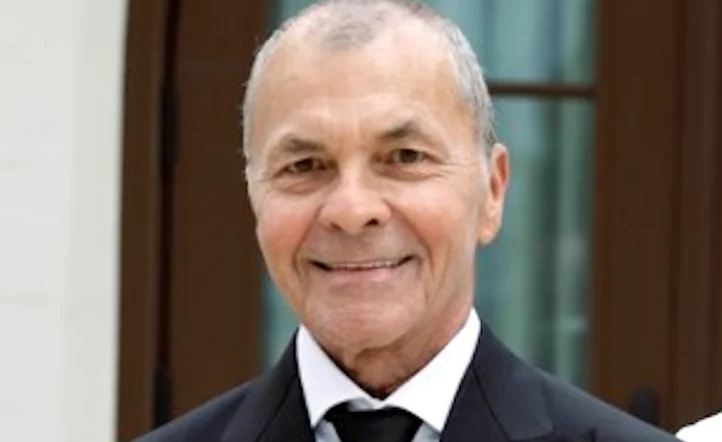
The man from a high-profile Victorian family whose identity was shielded by the courts has been publicly named as Tom Silvagni, the 23-year-old son of AFL great Stephen Silvagni and television presenter Jo Silvagni. A Victorian County Court jury recently found him guilty of two counts of rape, and on Thursday a judge lifted a long-running suppression order that had prevented the media from reporting his name or family connections.
The decision has ignited a national debate about open justice, media reporting and the treatment of sexual assault survivors, while also placing fresh scrutiny on how courts balance an offender’s mental health and reputation against the public’s right to know.
What the jury found Tom Silvagni did
The convictions relate to an incident in the early hours of 14 January 2024 at the Silvagni family home in Melbourne. According to evidence outlined in court and reported by outlets including ABC News, the victim had earlier engaged in consensual sex with her boyfriend at the property before he ordered an Uber and left.
Prosecutors told the court that after the boyfriend departed, Silvagni went into the dark bedroom and pretended to be the boyfriend. He then digitally assaulted the woman twice without her consent. The Crown described the attack as rape “through deception”, arguing that the complainant believed she was still with her partner until she realised something was wrong and told the man to stop.
In the days that followed, Silvagni doctored an Uber receipt to suggest the boyfriend had stayed at the house for longer, an act the prosecution said was designed to muddy the timeline and cast doubt on the woman’s account. Coverage from The Guardian and other outlets notes that this falsified document became a key point in the case, raising questions about Silvagni’s credibility as a witness.
Silvagni maintained his innocence throughout the trial and denied ever entering the room after the boyfriend left. His defence team argued that the complainant was mistaken about who assaulted her. The jury rejected that argument and, after deliberating, returned guilty verdicts on both rape charges.
How a powerful family name stayed hidden for months
Until now, Australian media were only able to describe the offender as a member of a “high-profile Victorian family”. The suppression order meant journalists could not report his name, his work as an AFL player manager, or his ties to one of football’s best-known dynasties – his father Stephen, a Carlton premiership star; his mother Jo, a former TV presenter; and his brother Jack, a current AFL player.
The order was originally granted on the basis of mental health concerns and fair-trial issues, with judges accepting that intense public scrutiny might affect Silvagni’s ability to participate in proceedings. Over time, however, media organisations and open-justice advocates argued that the cloak of secrecy had become harder to justify, especially after a jury had already delivered its guilty verdict.
According to reporting by Sky News Australia and others, the judge ultimately found that public interest, the seriousness of the crime and the level of speculation already circulating in the community weighed strongly in favour of lifting the order.
Open justice vs privacy: the legal battle behind the scenes
The case has become a high-profile test of how far name suppression can be stretched in the age of social media. For more than a year, details of the trial circulated online in coded form, with many users speculating about the identity of the “high-profile” accused while mainstream outlets were legally gagged from naming him.
Silvagni’s lawyers repeatedly argued that publishing his name would cause serious harm to his mental health and put him at risk in custody, and that it would inflict unnecessary damage on his family. Media organisations countered that the courts should not create a two-tier system where those with famous surnames are protected in ways ordinary defendants are not.
In the end, a Victorian County Court judge ruled that those arguments could no longer outweigh the principles of transparency, deterrence and community confidence in the courts. With the suppression order lifted, the case can now be discussed in full – from the nature of the offending to the powerful network that had, until today, shielded Silvagni from public accountability.
The AFL connection and community reaction
The Silvagni name is deeply woven into the history of Australian rules football. Stephen Silvagni is a Carlton legend and Hall of Famer, while his late father Sergio is remembered as one of the club’s greats. Jack Silvagni has carved out his own AFL career, and Tom himself worked in player management at Kapital Sports Group.
That heritage has made the case particularly confronting for parts of the AFL community, which is still grappling with ongoing debates about gendered violence, player culture and off-field behaviour. While no club has been accused of wrongdoing in this matter, advocates say the case underscores how power, status and sporting fame can complicate the path to justice for survivors.
Early reactions from fans, commentators and women’s safety organisations have focused on the importance of the victim’s persistence in seeing the matter through to trial, and on the need for robust support services for people reporting sexual assault.
What happens next for Tom Silvagni?
Silvagni is currently in custody and is expected to face a pre-sentence hearing in the coming days, where prosecutors and the defence will make submissions on the appropriate penalty. In Victoria, rape carries a maximum sentence of 25 years’ imprisonment, with a standard sentence of 10 years for the most serious examples of the offence.
Sentencing will take into account a range of factors, including the gravity of the deception, the victim’s ongoing trauma, any remorse shown and the steps Silvagni has taken – if any – towards rehabilitation. It remains open to his legal team to pursue an appeal, although no such move has yet been confirmed.
If this story affects you, support is available
This case contains distressing details of sexual violence. In Australia, help is available 24/7 from 1800RESPECT on 1800 737 732 and through local crisis services. Readers are urged to seek support if they have been affected by similar experiences.
You may also like

Make Swikblog your go-to source on Google for reliable updates, smart insights, and daily trends.