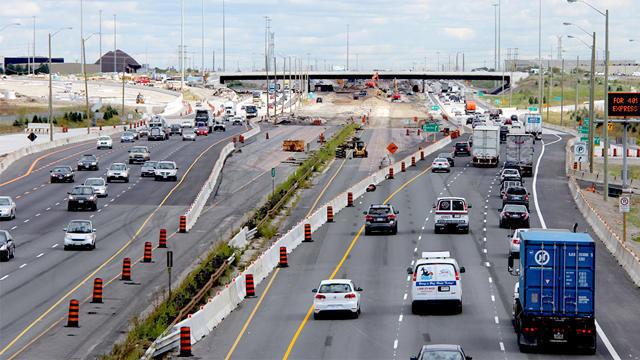

Toronto drivers face another difficult night on the region’s busiest highways as planned maintenance and construction affect six major routes, including Highway 401 and the Queen Elizabeth Way.
Work scheduled across Highways 400, 401, 404, 409 and 427, together with the QEW, is expected to produce a mix of lane reductions, ramp closures and restrictions on express or collector lanes. Most of the disruptive work is concentrated overnight, but congestion can begin earlier as traffic builds around the affected interchanges.
The notices do not mean that all six highways are closing in full. Each restriction applies to a particular direction, lane, ramp or section of road. That distinction matters on a network where a closed entrance ramp or express-lane segment can redirect a large volume of vehicles onto already busy collector lanes and nearby streets.
Overnight work targets major Toronto interchanges
Among the most significant restrictions is the planned closure of the Highway 401 eastbound on-ramp at Highway 400. The nightly maintenance window is scheduled from 11 p.m. to 5 a.m. between August 11 and August 13, requiring drivers approaching the interchange to use another entrance.
On Highway 401 westbound, maintenance is also scheduled on the collector lanes between Hogg’s Hollow Bridge and Avenue Road. One left lane is expected to close from 11 p.m. on August 11 until 5 a.m. on August 12.
A separate Highway 401 restriction affects eastbound express traffic between Leslie Street and Highway 404. One right lane is scheduled to close nightly from 10 p.m. until 5 a.m. through August 15. The location is particularly sensitive because it sits beside the Highway 404 and Don Valley Parkway connection, where lane changes and merging traffic can amplify delays.
Airport-bound and Etobicoke traffic may also encounter restrictions on Highway 409. Two left lanes on the eastbound highway between Highway 427 and Attwell Drive are scheduled to close nightly from 10 p.m. to 5 a.m. through August 15.
On Highway 427 southbound, the Finch Avenue off-ramp is expected to close nightly between 10 p.m. and 5 a.m. from August 11 through August 15. Drivers who normally use that exit will need to follow posted detours and allow additional time for a different interchange.
Additional planned work affecting sections of Highway 400, Highway 404 and the QEW may involve alternating lane closures or short overnight restrictions. Because contractors can reschedule work in response to weather or operational conditions, motorists should confirm their individual route through the province’s live Ontario 511 traffic service shortly before leaving.
Delays can spread beyond the closed lane
The largest disruption may not always occur directly beside the work zone. Closing a ramp at Highway 400 or Highway 427 can push drivers towards the next interchange, while restrictions around Highway 404 can increase pressure on Leslie Street, Yonge Street and the Don Valley Parkway approaches.
Motorists travelling to or from Toronto Pearson International Airport should pay particular attention to the Highway 409 and Highway 427 notices. Both roads carry traffic between the airport, Highway 401 and western Toronto, leaving fewer convenient alternatives when a ramp or multiple lanes are unavailable.
The timing also creates a potential problem for late-shift workers, commercial drivers and travellers returning after evening events. Although most scheduled closures begin after the main afternoon commute, queues can persist into the work period, especially where traffic must merge from express lanes into collectors.
Drivers can reduce the risk of an unexpected detour by checking the direction of travel, the precise interchange and whether the notice applies to main lanes, collectors or a ramp. The City of Toronto road-restrictions service also lists municipal closures that may affect routes used to avoid the highways.
Posted signs and instructions at the work zones take priority over advance schedules. With several restrictions clustered around major connections, even a limited overnight closure could add substantial time to a journey across Toronto and the GTA.

Make Swikblog your go-to source on Google for reliable updates, smart insights, and daily trends.