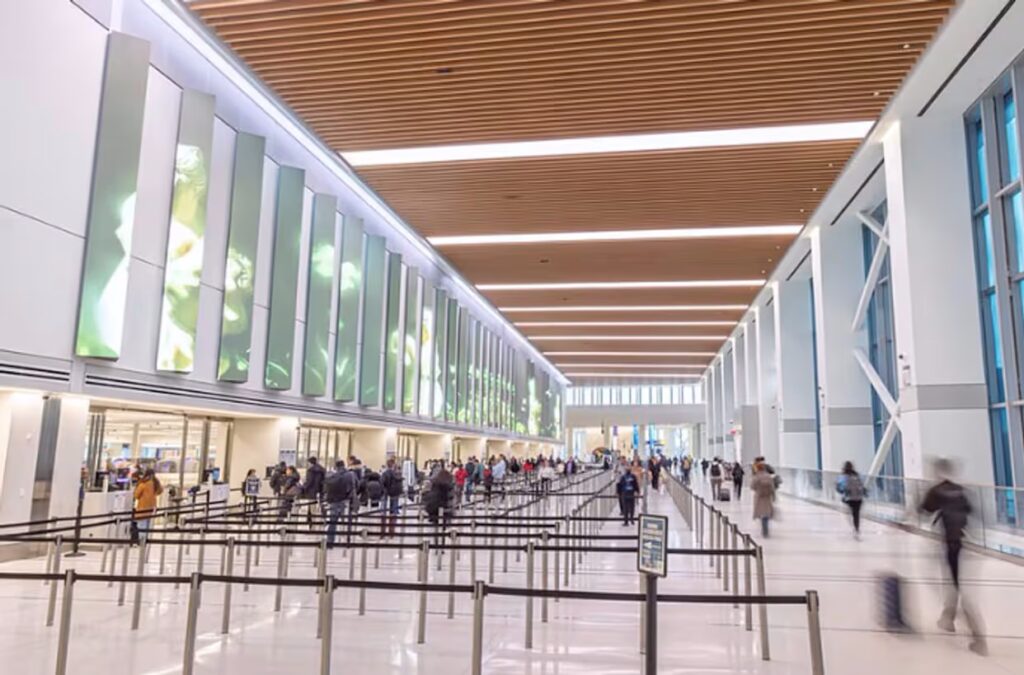

Air travel across the United States is facing a major disruption in 2026, with TSA wait times surging sharply at key airports like John F. Kennedy (JFK), Newark Liberty (EWR), and LaGuardia (LGA). What was once a routine 15–30 minute security process has now ballooned into delays exceeding 90 minutes — and in some cases, even crossing the two-hour mark.
The sudden spike in wait times — estimated to have surged as much as 200% at some checkpoints — is being driven by a deepening staffing crisis within the Transportation Security Administration (TSA). As the Department of Homeland Security funding stalemate continues, the impact is now clearly visible to millions of travelers nationwide.
Why TSA Wait Times Are Surging 200%
The root of the chaos lies in a prolonged government funding deadlock that has left approximately 50,000 TSA officers working without pay since mid-February. With no resolution in sight, the situation has rapidly escalated into a full-blown staffing crisis.
According to multiple reports, more than 400 TSA officers have already quit during this period, while thousands more are skipping shifts or calling out due to financial pressure. Some officers have even taken second jobs just to cover basic living expenses, including rent, food, and transportation.
This sharp decline in available staff has directly reduced the number of active security lanes at airports. Fewer officers mean fewer checkpoints operating — and that translates into longer lines, slower movement, and growing frustration among passengers.
JFK, Newark, LaGuardia Facing Severe Delays
At New York’s busiest airports, the impact has been immediate and severe. JFK Airport has emerged as one of the hardest hit, with some passengers reporting wait times of 75 to 90 minutes — and in extreme cases, even longer. Travelers described the situation as “complete chaos,” with lines forming in multiple directions and little coordination.
At LaGuardia Airport, general TSA lines were already exceeding 20 minutes earlier in the week, but real-world conditions quickly worsened. At Terminal B, passengers reported wait times approaching an hour, with lines stretching across the terminal during peak morning hours.
Newark Liberty International Airport has also seen fluctuating delays, with wait times ranging from 25 to 30 minutes under normal pressure — but rising significantly during rush periods due to staffing shortages.
One major concern for travelers is the unpredictability. Official airport wait-time estimates often lag behind real conditions, meaning passengers may arrive expecting moderate delays only to face hour-long queues.
Nationwide Airport Chaos Spreads
The crisis is not limited to New York. Airports across the United States — including Atlanta, Houston, New Orleans, and Chicago — are reporting extreme wait times ranging from two to three hours.
In some cases, security lines have stretched into parking garages and outdoor areas due to overcrowding. At Atlanta’s Hartsfield-Jackson airport, travelers were advised to arrive up to five hours early as staffing shortages forced many screening lanes to shut down.
Officials have warned that if the situation worsens, smaller airports could face temporary shutdowns due to insufficient staffing. The ripple effects are already visible, with thousands of flight delays and cancellations being reported nationwide.
Passengers Missing Flights As Lines Spiral
Real-life experiences highlight just how severe the disruption has become. One passenger at JFK reported waiting over 90 minutes in line, only to miss their flight entirely. Others described a lack of line management, with crowds forming from multiple directions and confusion about where to queue.
At some airports, travelers were redirected multiple times between different lines, adding to delays and frustration. In New Orleans, passengers reported standing in line for over 90 minutes before even reaching the main security checkpoint — with additional waiting time still ahead.
For many, what used to be a simple airport experience has turned into a stressful and unpredictable ordeal.
Travelers Trying To “Hack” TSA Lines
As delays grow longer, some passengers are attempting to bypass congestion using unconventional methods. These include switching to international terminals, signing up for TSA PreCheck or CLEAR on the spot, or using new facial recognition-based Touchless ID systems.
However, airport officials have warned against these “line hacks,” noting that they often create even more congestion and confusion. In some cases, international checkpoints became more crowded than domestic ones due to passengers attempting to skip lines.
While services like TSA PreCheck and CLEAR can still offer faster processing, they are not guaranteed solutions during extreme staffing shortages.
Government Response And Controversy
In response to the growing crisis, officials have proposed deploying ICE agents to assist TSA operations at certain airports. These agents would primarily help with crowd control and line management rather than screening duties.
The move has sparked criticism from labor unions, which argue that trained TSA officers cannot be easily replaced and that the focus should remain on resolving the funding issue and paying workers.
Meanwhile, union leaders have warned that conditions will continue to deteriorate if Congress does not act quickly, with more workers likely to quit or miss shifts.
How To Check TSA Wait Times Before You Travel
With delays becoming increasingly unpredictable, checking wait times before heading to the airport is now essential. Travelers can use official airport websites and TSA resources to monitor real-time conditions.
You can check updates directly on the TSA official website or through airport-specific pages like JFK Airport.
These platforms provide live updates, but passengers should still expect sudden changes depending on staffing levels and passenger volume.
What Travelers Should Do Right Now
Given the current situation, travelers need to plan more carefully than ever. Experts recommend arriving at least three hours early for domestic flights — and even earlier during peak travel periods.
Passengers should also complete check-in procedures online, pack efficiently to avoid additional screening delays, and proceed directly to security upon arrival.
The most important takeaway is simple: TSA delays are no longer predictable. What used to be a quick process can now take hours, and missing a flight is a real possibility.
Outlook: Delays Likely To Get Worse
With spring travel demand rising and the funding crisis unresolved, the outlook remains uncertain. Officials have warned that the situation could worsen in the coming weeks, especially as more travelers take to the skies for holidays and vacations.
Unless a resolution is reached soon, long TSA lines, airport congestion, and travel disruptions are expected to remain a major issue across the United States.
For now, preparation is the only defense. Travelers who plan ahead, monitor wait times, and arrive early will have the best chance of avoiding the worst of the chaos.

Make Swikblog your go-to source on Google for reliable updates, smart insights, and daily trends.