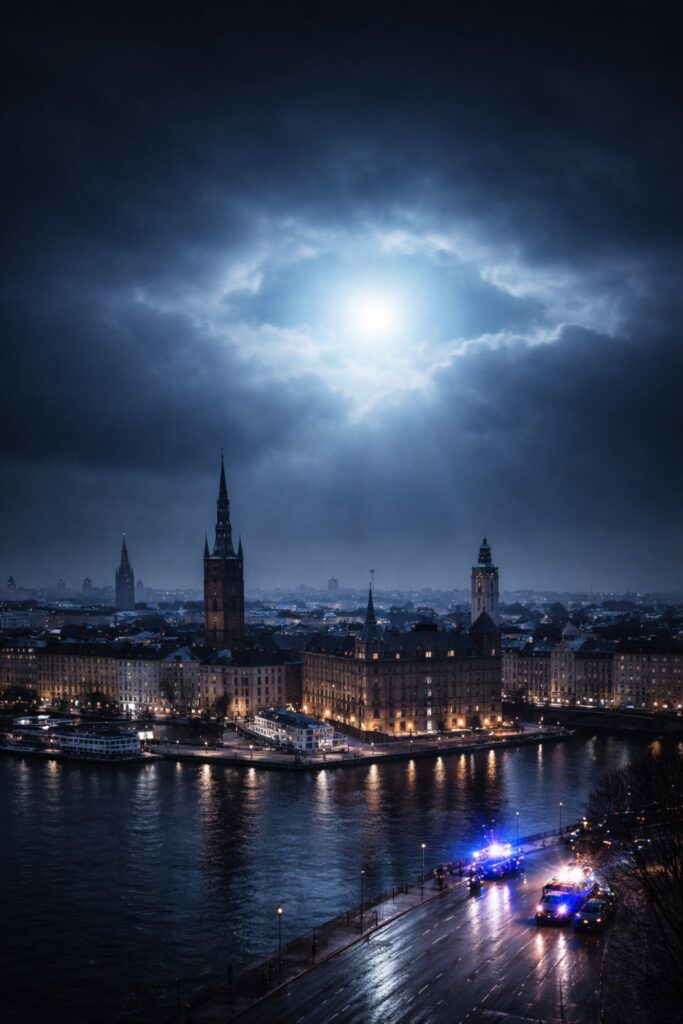

Stockholm woke to a strange mix of mystery and unease overnight after reports of an unusual light phenomenon in the sky were followed by emergency alerts about a possible explosion and a separate report of a loud bang in central areas of the city.
In the space of a few hours, social feeds filled with blurry photos, glowing halos, and short videos showing a bright patch of sky—while locals in Stockholm described hearing a sudden “smäll” (bang) that prompted calls to emergency services. Swedish outlets quickly pushed the breaking alerts, and residents began asking the same question: were these events connected, or was Stockholm simply hit by two unrelated incidents on the same night?
What people reported seeing in the sky
The first wave of attention came from sightings of an “unusual light phenomenon” overhead. These kinds of reports in Sweden can be triggered by several perfectly ordinary causes—yet they rarely feel ordinary when you witness them.
Common explanations for sudden sky-glow moments include:
- Meteors / fireballs that briefly brighten the sky and fade within seconds
- Atmospheric optics such as halos, light pillars, or ice-crystal reflections
- Cloud reflections of strong ground lighting (including stadiums, worksites, or waterfront lighting)
- Aircraft or distant flares distorted by cloud layers
Even when the explanation is harmless, the timing can feel unsettling—especially when it coincides with other emergency alerts in the same city.
Explosion alert and “loud bang” reports in central Stockholm
Not long after the sky reports circulated, emergency services received alerts about a possible explosion in central Stockholm—followed by another alert described as a loud bang. Early “larm” notifications often appear before authorities confirm what happened, which is why initial headlines can sound dramatic while details are still being checked.
In many European cities, “bang” calls can ultimately be linked to everyday causes such as construction work, fireworks, vehicle incidents, or electrical faults. However, police still treat loud-bang reports seriously until they rule out danger.
If you’re tracking confirmed updates, the most reliable place to check is the official Swedish Police communications page: Swedish Police (Polisen) updates.
Are the sky lights and the explosion alerts connected?
Right now, it’s safer to treat these as two separate breaking developments unless authorities confirm a link. When multiple alerts happen close together, it’s easy for online speculation to stitch them into a single storyline. But in fast-moving situations, that can create confusion.
A practical way to think about it:
- The sky phenomenon could be a natural or atmospheric event that looks dramatic but poses no direct threat.
- The explosion/bang alerts are location-specific incidents that emergency services investigate based on calls, sounds, and on-scene checks.
What makes this story viral is the overlap: a glowing sky is already attention-grabbing—add “explosion alert” to the night, and it becomes a citywide mystery that people feel compelled to share.
What to do if you’re in Stockholm and hear a bang
If you’re in Stockholm (or anywhere in Sweden) and hear something that sounds like an explosion:
- Move to safety and avoid approaching the area out of curiosity.
- Call emergency services if you suspect immediate danger.
- Follow official updates rather than viral posts or unverified clips.
- Don’t share exact locations of police activity in real time if it could interfere with response efforts.
Why stories like this spread so fast
“Sky mystery” stories travel fast because they combine visual intrigue with a shared public experience—people feel they might have missed something important. Add an emergency alert and the emotional temperature rises: uncertainty + proximity + overnight timing is the perfect viral recipe.
It also highlights how modern breaking news works: alerts publish quickly, details arrive gradually, and the public tries to fill the gaps in real time. The smartest approach is to let the investigation and official updates lead, and treat early headlines as developing rather than final.
Quick FAQ
Was it a meteor?
It’s possible. Meteors can create a brief glow, flash, or moving streak—especially if cloud layers reflect the light. Confirmation usually comes later from local astronomy groups or official monitoring networks.
Was there a confirmed explosion?
Early alerts can refer to a “possible explosion” before confirmation. For verified updates, follow official communications and reputable breaking-news services.
Could the loud bang be fireworks or construction?
Yes—those are common causes of loud-bang calls in cities. Police still investigate because similar sounds can come from more serious incidents.
For more breaking updates and explainers, visit Swikblog. You may also like: North London Derby (Swikblog trending).
Written by Swikriti
Developing reports referenced from Swedish breaking news aggregation: Omni.

Make Swikblog your go-to source on Google for reliable updates, smart insights, and daily trends.