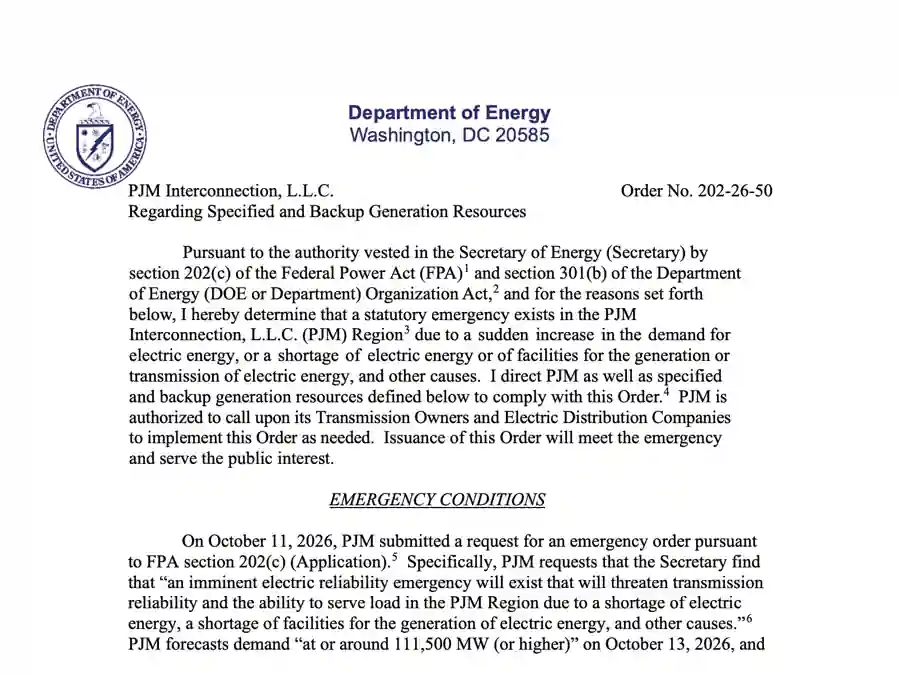

The U.S. Department of Energy (DOE) has issued an emergency order for the PJM Interconnection electricity grid, serving approximately 65 million people across parts of 13 states and Washington, D.C., as rising electricity demand and reduced generating capacity threaten grid reliability.
Emergency Order No. 202-26-50, issued October 12, takes effect October 13 and runs through October 16, 2026. It authorizes additional power generation and emergency backup resources to help prevent electricity shortages.
PJM has also issued an Energy Emergency Alert Level 1 (EEA 1) for October 13. The alert signals tightening electricity supplies, although no regionwide rolling blackout schedule has been announced.
13 States and Washington, D.C. Covered by Emergency Order
The PJM network covers all or parts of Delaware, Illinois, Indiana, Kentucky, Maryland, Michigan, New Jersey, North Carolina, Ohio, Pennsylvania, Tennessee, Virginia and West Virginia, along with Washington, D.C.
The emergency applies to PJM’s operating territory, not every electricity customer within those states. Local utility conditions may differ.
Electricity Demand Could Reach 111,500 MW
Documents associated with the emergency indicate that demand could reach approximately 111,500 megawatts or more on October 13.
Unusually warm October weather, planned generator maintenance and transmission outages have reduced the system’s flexibility during a period of elevated consumption.
Similar supply concerns have emerged internationally. During a separate episode, Britain’s electricity grid faced pressure during a 40°C heatwave, demonstrating how extreme temperatures can complicate electricity planning.
Social media claims suggest PJM could have approximately 900 MW of reserve capacity remaining, but that figure has not been independently verified as the grid’s current operating reserve.
PJM Issues EEA 1 Alert and Recalls Generators
PJM issued a Maximum Generation Emergency/Load Management Alert classified as EEA 1 for October 13, indicating that additional operational measures may be needed to maintain electricity supplies.
The grid operator also recalled generating units from planned maintenance, with October 14 identified as a deadline for affected resources to return.
These steps are designed to increase available electricity before conditions deteriorate into a more serious emergency.
Origin Electricity Bills Rise as Daily Supply Charges Surge Despite Power Price Cuts
Victoria Electricity Bills Fall From July 2026: $84 Relief for Households
DOE Authorizes Emergency Power Generation
The federal order directs PJM to dispatch specified generating units when necessary to maintain reliability. Certain emergency operations may receive limited relief from applicable environmental restrictions under the order’s conditions.
The authorization does not automatically require plants to operate at maximum output or provide unrestricted exemptions from pollution rules.
The official Department of Energy emergency order details the authorization and its effective dates.
Data Centers Could Be Ordered Onto Backup Generators
Under specified emergency conditions, PJM may direct eligible data centers, industrial facilities and other large electricity users to operate backup generators.
This last-resort measure could reduce pressure on the regional network before or during an EEA 3 emergency.
However, the authorization does not mean all data centers have already disconnected from the grid.
Rolling Blackouts Remain a Last-Resort Measure
An EEA 1 alert indicates tightening electricity supplies, while EEA 2 and EEA 3 represent progressively more serious emergencies. Severe shortages can eventually require controlled power interruptions.
A previous power outage in St. George, Utah led to temporary rolling blackouts after a transmission problem. That separate incident illustrates how actual outages differ from precautionary grid alerts.
There is currently no confirmed regionwide rolling blackout schedule associated with the October 13 PJM emergency.
October 13–16 Emergency Timeline
- October 11: PJM requests federal emergency assistance.
- October 12: DOE issues Order No. 202-26-50; PJM announces an EEA 1 alert.
- October 13: Emergency authorization begins amid elevated electricity demand.
- October 14: Deadline for certain generators to return from maintenance.
- October 16: Federal order is scheduled to expire unless extended.
Electricity Customers Advised to Monitor Utility Updates
Residents should monitor their electricity providers for outage warnings, conservation requests and service updates. Charging essential devices, keeping emergency lighting available and reviewing medical equipment backup plans are sensible precautions.
The immediate concern is whether PJM can maintain sufficient electricity reserves through October 16 without escalating its emergency alert level. Any confirmed outage instructions should come directly from PJM or local electricity utilities.

Make Swikblog your go-to source on Google for reliable updates, smart insights, and daily trends.