
Updated: July 4, 2026
South Australia has introduced a 90-day exclusion zone to protect the world’s largest known breeding aggregation of giant Australian cuttlefish near Whyalla, after scientists recorded an extraordinary collapse in this year’s breeding population. The temporary restrictions came into effect on July 1, 2026 and limit recreational water activities across part of the Upper Spencer Gulf Marine Park during the species’ most important breeding period.
The decision follows monitoring by the South Australian Research and Development Institute (SARDI), which found fewer than 50 giant Australian cuttlefish during recent surveys in an area that normally hosts tens of thousands each winter. Conservation officials say reducing human disturbance now could improve breeding success while researchers continue investigating what caused the sharp decline.
What the temporary exclusion zone means
The protected area stretches between Black Point and Stony Point near Whyalla. Until late September, people cannot enter the water for recreational purposes inside the exclusion zone.
The restrictions apply to swimming, snorkelling, scuba diving, freediving, recreational diving, boat anchoring and similar activities that could disturb breeding adults, eggs or newly hatched cuttlefish.
Authorities have warned that serious breaches of the exclusion zone may attract penalties of up to A$100,000 under South Australia’s marine park legislation.
Official maps and updates are available from the South Australian Department for Environment and Water.
Why officials acted so quickly
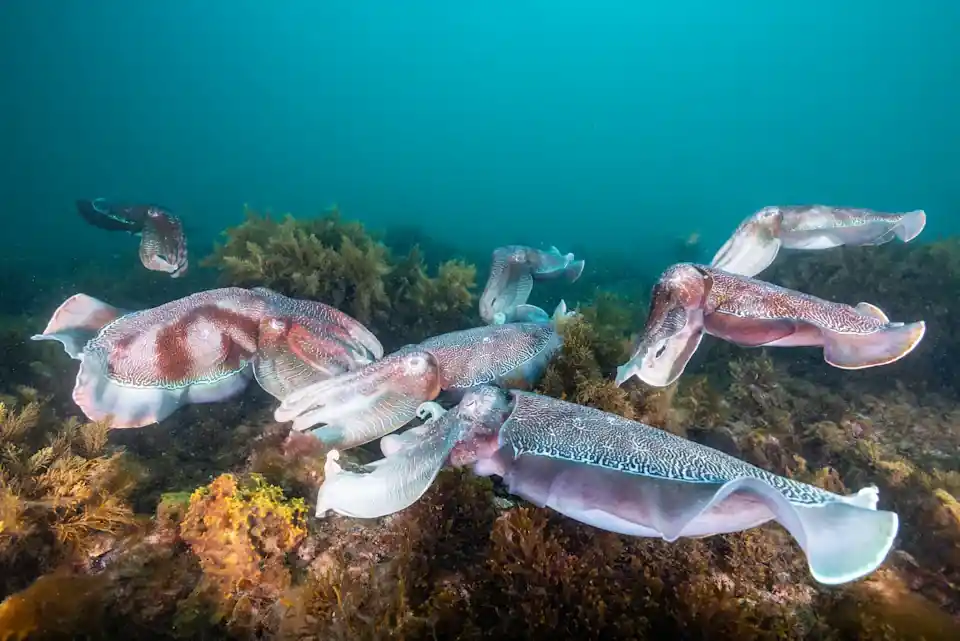
Whyalla’s winter breeding aggregation is internationally recognised as the world’s largest gathering of giant Australian cuttlefish. During a typical season, the rocky reefs near Point Lowly become crowded with males competing through spectacular colour displays while females lay thousands of eggs beneath submerged rock ledges.
This year has been dramatically different. Surveys have identified fewer than 50 breeding animals in the monitored area, raising concerns that the population could experience one of its weakest breeding seasons since long-term scientific monitoring began in 1998.
Historical surveys show how much numbers can vary. Around 13,500 cuttlefish were recorded during the previous major low in 2013 before the population recovered to approximately 247,000 in 2020. About 64,000 animals were counted last year, making this season’s decline particularly alarming.
Emily Bourke, South Australia’s Minister for Tourism and Environment, said the temporary exclusion zone is intended to give the remaining breeding animals the best possible opportunity to reproduce without unnecessary disturbance.
Scientists are still investigating the decline
Researchers have not identified a single confirmed cause for the unusually low numbers, but attention has focused on the widespread harmful algal bloom that has affected South Australian waters since March 2025.
The bloom has been linked to significant marine wildlife deaths across multiple species. Scientists are also examining whether changing ocean temperatures, food availability and broader environmental conditions may have contributed to the reduced breeding aggregation.
Because investigations remain ongoing, authorities describe the exclusion zone as a precautionary conservation measure rather than a response to one confirmed cause.
Why the breeding season matters
The Whyalla aggregation is more than a seasonal wildlife attraction. It plays a critical role in the life cycle of the giant Australian cuttlefish, with adults returning to the rocky reefs each winter to mate before completing their natural life cycle.
Eggs laid during the breeding season develop over several months before young cuttlefish emerge, making the current breeding window essential for rebuilding future populations.
Marine biologists say repeated disturbance from divers, swimmers or anchored boats can add unnecessary stress when breeding numbers are already exceptionally low.
Impact on tourism and local businesses
The annual cuttlefish season normally attracts divers, underwater photographers and marine wildlife enthusiasts from around Australia and overseas, providing an important economic boost for Whyalla during winter.
Several tour operators have already adjusted schedules after the disappointing breeding numbers became apparent. While the restrictions are expected to reduce visitor activity in the short term, many businesses have publicly supported the conservation measures in the hope of protecting future seasons.
The South Australian Government has confirmed that eligible businesses affected by the ongoing algal bloom may apply for Algal Bloom Small Business Support Grants to help offset some of the economic impact.
Existing conservation rules remain in force
The temporary exclusion zone adds to protections already operating within the Upper Spencer Gulf Marine Park.
Fishing has long been prohibited inside sanctuary zones, while separate regulations introduced in late 2025 significantly increased penalties for illegally taking giant Australian cuttlefish from South Australian waters.
These long-term protections are intended to safeguard breeding adults, eggs and juvenile cuttlefish beyond this year’s conservation response.
What visitors should know before travelling
Whyalla remains open to visitors, but anyone planning marine activities near Point Lowly should check the latest marine park boundaries before entering the water.
Dive operators may also have revised schedules depending on current conditions and wildlife sightings. Contacting operators before travelling can help avoid unexpected cancellations.
Seasonal access restrictions have become an increasingly common conservation tool across Australia when vulnerable wildlife requires additional protection. Similar temporary measures have been used to reduce disturbance at sensitive breeding habitats, including Newcastle Beach’s protected shorebird nesting area.
Monitoring will continue throughout the breeding season
The exclusion zone is expected to remain in place for up to 90 days, although the South Australian Government says it could be reviewed if monitoring shows a significant improvement in cuttlefish numbers.
Scientists will continue surveying the breeding aggregation through the remainder of the winter season, which typically extends into mid-August. The findings will help determine whether the population begins recovering naturally or whether additional conservation measures may be required in the future.

Make Swikblog your go-to source on Google for reliable updates, smart insights, and daily trends.