
Written by: Mark Lefebvre, Weather Correspondent
Updated using Environment and Climate Change Canada and regional forecast data for 24–28 November 2025.
Toronto, Monday 24 November — Canada’s official Thanksgiving falls in October, but late November has become a second unofficial season of gatherings. Between US Thanksgiving, Black Friday sales and early Christmas parades, millions of Canadians will be travelling, shopping and heading to outdoor events this week. The weather story is a classic cross-country mix: Pacific rain, Prairie deep freeze, and a messy blend of showers and flurries across central and eastern Canada.
The country’s authoritative source for forecasts and severe weather alerts remains Environment and Climate Change Canada’s public weather service, which provides city-by-city updates and real-time alert maps across every province and territory.
For those eyeing festive events such as the Santa Claus Parade Canada 2025, or planning long drives for family dinners, this week’s pattern is a reminder that winter is no longer lurking in the background — it is arriving in stages from west to east.
West Coast: Classic Pacific November, with Persistent Rain
On the West Coast, including Vancouver and much of coastal British Columbia, the theme is familiar: cloud, showers and periods of steadier rain rather than deep cold. Forecasts for Vancouver show a string of days with showers or rain from Monday through Thursday, with daytime highs generally in the mid-single digits to around 10 °C and nights staying comfortably above freezing.
Farther up the coast and on higher ground — including parts of Vancouver Island and inland mountain passes — temperatures are marginal enough for wet snow or sleet at times, particularly in the mornings. Drivers heading across mountain routes toward the Interior should be prepared for changing surfaces: rain at sea level, but slush or snow higher up.
Prairies: Snow, Wind and a True Winter Chill
Across Alberta, Saskatchewan and Manitoba, winter is already in charge. In cities such as Calgary, the week begins with
By Thursday and Friday — the peak of US Thanksgiving and Black Friday travel — large parts of the Prairies face a combination of cloud, biting windchill and occasional light snow. For anyone commuting early, hauling shopping bags between car parks, or travelling between cities, the advice from forecasters is simple: treat this as mid-winter, not late autumn, with layered clothing, emergency kits in vehicles and extra journey time.
Central Canada: Mild Start, Then Rain, Flurries and a Sharper Drop
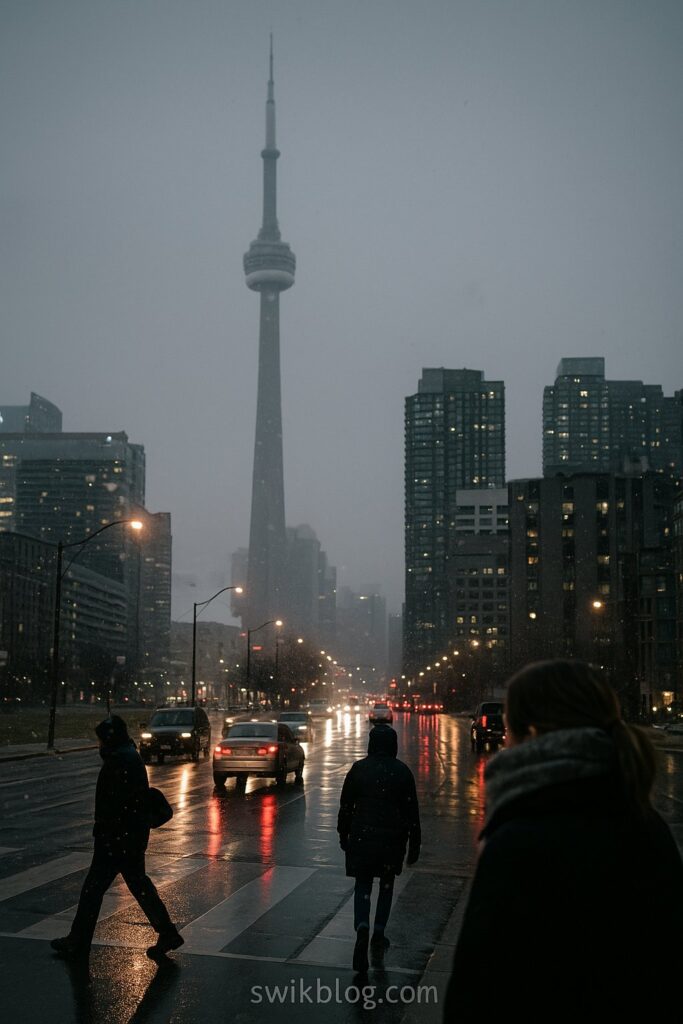
In Ontario and Quebec, the story is more changeable. The week opens on a relatively mild note in the Great Lakes corridor. Toronto’s forecast shows mostly dry and bright conditions on Monday with highs in the mid-single digits, followed by rain moving in on Tuesday and Wednesday as a series of low-pressure systems sweep across the region.
Montreal and Ottawa see a similar progression: cloudy skies with the odd flurry early in the week, then periods of rain or showers mid-week, before colder air works its way in and turns some of that moisture into flurries and light snow by Thursday and Friday. It’s the sort of pattern that can produce wet commutes one day and icy pavements the next.
Environment and Climate Change Canada’s national overview notes that alerts are issued whenever hazardous events — such as heavy snow, freezing rain or extreme cold — are expected, and that these are displayed on colour-coded maps and regional tables for quick reference by the public.[1] At the time of writing, widespread “red-flag” warnings are not in effect nationally, but local snowfall warnings and special weather statements remain possible in pockets of the Prairies and eastern Canada as systems move through.
Atlantic Canada: Mixed Precipitation and Blustery Spells
Further east, in Nova Scotia, New Brunswick, Prince Edward Island and Newfoundland and Labrador, late November is living up to its reputation for mixed precipitation. Depending on elevation and proximity to the coast, residents can expect a shifting blend of rain, wet snow and ice pellets as different air masses battle for dominance over the region.
Wind will be an important part of the story. As Atlantic lows track past, gusty onshore winds are likely at times, particularly around headlands and exposed coastal roads. For communities already gearing up for light displays, small-town parades and early Christmas markets, organisers may need contingency plans for umbrellas, slick pavements and occasionally poor visibility.
No Nationwide Emergency, but Winter is Settling In
Canada’s meteorological service is blunt about its role: it is the country’s official source for severe weather warnings and alerts, used by emergency planners, transport agencies and the public alike. [2] While this week does not presently show the kind of nationwide blizzard or ice storm that leads national bulletins, the combination of heavy snow in parts of the West, deep cold in the Prairies and wet-then-icy conditions in central and eastern Canada is enough to cause local disruption.
Forecasters and private outlets, including the Weather Network’s November outlook, have been flagging a pattern in which an extended, milder autumn gives way to a sharper wintry turn by the end of the month. This week’s forecasts appear to bear that out, with temperatures stepping down and more snow appearing on the maps as the days progress.
How to Plan Your Week: Shoppers, Travellers and Parade-Goers
For Canadians marking US Thanksgiving with family dinners, watching NFL games or simply hunting for Black Friday deals, the advice is less about panic and more about planning:
- West Coast: Expect rain and low cloud; keep waterproofs handy and watch for surface water on busy urban routes.
- Prairies: Treat this as deep winter — severe windchill, icy roads and accumulating snow demand slower driving and proper winter kit.
- Central Canada: Prepare for changeable conditions: rain mid-week, followed by flurries and the risk of ice by Thursday and Friday.
- Atlantic Canada: Mixed precipitation and blustery spells; allow for reduced visibility and slippery pavements at times.
Whether you are lining up for a Santa Claus parade, stocking up for December, or simply commuting across town, Canada’s unofficial “second Thanksgiving” week is a reminder that weather still sets the terms. A good forecast, sturdy footwear and an extra layer may be just as important as the best Black Friday deal.

Make Swikblog your go-to source on Google for reliable updates, smart insights, and daily trends.