
Updated: December 2025
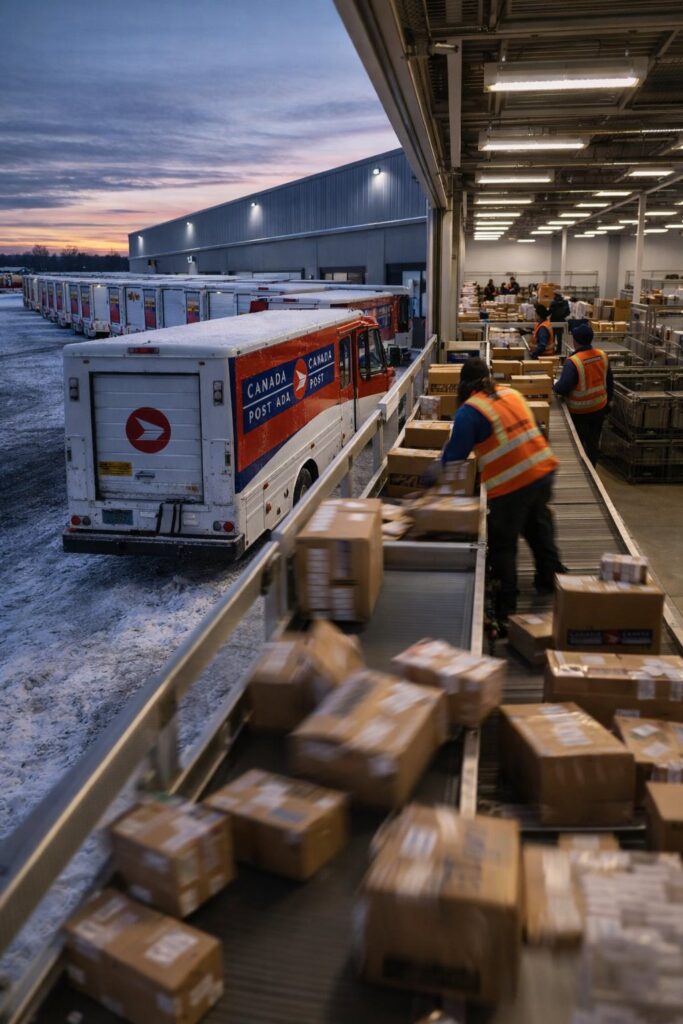
Canadians watching the holiday delivery crunch finally got a major development: Canada Post and the Canadian Union of Postal Workers (CUPW) say they have finalized tentative agreements for new collective contracts. If the deals are ratified by union members, they could bring a measure of stability after a long labour dispute that has repeatedly raised fears of strike action, delayed mail, and growing parcel backlogs.
What you need to know (quick summary)
- Tentative agreements are in place for both the Urban and Rural/Suburban bargaining units.
- Members still have to vote to ratify; CUPW says votes will happen early in the new year.
- No strike or lockout is expected during the ratification period, according to CUPW’s update.
- Service should remain focused on clearing backlogs, with capacity likely improving if the contracts are approved.
What exactly is a “tentative agreement”?
A tentative agreement is a proposed contract that leadership on both sides is prepared to recommend—but it isn’t final until the union’s membership votes to accept it. CUPW says its national executive board has voted to accept the tentative deals and will recommend approval during the ratification process. Canada Post has also confirmed the agreements and says the parties finalized contractual language for the new collective agreements.
For readers, that means two things can be true at once: (1) the dispute has taken a meaningful step toward resolution, and (2) the next milestone is the member vote, which is where the agreement becomes official—or returns to bargaining.
Which workers are covered?
Canada Post says the tentative agreements cover both of CUPW’s bargaining units:
- Urban unit (many of the postal operations people think of first, including letter carriers and urban facilities roles)
- RSMC (Rural and Suburban Mail Carriers)
What the deal could mean for mail and parcel deliveries
If you’re asking the most practical question—“Will my mail show up on time?”—the answer depends on how quickly the system can digest what it’s already carrying. A tentative agreement doesn’t instantly erase delays, but it can:
- Reduce uncertainty for households and small businesses planning shipments, returns, and bill payments.
- Stabilize staffing and routing if workers feel confident that job protections and scheduling frameworks are set for multiple years.
- Help the network focus on clearing the backlog instead of preparing for disruption.
In other words, the “fix” isn’t just about one day’s delivery—it’s about improving the conditions that allow Canada Post’s processing plants, transportation lanes, and last-mile routes to run predictably for weeks at a time.
Are service disruptions over?
Not automatically. But CUPW has stated there will be no strike or lockout action during the ratification vote period. That’s significant, because the days leading into a potential job action often create a rush of last-minute shipping and a spike in operational strain. A stable ratification window gives Canada Post time to keep processing items already in the system.
For customers, it’s still smart to plan with a bit of cushion—especially for time-sensitive parcels—but the tentative agreement news is a clear sign that both sides are trying to land a long-term outcome rather than keep cycling through crisis deadlines.
What’s reportedly inside the tentative agreements?
Canada Post’s public summary of the tentative agreements highlights improvements such as wage increases, enhanced benefits, and changes tied to how parcel delivery is handled on weekends. Some reporting on the agreements has described a five-year contract term and a structure where wage increases are front-loaded early and then linked to inflation later in the term.
Because “tentative” still means “not yet ratified,” readers should treat these as high-level terms until the full ratification materials are published for members. The final details that matter most to customers—like overtime rules, weekend staffing models, and how routes are scheduled—often live in the fine print.
What happens next and when you might feel the impact
Here’s the timeline to watch:
- CUPW ratification vote — CUPW says votes will take place early in the new year.
- Implementation period — If members approve, the new agreements become the governing rules for pay, scheduling, and operations.
- Backlog normalization — Depending on the volume sitting in the system, clearing delays can take days to weeks, not hours.
If you’re mailing something urgent, consider tracking options and earlier drop-off windows. For small businesses, it may be wise to message customers with clear delivery expectations until scanning and transit times look fully normal again.
Why this matters beyond Christmas shipping
Canada Post is more than a holiday parcel pipeline. It’s a core piece of national infrastructure for rural communities, government mail, legal documents, and everyday commerce. Long-running labour disputes can ripple through:
- Small business cash flow (returns, replacements, refunds)
- Cross-country logistics (especially to remote areas)
- Everyday household needs (bills, IDs, documents)
A multi-year agreement—if ratified—can give the organization and workers a shared runway to address bigger challenges: rising parcel expectations, pressure from private couriers, and the high cost of operating a truly national network.
Where to read the official updates
For the most accurate wording as ratification approaches, rely on the primary sources: Canada Post’s negotiations update and CUPW’s negotiations bulletin. You can read them here: Canada Post’s official tentative agreement announcement and CUPW’s negotiations update.
More from Swikblog: For other Canada travel and service disruption updates, visit Swikblog.com.

Make Swikblog your go-to source on Google for reliable updates, smart insights, and daily trends.