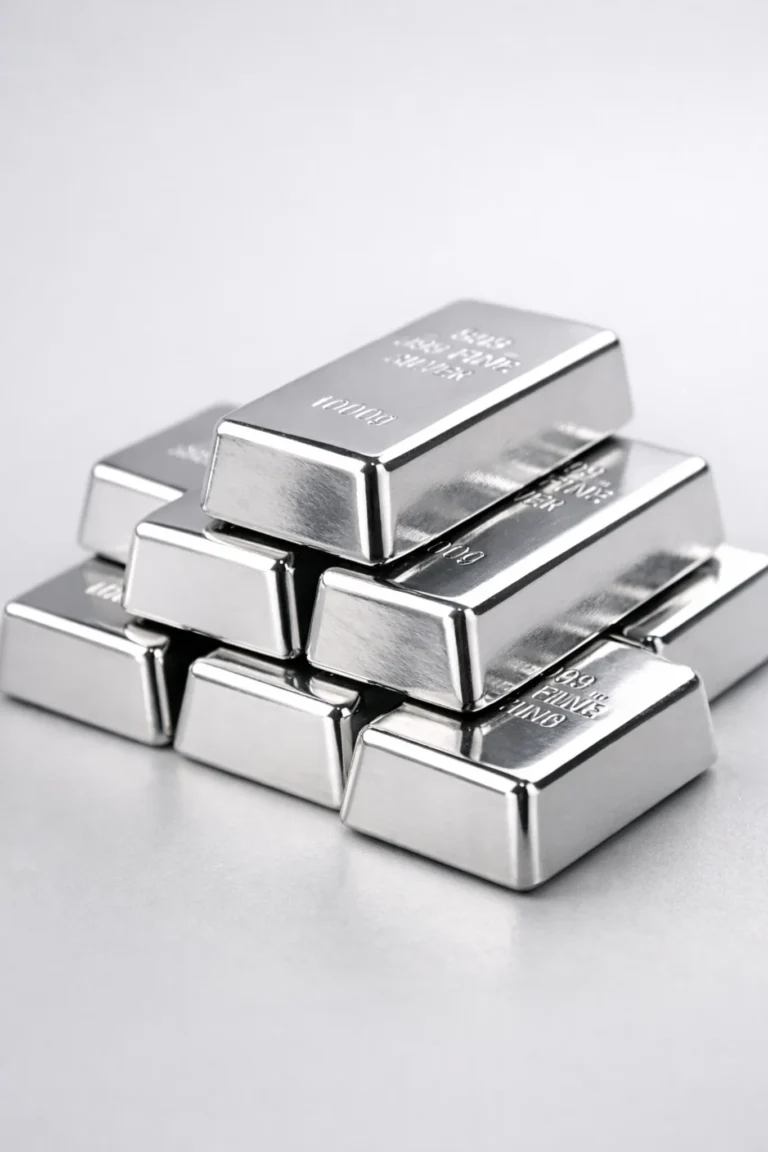

US silver prices came under sharp pressure in early trading on Tuesday, with COMEX futures dropping to $86.83 per ounce after giving up an earlier rally that briefly pushed the metal close to the $89.70 area. The retreat left silver down roughly 3.08% on the session, a notable reversal for a market that has been moving in wider intraday ranges than usual.
The move stands out not just because of the size of the decline, but because it followed a stronger start to the day. Futures opened near $88.70, climbed early, and then sold off steadily as the session developed. By the time the market settled into morning trading, silver was hovering in the mid-$86 range, showing how quickly sentiment had shifted.
Intraday reversal puts silver back in focus
Silver has been one of the more volatile corners of the commodities market, and Tuesday’s action offered another reminder of that. The metal touched an intraday high near $89.69 before sliding toward a low around $86.15, a swing of more than $3.50 in a single trading window. For short-term traders, that kind of range is hard to ignore.
What makes the session especially important is the speed of the reversal. Instead of building on the earlier strength, silver lost momentum quickly and remained under pressure as sellers took control. That type of price action often signals that traders are becoming more cautious at elevated levels, especially after strong moves higher in recent weeks.
Live contract details on the CME silver futures market continue to show just how closely watched this contract has become as investors assess both precious-metals demand and broader risk appetite.
Why the drop matters for the US silver market
For readers tracking the US silver price today, the key takeaway is that the market is no longer trading in a quiet, orderly pattern. A decline of more than 3% in early action suggests participants are reacting aggressively to changing momentum rather than simply waiting for a longer-term trend to reassert itself.
Silver also tends to behave differently from gold during periods like this. While it shares some safe-haven characteristics, it is also heavily tied to industrial demand, speculative positioning, and fast money flows. That can make sell-offs look sharper and rebounds feel stronger. On a day like this, silver’s dual identity was on full display.
The latest quote boards showed the May COMEX silver contract near $86.83, compared with a previous settlement around $89.59. That gap is meaningful because it puts the market well below the prior close and reinforces the idea that traders were willing to unwind positions quickly once the early rally faded.
Pressure builds after the early push toward $90
There is also a psychological layer to this move. Silver’s push toward the $90 level gave the market an obvious near-term target, and when that area failed to hold, the reversal gathered pace. Round-number zones often become magnets in commodities trading, but they can also become rejection points when buyers hesitate.
Once silver moved away from that upper band, attention shifted to whether the metal could stabilize above the high-$86 and low-$87 area. At least in early US trading, that support zone was being tested rather than defended decisively. The result was a chart that looked increasingly heavy as the morning progressed.
Fresh market data on Yahoo Finance’s silver futures page reflected the same broad pattern: an early rise, a swift pullback, and a market trying to find its footing after slipping into negative territory.
Valuation debate returns after the latest pullback
The latest drop is likely to revive a familiar debate around silver’s recent run. Bulls can still point to the fact that prices remain historically elevated even after Tuesday’s decline. Bears, however, will argue that the metal had run hot and that a sharp intraday pullback was a sign the market may need time to cool before attempting another leg higher.
That debate matters because silver has not been trading like a sleepy defensive asset. It has been moving in a way that attracts momentum traders, headline-driven positioning, and rapid profit-taking. When a market is already stretched, a failed attempt to break higher can trigger outsized selling pressure, which is exactly what Tuesday’s chart appeared to show.
Even so, the broader backdrop remains active. Silver is still being watched through the lens of inflation expectations, industrial demand, and speculative interest. That means traders are unlikely to treat one weak session as the final word. Instead, the focus now shifts to whether the metal can rebuild above current levels or whether the slide opens the door to deeper short-term weakness.
What traders are watching next
In the near term, the market is likely to stay focused on two numbers: the failed move toward $89.70 and the drop back toward the $86 zone. If silver cannot reclaim lost ground quickly, the retreat may start to look less like a brief pullback and more like a reset after a stretched run. If buyers do step back in, the session could be remembered as a volatile shakeout rather than the start of a larger unwind.
For now, the message from the US silver price today is simple enough: silver opened strong, reversed hard, and turned into one of the day’s more closely watched commodity moves. With futures sliding to $86.83 per ounce after an early rally, traders have been handed a fresh test of conviction just below the $90 mark.

Make Swikblog your go-to source on Google for reliable updates, smart insights, and daily trends.