
By Swikriti Dandotia
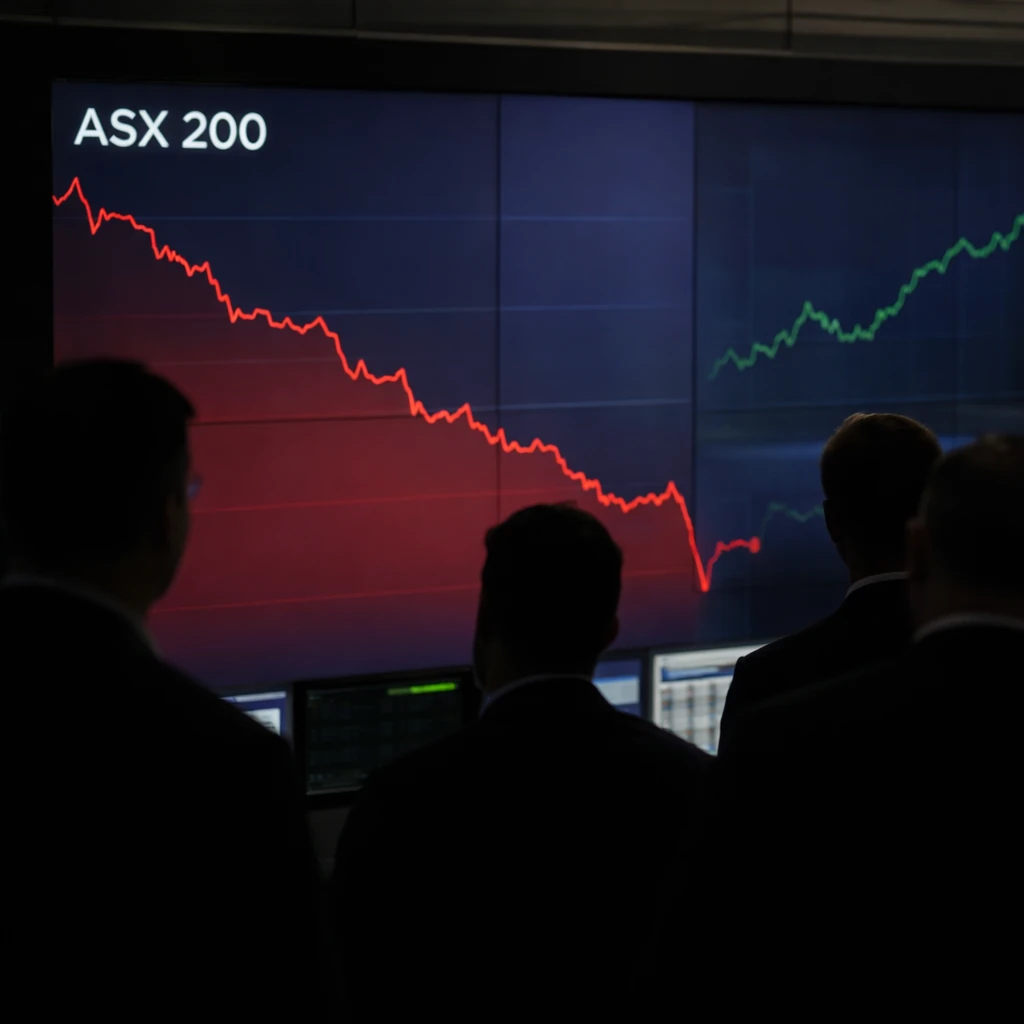
The S&P/ASX 200 fell 28.30 points, or 0.3%, to 8,932.30 in early Monday trade, as global markets turned cautious after US-Iran peace talks collapsed, triggering a sharp spike in oil prices and reigniting fears of a prolonged energy shock. The pullback comes after the benchmark surged 4.4% last week, its strongest weekly gain since late 2022, highlighting how quickly sentiment has reversed.
Investors were rattled after US President Donald Trump announced plans to blockade the Strait of Hormuz, a critical global oil shipping route responsible for roughly 20% of global oil and LNG flows. The escalation has raised concerns over supply disruptions, inflation pressures, and broader economic risks if tensions continue to rise.
The immediate impact was visible across markets. Brent crude surged nearly 8%, while traders in physical markets were reportedly paying above $140 per barrel for cargoes. European natural gas futures also jumped as much as 17%, underlining the severity of the supply shock. Meanwhile, the Australian dollar weakened 0.5% to US70.33¢, and US equity futures slipped 0.9%, reflecting a broader shift toward risk aversion.
Energy rallies while broader market weakens
The ASX reaction was sharply divided. Energy stocks emerged as clear winners, benefiting from the surge in oil prices and improved earnings outlook. Woodside gained 3% and Santos rose 2.2%, while refiners Ampol climbed 2.4% and Viva Energy jumped 4.6%. Higher crude prices directly boost revenue expectations for producers, while refiners benefit from widening margins.
However, gains in energy were not enough to offset widespread losses across other sectors. Nine of the eleven sectors traded lower, with materials and financials — which together account for more than half of the index — leading the decline.
Gold miners dragged the materials sector lower as bullion prices dropped as much as 2.2%, despite geopolitical tensions. Northern Star Resources fell 4.2%, Evolution Mining dropped 4.5%, and Newmont declined 1.5%. The decline reflects concerns that rising oil prices could fuel inflation, reducing the appeal of gold as a hedge in the near term.
The big four banks also faced selling pressure, highlighting weakening investor confidence. Commonwealth Bank slipped 0.3%, Westpac lost 0.8%, National Australia Bank dropped 1.3%, and ANZ declined 0.7%. Financial stocks remain sensitive to economic uncertainty and interest rate expectations, both of which are now back in focus.
Technology stocks were among the hardest hit, as investors rotated out of growth assets. WiseTech Global fell 2.5%, Xero dropped 2.6%, and Life360 plunged 9.2%. Rising inflation expectations and bond yields typically pressure high-growth valuations, making tech stocks particularly vulnerable during macro shocks.
A2 Milk crashes after outlook downgrade
The biggest individual stock move came from A2 Milk, which plunged 16.5% after the company slashed its sales and earnings forecasts. The infant formula producer cited supply chain disruptions — partly linked to the Iran conflict — that have slowed shipments to China, its key market.
The downgrade raised concerns about revenue visibility and margin pressure. While the company did not provide exact revised earnings figures in the update, the sharp market reaction suggests investors are pricing in a meaningful hit to both top-line growth and profitability in the near term.
The sell-off also reflects broader fears that geopolitical tensions are beginning to affect real business operations, not just market sentiment. Companies reliant on global logistics and cross-border trade could face increasing challenges if the conflict continues to disrupt supply chains.
Adding to corporate concerns, logistics firm Brambles fell 1.1% after a Federal Court ruling found the company failed to adequately inform investors about its financial position, exposing it to potential compensation claims.
Global macro pressures intensify
The developments come against a backdrop of rising global inflation pressures. In the United States, inflation surged in March, marking the biggest increase in four years, driven largely by higher fuel costs. Consumer inflation expectations have also jumped, with year-ahead expectations rising to 4.8% from 3.8% the previous month.
Bond markets reacted accordingly, with the US 10-year Treasury yield climbing to 4.32%. The increase signals that investors are preparing for a prolonged period of higher interest rates, as central banks remain cautious about cutting rates amid persistent inflation risks.
The Federal Reserve has already indicated that it may need to keep rates elevated for longer, and some officials have even suggested that further rate hikes could be considered if inflation does not ease. Higher interest rates tend to weigh on equities by increasing borrowing costs and reducing the present value of future earnings.
On Wall Street, markets showed mixed performance, reflecting uncertainty ahead of the geopolitical developments. The S&P 500 slipped 0.1%, the Dow Jones fell 0.6%, while the Nasdaq rose 0.4%. Despite the volatility, US markets remain within 2.3% of their all-time highs, indicating underlying resilience.
For deeper insights into global commodity movements, investors can track updates via Reuters commodities coverage.
Investor sentiment and outlook
Investor sentiment has clearly shifted toward caution. The failure of the Iran talks and the threat of a blockade in the Strait of Hormuz have reintroduced a major source of uncertainty into global markets. The risk is not just higher oil prices, but the broader economic impact of sustained energy inflation.
If oil prices remain elevated, the effects could ripple through the global economy, increasing costs for transportation, manufacturing, and consumer goods. This would likely weigh on corporate earnings and consumer spending, particularly in energy-importing economies.
At the same time, energy stocks could continue to outperform if supply constraints persist, creating a divergence within the market. Investors may increasingly favor sectors with pricing power and direct exposure to commodities, while avoiding rate-sensitive and growth-oriented stocks.
Looking ahead, the ASX is expected to remain volatile, with market direction closely tied to developments in the Middle East. Any escalation in tensions could push oil prices even higher, while signs of de-escalation could trigger a relief rally.
For now, the market is navigating a complex mix of geopolitical risk, inflation concerns, and shifting monetary policy expectations. Monday’s session underscores how quickly global events can reshape investor sentiment, turning optimism into caution in a matter of hours.

Make Swikblog your go-to source on Google for reliable updates, smart insights, and daily trends.