
HBO’s long-awaited return of Euphoria has sparked immediate conversation after its Season 3 premiere delivered one of the show’s most intense sequences yet, with Zendaya’s Rue Bennett forced into a life-or-death test that is already dominating online reactions.
The episode, released April 12 on HBO Max, jumps forward five years after high school and finds Rue in a far more dangerous position. No longer just battling addiction, she is now working under coercion as a drug courier for Laurie, the quietly menacing dealer introduced in earlier seasons. That shift sets the stage for the premiere’s defining moment — a violent encounter with a new power player, Alamo.
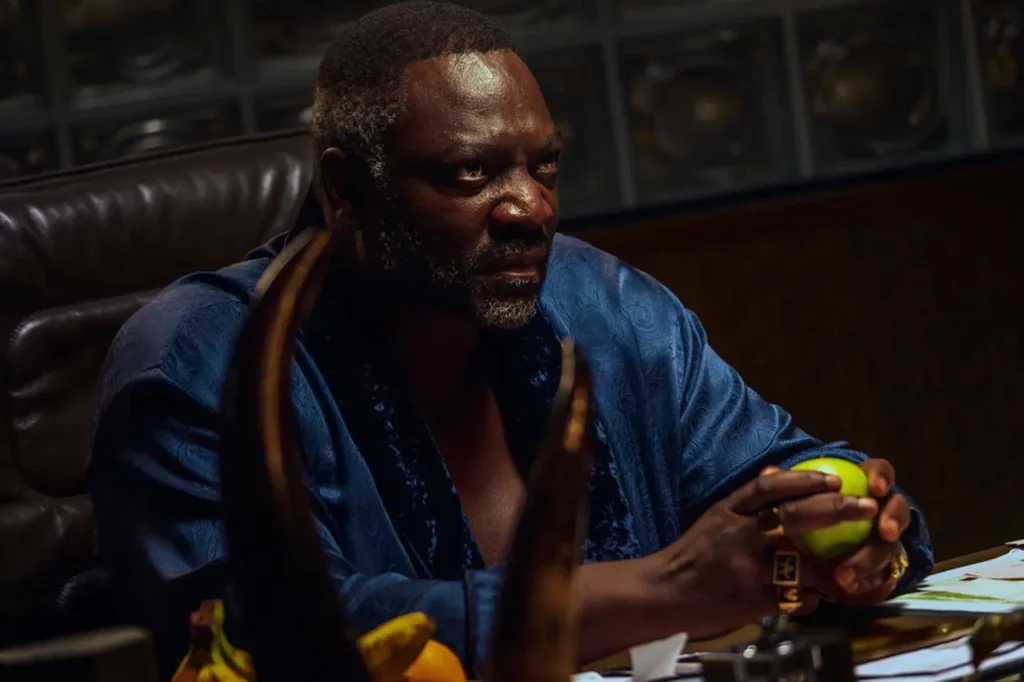
Rue is sent to deliver drugs to Alamo, a wealthy strip club owner operating out of a lavish mansion. The situation spirals when a dancer named Tish dies after taking fentanyl-laced drugs unknowingly tied to Rue’s delivery. The death immediately turns Rue from messenger into liability, placing her at the center of Alamo’s anger.
Rather than killing her outright, Alamo pauses when Rue insists that she believes God brought her to him. What follows is the episode’s most talked-about scene: a staged test of faith in which Rue is ordered to stand still with a green apple balanced on her head while Alamo takes aim with a gun.
The rules are simple and brutal. If he hits the apple, she lives. If he misses, she dies. Alamo fires — and hits the target, sparing Rue’s life while drawing her further into his orbit.
A darker turn shaped by power and control
The sequence marks a decisive tonal shift for the series. While earlier seasons explored teenage chaos and addiction through a personal lens, the premiere expands Rue’s world into something more structured and dangerous, where survival depends on the whims of powerful figures rather than chance alone.
Alamo’s decision is not framed as mercy, but as performance. He turns violence into spectacle, testing not only Rue’s composure but her belief in fate. The scene underscores his role as a character who thrives on control and theatrics, contrasting sharply with Laurie’s quieter, more calculated menace.
For Rue, the outcome is both relief and entrapment. She escapes immediate death, but the cost is clear: her dependence shifts from one dangerous figure to another. The premiere suggests that Alamo may be even more unpredictable, using psychological games and symbolic gestures to assert dominance.
Zendaya’s restrained performance reinforces that shift. Rue’s stillness during the scene reflects a character no longer resisting her circumstances in the same way, but enduring them. It signals a version of Rue shaped less by impulsive decisions and more by survival under pressure.
Why the ending is resonating with viewers
The apple scene has quickly become a focal point for audiences not simply because of its shock value, but because of what it represents. It reframes Rue’s journey from internal struggle to external danger, placing her in a world where consequences are immediate and often irreversible.
The religious undertones — faith, judgment and survival — add another layer, raising questions about whether Rue’s survival is chance, belief or simply Alamo’s choice. That ambiguity is central to the episode’s impact, leaving viewers unsettled rather than reassured.
The premiere also signals HBO’s intent to push Euphoria into new territory after a prolonged gap between seasons. With shifting timelines, new characters and higher stakes, the series appears to be moving beyond its high school roots into a broader, more volatile landscape. More details on the show’s release and episodes can be found on HBO’s official page.
Rue survives the episode’s final test, but the closing moments make clear that survival is no longer a victory in itself. Instead, it marks the beginning of a deeper entanglement — one where every decision carries greater risk, and where the line between fate and control continues to blur.
You may like Lufthansa cancels 75% of flights in Germany amid pilot strike.

Make Swikblog your go-to source on Google for reliable updates, smart insights, and daily trends.