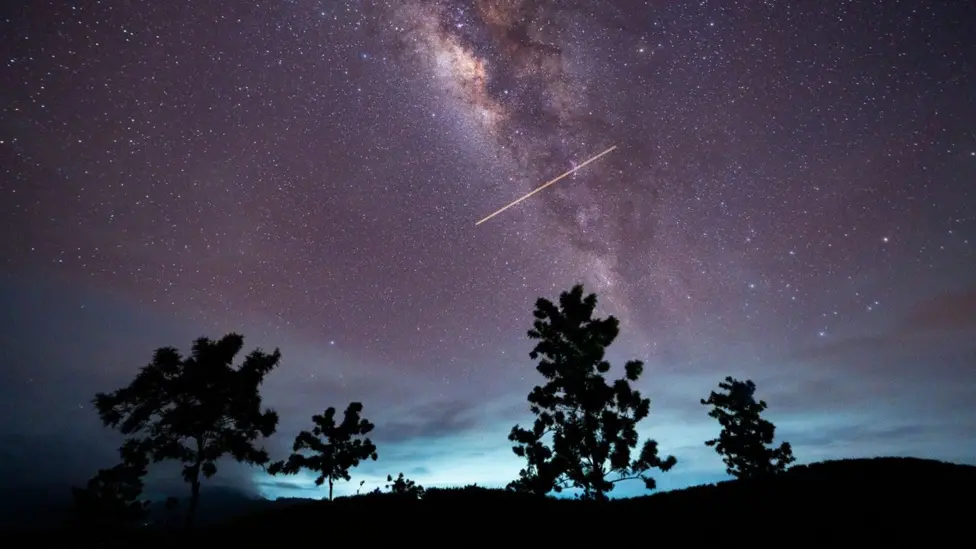

The UK night sky is set for a rare and historic spectacle this week as the Lyrid meteor shower — one of the oldest recorded celestial events — becomes visible from April 16, with its peak expected overnight on April 21–22. The annual display is gaining attention for its potential to produce bright fireballs and sudden bursts of activity, making it one of the most anticipated skywatching moments of the spring.
Around 10 to 15 meteors per hour are typically visible under clear, dark skies, though astronomers note that unpredictable surges can occasionally push that number close to 100 per hour. These fast-moving streaks, often referred to as “shooting stars”, are fragments of cosmic debris burning up as they enter Earth’s atmosphere at high speed.
The Lyrids appear to originate from the constellation Lyra, which rises in the north-eastern sky during late evening and becomes more prominent in the early hours. This makes the period between midnight and dawn the most favourable viewing window for observers across the UK.
Ancient origins and rare fireballs
What sets the Lyrids apart from other annual meteor showers is their deep historical record. The event was first documented by Chinese astronomers in 687 BCE, making it one of the longest-observed meteor showers in human history.
The phenomenon is caused by Earth passing through a stream of dust left behind by Comet Thatcher, a long-period comet that takes around 415 years to orbit the Sun. Although the comet itself will not return until 2283, its debris continues to intersect with Earth’s orbit each April, creating the meteor display.
Most of the visible meteors are produced by particles no larger than grains of sand. As they collide with the atmosphere, they heat up and ionise, producing the bright streaks and coloured trails seen from the ground. Occasionally, larger fragments — closer in size to a grape or acorn — create intense flashes known as fireballs, which can briefly outshine planets like Venus and leave glowing trails behind them.
Best viewing conditions across the UK
Weather conditions will be a key factor in determining visibility. Early forecasts suggest northern parts of Scotland may experience clearer skies earlier in the week, while cloud and rain could affect parts of England through Friday. However, clearer conditions are expected to develop more widely from Saturday evening into Sunday morning, offering one of the best opportunities to view the display.
Stargazers are advised to move away from urban light pollution and allow time for their eyes to adjust to the darkness. A wide, unobstructed view of the sky is more effective than using telescopes, which can limit visibility. Looking generally towards the darker sections of the sky, rather than directly at Lyra, often increases the chances of spotting meteors.
The timing of this year’s shower is also favourable due to minimal moonlight interference following the new moon on April 17, allowing even faint meteors to be visible under clear skies.
The Lyrids are not the only meteor activity this month. The Eta Aquarid meteor shower, linked to Halley’s Comet, is active from April 9 to May 28 and will peak in the early hours of May 6, producing an average of around 40 meteors per hour. Together, these overlapping events increase the chances of seeing multiple shooting stars across April’s night skies.
For those planning to watch, keeping track of local conditions will be essential, with updated forecasts available via the Met Office weather service. With the right combination of clear skies and patience, the coming nights could offer one of the most visually striking astronomical displays of the season.
You may like: Claude Down 2026: API 500 Errors Trigger Major Outage, Developers Hit Globally

Make Swikblog your go-to source on Google for reliable updates, smart insights, and daily trends.