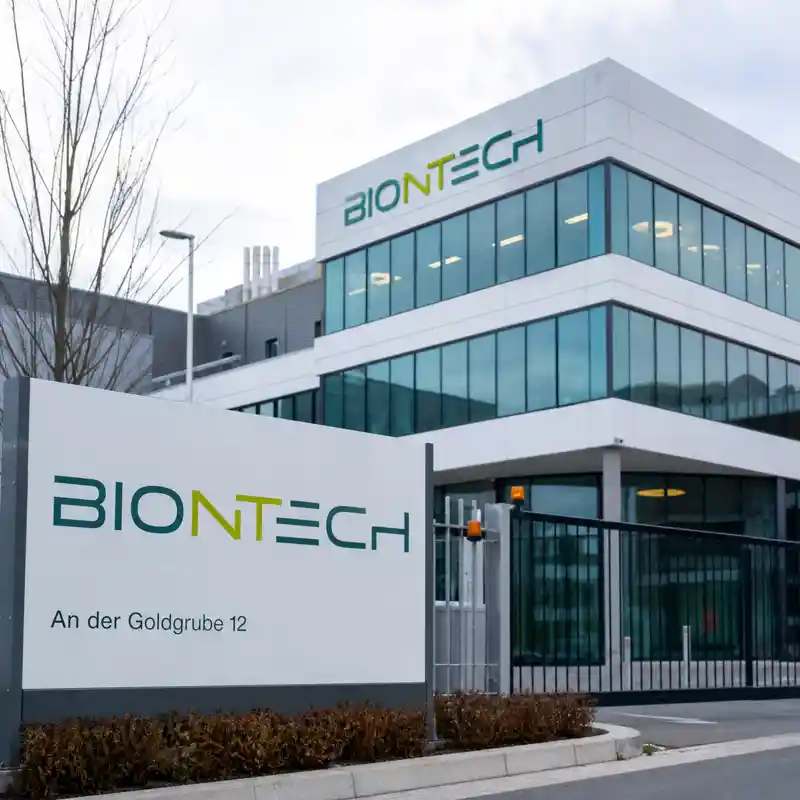

BioNTech is entering a decisive phase in its evolution beyond the pandemic, unveiling a restructuring plan that could affect up to 1,860 jobs while leading to the closure of multiple sites across Germany and Singapore. The move reflects a broader shift as the company adapts to declining COVID-19 vaccine demand and redirects its focus toward long-term drug development.
The German biotech firm confirmed that operations in Idar-Oberstein, Marburg and Tuebingen will be phased out by the end of 2027, while its Singapore facility is expected to shut down in the first quarter of the same year. The company is also reviewing strategic options for these locations, including potential partial or complete sales.
This transition is closely tied to BioNTech’s decision to hand over COVID-19 vaccine production to Pfizer, its long-standing partner. During the pandemic, BioNTech rapidly expanded its manufacturing footprint to meet global demand. However, as vaccine demand stabilizes, maintaining that level of infrastructure is no longer commercially viable.
The scale of the restructuring is significant. With a workforce of approximately 8,400 employees, the planned cuts could impact around 22% of staff, primarily in Germany. The announcement builds on earlier plans disclosed last year, when BioNTech outlined a reduction of between 950 and 1,350 roles by 2027. It remains unclear how much of that earlier target has already been achieved.
The company’s latest financial results underline the urgency of these changes. BioNTech reported a net loss of €532 million in the first quarter, compared to a €416 million loss during the same period last year. The widening losses highlight the sharp contrast with its pandemic-era performance, when vaccine revenues drove record profits and rapid global expansion.
To address this shift, BioNTech is intensifying its cost-saving efforts, targeting approximately €500 million in annual savings by 2029. Despite these reductions, the company is maintaining its commitment to innovation, reaffirming its research and development budget of €2.2 billion to €2.5 billion for 2026.
This dual approach—cutting costs while preserving R&D investment—signals a strategic reset. BioNTech is positioning itself as a research-driven biotechnology company, with a particular emphasis on oncology and advanced immunotherapies rather than large-scale vaccine production.
Even as it restructures, BioNTech remains financially strong. The company reported €16.7 billion in cash and financial securities as of March 31 and announced a plan to repurchase up to $1 billion in shares over the next year. This reflects confidence in its long-term outlook, even as near-term challenges persist.
The restructuring also coincides with a major leadership change. Co-founders Ugur Sahin and Oezlem Tuereci are expected to step down by the end of this year to pursue a new venture focused on early-stage research. Their departure marks the end of an era for BioNTech, as the duo played a central role in developing one of the world’s most widely used COVID-19 vaccines.
Read More
- Visit Swikblog Homepage
- Palantir Raises 2026 Revenue Forecast on US Government AI Demand
- KFC $10 Bucket of the Day Deal: Full Weekday Menu
- China Fireworks Factory Explosion in Hunan Leaves 21 Dead, 61 Injured
- A2 Milk Shares Drop 18% After Toxic Baby Formula Recall in US
- Vodafone to Buy CK Hutchison Stake in VodafoneThree for £4.3 Billion
One of the key assets affected by the changes is the Tuebingen facility, which became part of BioNTech through its $1.25 billion acquisition of CureVac. While the deal was aimed at strengthening the company’s mRNA capabilities, the latest restructuring suggests a more selective approach to managing its expanded operations.
The planned closure of the Singapore site also reflects shifting global dynamics. During the pandemic, companies raced to build international production hubs. Today, with demand normalized, many of those investments are being reassessed, and BioNTech’s decision highlights the changing economics of vaccine manufacturing.
Looking ahead, BioNTech’s growth story will increasingly depend on its drug development pipeline. The company is advancing multiple programs in cancer treatment, including mRNA-based therapies designed to train the immune system to target tumors more effectively. These efforts represent a significant shift from its pandemic-driven business model.
More insights into BioNTech’s long-term strategy and pipeline can be explored on its official investor relations page, where the company outlines its future direction.
The broader biotechnology sector is also undergoing a similar transition. Companies that expanded rapidly during COVID-19 are now adjusting to a more stable, less urgent demand environment. BioNTech’s restructuring is part of this industry-wide recalibration.
For employees and local economies, particularly in Germany, the cuts represent a significant shift from the rapid hiring seen during the pandemic. The changes reflect a move toward efficiency and specialization as the company redefines its operational footprint.
BioNTech’s future now hinges on its ability to translate its scientific expertise into successful commercial therapies. While it retains strong financial reserves and technological capabilities, the coming years will be critical in determining whether it can replicate its past success in a new and more competitive landscape.

Make Swikblog your go-to source on Google for reliable updates, smart insights, and daily trends.