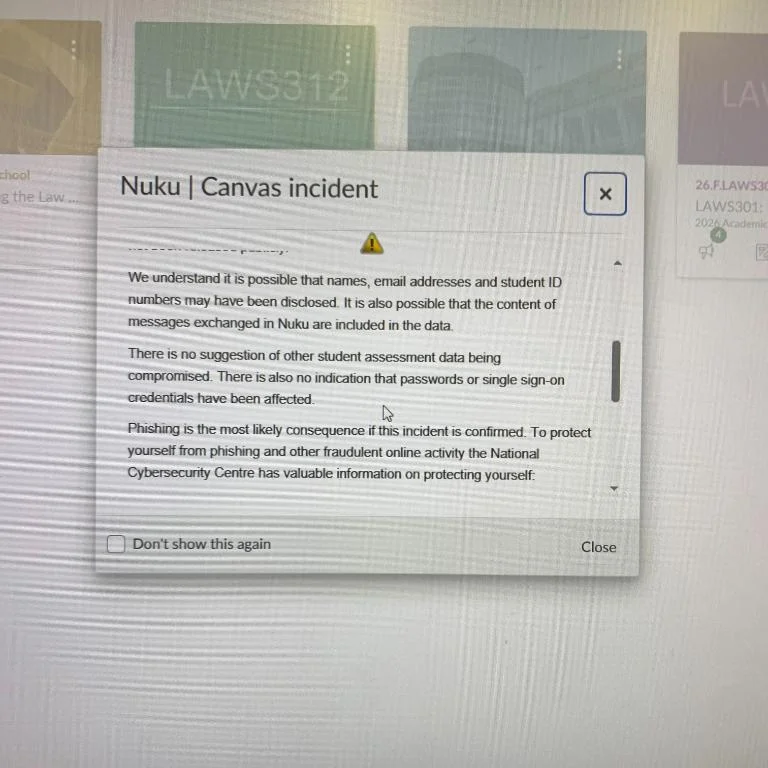

The incident has triggered investigations across several major universities in Aotearoa, including Victoria University of Wellington, Auckland University of Technology (AUT), and the University of Auckland, after unauthorized access was detected within systems connected to the Canvas learning management platform.
Canvas, operated by US-based education technology company Instructure, is one of the world’s most widely used online learning systems. The platform is relied on daily by universities for coursework, assignment submissions, student messaging, online classes, grading systems, and academic communication.
According to information shared with affected institutions, a “criminal threat actor” gained unauthorized access to parts of the Canvas environment. The exposed information may include student and staff names, email addresses, internal messages, and student identification numbers.
At this stage, Instructure says there is no evidence that passwords, financial information, government identification details, or birthdays were compromised during the breach. However, cybersecurity experts warn that even limited academic information can still create serious phishing and identity risks for students and university staff.
Victoria University confirmed it was among a large number of institutions impacted globally after being alerted to suspicious activity involving Nuku, its Canvas-linked learning system. The university stressed that its own internal infrastructure continues operating normally and there is currently no indication that student assessment records have been affected.
Officials also said there was no evidence that single sign-on credentials or passwords had been exposed. A dedicated cybersecurity team is now working alongside Instructure investigators to determine exactly what information may have been accessed during the incident.
The university informed students and staff about the breach on Wednesday morning, promising regular updates as investigations continue.
Universities increase monitoring after Canvas security incident
Auckland University of Technology also confirmed it uses Canvas and has launched an internal review to assess any possible impact on its systems and users.
AUT said its learning platform remains operational and that ICT teams are actively monitoring the situation while applying additional precautions to secure university applications and digital services.
The University of Auckland similarly told students it was working to determine whether university-related data had been affected by the international cyber incident. As of Wednesday afternoon, there was no confirmed impact, though monitoring efforts remain ongoing.
The breach has become significant because of the global reach of Canvas. Nearly 9000 educational institutions use the platform, meaning a single cyber incident has the potential to affect millions of students, lecturers, and staff across multiple countries at once.
Cybersecurity specialists say attacks on education systems have increased sharply in recent years as universities become more dependent on cloud-based learning tools and external software providers. Institutions now manage huge amounts of personal data while operating across dozens of connected digital platforms.
That interconnected environment means vulnerabilities affecting third-party vendors can quickly spread into universities worldwide, even when local campus systems themselves are not directly hacked.
Experts warn that student information such as university email addresses, course data, student ID numbers, and internal messages can be used in highly targeted phishing attacks. Fraudulent emails pretending to be assignment alerts, tuition notices, scholarship updates, or login warnings often appear more convincing when attackers already possess genuine university-related information.
Students and staff are therefore being urged to remain cautious about unexpected emails, suspicious login requests, or messages asking for passwords or personal details.
Security professionals generally recommend enabling multi-factor authentication, using unique passwords, and accessing university portals directly instead of through links received in emails or text messages.
Read More
Growing cybersecurity risks across New Zealand universities
The Canvas incident is also expected to reignite discussion around cybersecurity preparedness within the education sector. Universities increasingly depend on international software vendors to support teaching and student engagement, but every external platform introduces another layer of potential cyber risk.
For institutions, incidents like this often lead to reviews of vendor security standards, data storage practices, breach response procedures, and long-term digital risk management strategies.
New Zealand’s education sector has already experienced rising concern around ransomware attacks, phishing operations, and student data protection in recent years. The latest Canvas breach adds to broader global concerns over how universities secure rapidly expanding digital ecosystems.
Students looking for official cybersecurity advice can access guidance through CERT NZ, New Zealand’s national cybersecurity response agency. Readers can also follow more updates from the country’s education and technology sector through Swikblog New Zealand Highlights.
While universities continue investigating the scope of the breach, officials maintain there is currently no evidence that financial information or passwords were exposed. Still, the attack has highlighted how deeply universities now depend on global digital infrastructure — and how quickly a cyber incident overseas can become a serious concern for campuses in New Zealand.

Make Swikblog your go-to source on Google for reliable updates, smart insights, and daily trends.