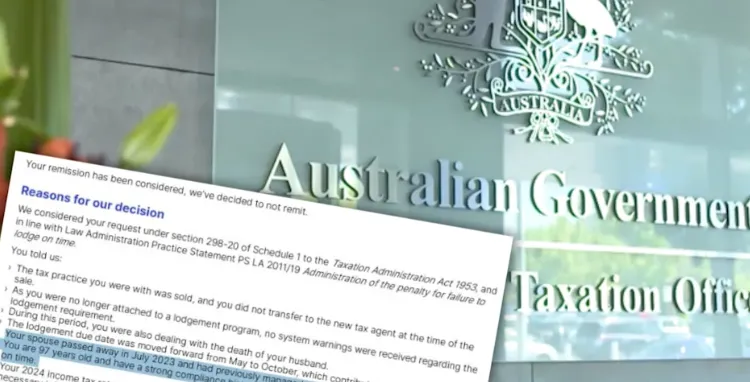

The Australian Taxation Office (ATO) is facing widespread criticism after a 97-year-old Brisbane widow was issued a $1,650 penalty for lodging her tax return late following the death of her husband, who had managed the couple’s finances and tax affairs for years.
The case quickly sparked outrage across Australia after the woman’s accountant, Nathan Watt of Watson & Watt, revealed the details publicly. The woman had reportedly submitted her tax returns on time throughout her life, but after losing her husband in July 2023, she struggled to manage the process alone.
According to reports, the situation became more complicated because the tax practice previously handling the couple’s affairs had been sold, meaning the woman did not receive the usual reminders or warnings about the overdue lodgement.
Watt contacted the ATO asking for the late lodgement penalty to be cancelled, outlining the woman’s age, bereavement and exceptional circumstances. However, the request was rejected.
In its response, the ATO reportedly told the woman she had not “prioritised” her tax obligations and said it would not be fair to remit the fine when other taxpayers had taken steps to lodge on time.
Public backlash forced the ATO to reverse its decision
The penalty triggered a major backlash after Watt shared the response online. Tax professionals, accountants and members of the public described the decision as “horrifying”, “inhumane” and “shameful”. Some called for the matter to be referred to the Tax Ombudsman.
Tax Ombudsman Ruth Owen later criticised the handling of the case, saying too many decisions fail to consider the human being behind the tax return. She also warned that similar situations were becoming systemic.
The controversy comes at a time when the ATO is taking a tougher stance on debt collection and late tax lodgements. The agency has increased enforcement activity in recent years amid concerns some taxpayers delay filing returns expecting penalties to be waived later.
Under current ATO rules, individuals can face penalties of $330 for every 28 days a return remains overdue, up to a maximum of $1,650. Taxpayers can still apply for remission where serious personal circumstances exist. The official ATO guidance on these penalties can be viewed here.
After intense public criticism, the ATO apologised and fully reversed the penalty. In a statement, the agency admitted its communication caused “unintended offence” and confirmed the decision had been corrected.
Read More
Why the case matters beyond one taxpayer
The incident has reignited debate about how government agencies handle elderly and vulnerable Australians, especially people dealing with grief, illness or sudden financial disruption.
It has also renewed scrutiny of the ATO’s broader compliance approach, including concerns around outsourced debt collection and increasingly rigid enforcement processes. Swikblog recently examined related enforcement measures in its report on the ATO’s growing compliance crackdown and multimillion-dollar penalties.
For many Australians, the story resonated because it highlighted the importance of compassion and common sense within the tax system. While the fine has now been cancelled, the public reaction suggests many believe the situation should never have reached that point in the first place.

Make Swikblog your go-to source on Google for reliable updates, smart insights, and daily trends.