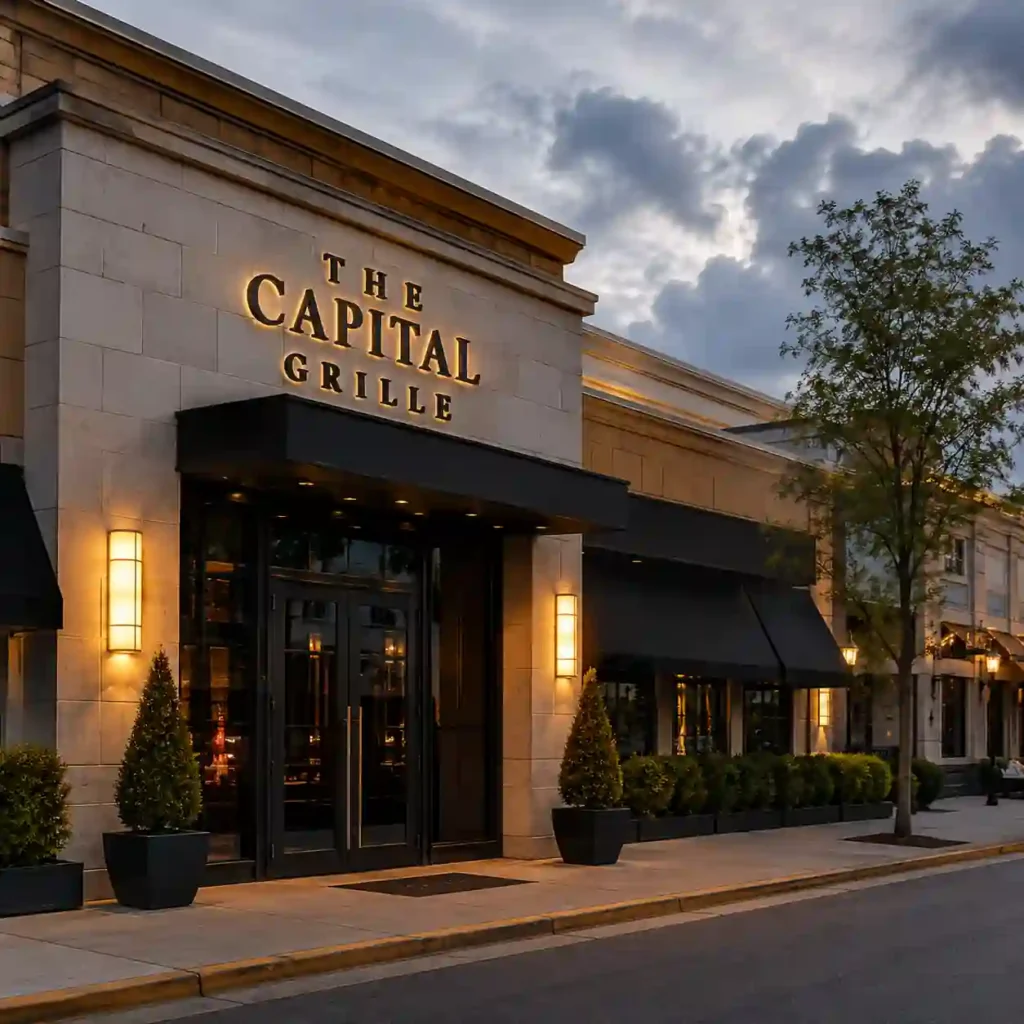

Darden Restaurants is continuing a major reshaping of its restaurant business after confirming that The Capital Grille at Westfield Old Orchard Mall in Skokie, Illinois, will permanently close on May 31, 2026 — just three years after opening.
The closure has drawn attention because The Capital Grille is one of Darden’s best-known upscale chains and operates under the same corporate umbrella as Olive Garden, LongHorn Steakhouse, Yard House, Ruth’s Chris Steak House and Seasons 52.
The fine-dining restaurant opened in March 2023 inside a sprawling 9,000-square-foot space at the suburban Chicago mall, replacing a former McCormick & Schmick’s location. The restaurant became one of the mall’s high-profile dining additions during a period when shopping centers across the US were trying to attract more visitors through restaurants and entertainment concepts.
According to NBC Chicago, Darden Restaurants confirmed the location’s final day of operation will be May 31.
A company spokesperson said the closure followed “careful consideration” and stressed that the decision was not tied to employee performance.
“Closing this restaurant is a difficult business decision, and it’s one we made very carefully and thoughtfully, particularly because it impacts our team members and our guests,” Darden said in a statement.
The company also said it is trying to place affected workers into other jobs within its restaurant portfolio.
While Darden emphasized there are currently no plans to close additional Capital Grille locations, the move arrives during a broader restructuring effort inside the company.
Earlier this year, Darden announced that all 28 Bahama Breeze restaurants in the United States would either close permanently or be converted into other restaurant brands owned by the company. Darden publicly stated that Bahama Breeze was no longer considered “a strategic priority.”
The closures impacted restaurants across Delaware, Georgia, Florida, Michigan, New Jersey, North Carolina, Pennsylvania, Virginia and Washington.
At the same time, another group of Bahama Breeze locations is being transformed into different Darden brands over the next 12 to 18 months. Several of those conversions are happening in Florida cities including Orlando, Tampa, Kissimmee, Brandon, Altamonte Springs and Fort Myers.
Other conversion markets include Kennesaw, Georgia; Fayetteville, North Carolina; Charleston, South Carolina; and Virginia Beach, Virginia.
Darden said the selected properties remain valuable restaurant sites and could perform better under stronger-performing concepts inside its portfolio.
One of those conversions has already happened. A former Bahama Breeze location in Gainesville, Florida, reopened as Cheddar’s Scratch Kitchen on May 11, 2026.
Read More
The changes highlight how major restaurant operators are becoming increasingly selective about where they invest money as consumer behavior shifts. Inflation pressures, higher labor costs, rising rent expenses and changing dining habits have forced chains to reevaluate weaker locations, especially in shopping malls and highly competitive suburban markets.
Swikblog recently covered similar restaurant industry pressures, including Red Lobster’s Florida restaurant closure and ongoing Smokey Bones shutdowns across the US.
What makes Darden’s strategy notable is that the company is still aggressively investing in some brands while pulling back from others. Olive Garden and LongHorn Steakhouse continue to perform strongly for the company, and Darden has continued opening new locations tied to those brands.
Meanwhile, concepts that are producing weaker traffic or slower sales growth are being reduced, converted or reevaluated.
For shoppers and diners in the Chicago suburbs, the Skokie closure leaves another large restaurant vacancy at Westfield Old Orchard Mall. However, The Capital Grille still maintains other Chicago-area restaurants in Lombard, Rosemont, Schaumburg and Streeterville.
The closure ultimately reflects a wider trend happening throughout the restaurant industry in 2026: even nationally recognized chains are no longer keeping underperforming locations open simply for brand visibility. Companies are increasingly focused on efficiency, profitability and long-term growth markets as competition intensifies across the dining sector.

Make Swikblog your go-to source on Google for reliable updates, smart insights, and daily trends.