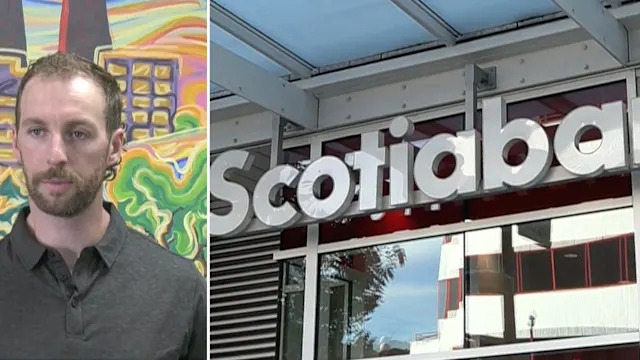

An Ontario couple who had just begun a new chapter as business owners say they were left financially devastated after fraudsters drained more than $90,000 from their Scotiabank accounts, leaving them uncertain over whether the bank will return the stolen money.
Dilyn Gilbert-Leduc and his wife became the owners of Mor In Pools and Spas at the start of 2026, a milestone that should have marked a promising year for their family. Instead, the couple says their personal and business finances were hit by a major fraud attack on March 31, when scammers allegedly gained access to accounts linked to Scotiabank and moved out nearly all available funds.
According to the couple’s account, the fraud involved what appeared to be Scotiabank’s customer service number. Gilbert-Leduc said he had received several missed calls from the number and was initially cautious because he knew fraud attempts were common. But when the couple eventually answered, the caller appeared convincing and seemed to know enough information to sound legitimate.
The situation became even more alarming because the number appeared authentic when the couple called back. That detail points to one of the most troubling parts of modern banking scams: phone-number spoofing, where fraudsters can make a call appear as though it is coming from a real bank line. Scotiabank later said its customer service number had not been compromised and warned that scammers may spoof phone numbers to mislead customers.
Gilbert-Leduc said the fraudsters accessed the funds through a personal token connected to Scotia Connect, the bank’s business banking platform. The money was reportedly taken from both personal and business accounts, putting pressure on the family and the newly acquired company at the same time.
One of the most important details in the case is the couple’s claim that money had already been taken before they shared further personal information with the caller. That point may become central in any reimbursement decision, because banks often examine whether a customer directly approved a transaction or disclosed information such as passwords, one-time codes, PINs or security tokens.
Scotiabank did not comment on the couple’s individual case, citing privacy reasons. In a general statement, the bank said it would never ask customers to disclose a PIN, password or one-time code on a call the customer did not initiate. The bank also emphasized that spoofed calls can make fraudsters appear to be calling from an official number.
The couple say they have not received a clear commitment that the money will be returned. Gilbert-Leduc said they had been given uncertain responses, including what he described as a “50-50” chance of recovering the funds, even though the money had allegedly been traced to another bank. For readers looking at broader consumer protections, the Financial Consumer Agency of Canada explains that federally regulated financial institutions must investigate unauthorized transaction claims and consider relevant factors before deciding whether a customer is responsible.
Bank spoofing scams are becoming harder to detect
The case shows how difficult it has become for ordinary customers to identify bank fraud in real time. Many people are told to call the number on the back of their bank card or return a call through an official line. But spoofing can blur that safety step, especially when a fraudster makes a call appear to come from a trusted institution.
For the couple, the impact goes beyond a disputed bank transaction. The alleged fraud struck just months after they took over a small business, leaving them dependent on support while waiting for answers. Their case has now become a warning about the growing sophistication of banking scams in Canada and the uncertainty victims can face even after a fraud has been reported.

Make Swikblog your go-to source on Google for reliable updates, smart insights, and daily trends.