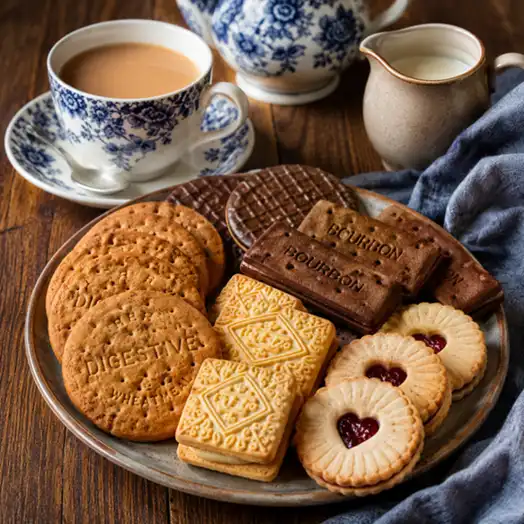

National Biscuit Day 2026 is being celebrated on Friday, 29 May, honoring one of Britain’s most iconic tea-time traditions. From classic Digestives and Rich Tea biscuits to Hobnobs, Bourbons, Custard Creams, and Jammie Dodgers, biscuits continue to hold a special place in British homes, offices, and cafés.
The annual food awareness day celebrates biscuits in all forms — sweet, savory, homemade, and mass-produced. Across the United Kingdom, people are marking the occasion with tea breaks, biscuit tastings, baking sessions, and online debates over which biscuit deserves the title of Britain’s favorite.
The story of biscuits dates back thousands of years. The word “biscuit” comes from the Latin phrase panis biscotus, meaning “twice-cooked bread.” Ancient Roman soldiers and Egyptian sailors carried hard baked biscuits during long journeys because they could survive for months without spoiling. These early biscuits were baked hard to remove moisture, making them durable travel food.
Historians believe the first biscuits were not sweet at all. Early versions were simple flour-based baked foods eaten mainly for survival. Sweet biscuits only started appearing around the seventh century when Persian bakers experimented with butter, eggs, cream, honey, and sugar. Over time, biscuits spread throughout Europe, with different countries developing their own recipes and traditions.
Britain’s biscuit industry grew rapidly during the Industrial Revolution. Famous companies like Huntley & Palmers, Carr’s, and McVitie’s transformed biscuits into a global product through factory production and improved packaging. In 1831, Huntley & Palmers introduced the decorative biscuit tin, helping keep biscuits fresh while turning them into popular gifts. By 1900, the company reportedly exported biscuits to 172 countries around the world.
One of the biggest moments in biscuit history came in 1892, when McVitie’s introduced the Digestive biscuit. Originally marketed as a digestive aid because of its sodium bicarbonate content, it later became one of the UK’s bestselling biscuits and remains a tea-time favorite today.
Read More
Why National Biscuit Day Still Matters
Britain continues to rank among the world’s biggest biscuit-consuming nations. Industry reports estimate the average Briton buys around 500 biscuits every year, while British households consume close to 100 packets annually. The UK biscuit market is worth billions of pounds and supports thousands of jobs across manufacturing, retail, and food distribution.
Biscuits are also deeply tied to British social culture. Tea and biscuits remain part of workplace breaks, family conversations, and everyday routines across the country. The famous “biscuit dunking” debate — deciding which biscuit survives longest in tea — has become part of modern British identity.
National Biscuit Day also highlights cultural differences between the UK and the United States. In Britain, biscuits are crunchy baked snacks similar to cookies, while in America the term “biscuit” refers to soft bread rolls often served with butter, jam, or gravy.
People celebrating National Biscuit Day 2026 are baking homemade shortbread, hosting blind biscuit tastings, trying traditional recipes, and supporting local bakeries and artisan biscuit makers. Many are also sharing favorite biscuit memories online using hashtags like #NationalBiscuitDay and #BiscuitDay.
Interesting biscuit facts continue to fascinate food lovers. Historians note that early British biscuits were once used as breath fresheners, while some cultures believed eating biscuits before funerals could help relieve sins. During World War II, the pairing of tea and biscuits became even more popular across Britain because of rationing and morale-boosting tea breaks.
Readers interested in food traditions and awareness celebrations can also explore Swikblog’s feature on World Food Day 2025.
For additional verified history and event details, visit National Today’s National Biscuit Day guide.
Despite changing food trends and modern snacking habits, biscuits continue to survive because of their simplicity, nostalgia, affordability, and timeless connection to British tea culture.
“`
Make Swikblog your go-to source on Google for reliable updates, smart insights, and daily trends.