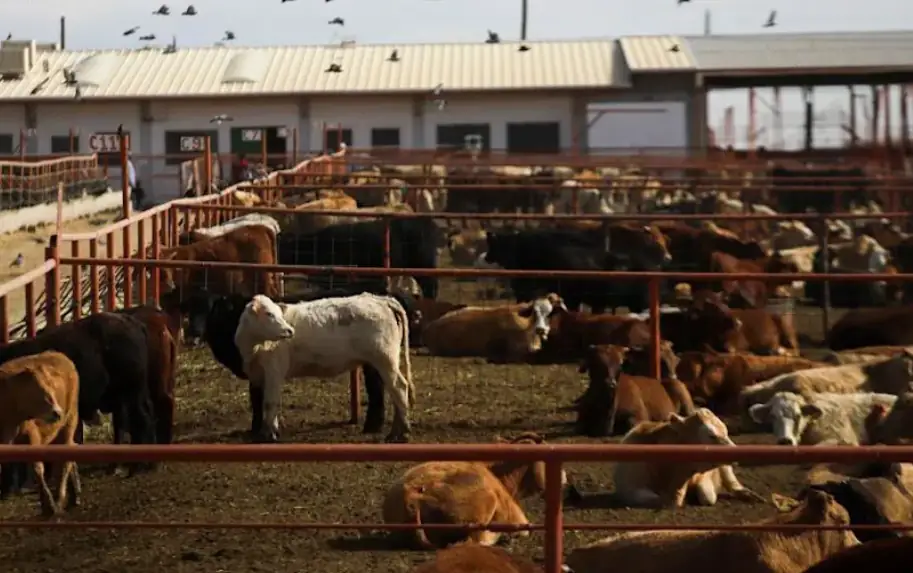

Canada has temporarily blocked cattle and horse imports from Texas after U.S. authorities confirmed cases of the flesh-eating New World screwworm in calves near the Mexico border, marking the parasite’s return to the United States decades after it was declared eradicated.
The Canadian Food Inspection Agency (CFIA) announced that livestock that have been in Texas within 21 days before entering Canada will not be accepted until further notice. The move follows the discovery of infected calves in South Texas, where federal and state officials are attempting to contain what could become a significant threat to the North American cattle industry.
The first confirmed case involved a three-week-old calf in La Pryor, Texas, approximately 30 miles from the Mexico border. Officials found screwworm larvae in the animal’s umbilical area. Just days later, a second case was identified in a one-month-old calf in Zavala County, roughly 5.6 miles from the original detection site. Both cases were discovered as authorities investigated multiple suspected infections in the region.
Flesh-Eating Parasite Returns After Nearly Six Decades
The New World screwworm is an invasive parasitic fly whose females lay eggs in open wounds or body openings of warm-blooded animals. Once the eggs hatch, hundreds of larvae burrow into living tissue and continue feeding, causing severe injuries that can become fatal if left untreated.
The parasite was considered eradicated from the United States in 1966 after a successful sterile-fly programme. However, agricultural authorities have closely monitored its gradual movement through Central America and Mexico in recent years. The Texas detections are the first confirmed cases linked to the latest outbreak moving northward toward the U.S. border.
The U.S. Department of Agriculture has established a 20-kilometre control zone around the affected area and implemented quarantines, livestock movement restrictions and enhanced surveillance. According to the USDA APHIS New World Screwworm Emergency Response, federal and state agencies are coordinating efforts to prevent the parasite from spreading beyond South Texas.
Read More
Economic Risks Extend Beyond Texas
Texas is the largest cattle-producing state in the United States, making the outbreak particularly concerning for ranchers, exporters and livestock markets. Governor Greg Abbott declared a state of disaster on June 6, warning that the screwworm outbreak poses an imminent threat to the state’s agricultural sector and could expand during the summer months.
The impact could also be felt across the border. Canada imported approximately 550,000 cattle from the United States in 2025 for breeding, dairy and slaughter purposes. Although Canadian officials believe the country’s colder climate makes widespread establishment of the parasite less likely, they have advised farmers to monitor animals for wounds accompanied by discharge or foul odours. Authorities have also urged pet owners travelling to Texas to inspect their animals carefully.
To contain the outbreak, U.S. officials plan to release hundreds of millions of sterile flies designed to reduce screwworm reproduction. Specially trained detector dogs are also being deployed to help identify infected animals. Some experts, however, have questioned whether these measures alone will be enough if the parasite continues expanding its range.
The outbreak also serves as a reminder of how interconnected modern livestock supply chains have become. As international animal transport networks continue to grow—highlighted by Heytesbury’s acquisition of 11 live export ships from Vroon—governments are placing greater emphasis on disease prevention and biosecurity to protect agricultural industries.
Officials stress there is currently no food safety risk associated with the Texas cases. The primary concern remains protecting livestock from a parasite that once cost governments millions of dollars to eliminate and is now testing North America’s biosecurity systems once again.
“`
Make Swikblog your go-to source on Google for reliable updates, smart insights, and daily trends.