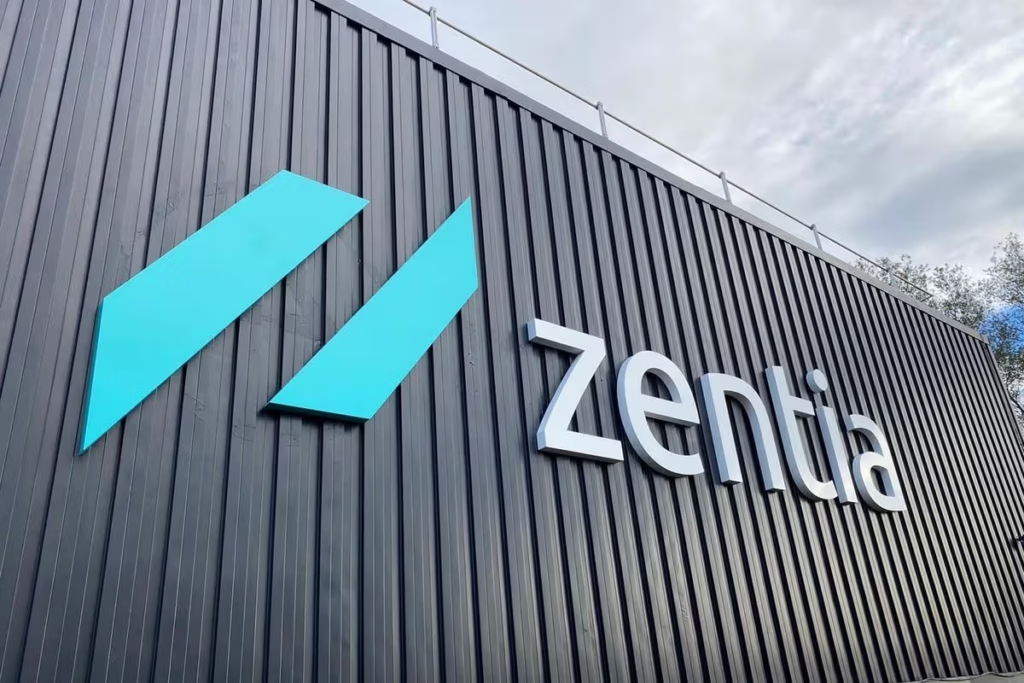

Zentia, a long-established UK manufacturer of acoustic ceiling systems, has entered administration, resulting in approximately 170 redundancies and bringing production to a halt at its two Gateshead facilities. The collapse marks a major setback for the North East manufacturing sector and highlights the pressure facing companies linked to Britain’s construction supply chain.
The company, formerly known as Armstrong Ceiling Solutions, was rebranded as Zentia after its acquisition in 2020. It manufactured mineral fibre ceiling tiles, suspension grids and floating ceiling systems used in offices, hospitals, schools and commercial buildings across the UK.
Administrators from Interpath were appointed to Zentia Limited and Zentia Profiles Limited after attempts to stabilise the business failed. The companies had combined annual revenues of more than £50 million, but rising energy costs, weaker-than-expected sales and difficult market conditions left the directors with no solvent route forward.
The business had already received a £6.5 million capital injection from its shareholder last year and later explored sale options. However, those efforts were not enough to prevent administration. Production has now stopped at both Gateshead sites, with most of the workforce made redundant and a small number of staff retained to assist the administrators.
Zentia’s collapse is striking because the company had recently been recognised as a strong UK manufacturer. In 2023, it won the Made in Britain Award at the North East Business Awards and had also featured among the North East’s Top 200 largest companies.
Just five years ago, Zentia was expanding and creating jobs after securing a £12 million finance facility to bring more manufacturing processes in-house. Its products were used in projects including the transformation of Harton Technology College in South Shields and renovation work at Kings Church in Amersham.
The administration reflects wider problems across the construction supply chain, where suppliers have been squeezed by higher operating costs, delayed projects and weaker demand. Similar pressure was seen when a UK groundworks contractor collapsed, putting hundreds of jobs at risk.
Interpath managing director and joint administrator James Lumb said Zentia’s long history in the North East made the situation especially disappointing, adding that support for affected workers would be the immediate priority.
The administrators are now seeking buyers for Zentia’s business and assets, including remaining stock. Interested parties have been asked to contact the administrators as the sale process gets underway.
Read More
Employees, suppliers and other stakeholders seeking updates on the administration process can access case information through Interpath’s Insolvency Portal.
For Gateshead, the loss of Zentia is more than a company failure. It removes skilled manufacturing jobs from a region with deep industrial roots and shows how quickly even established businesses can be hit when high energy costs, softer sales and construction-sector weakness arrive at the same time.

Make Swikblog your go-to source on Google for reliable updates, smart insights, and daily trends.