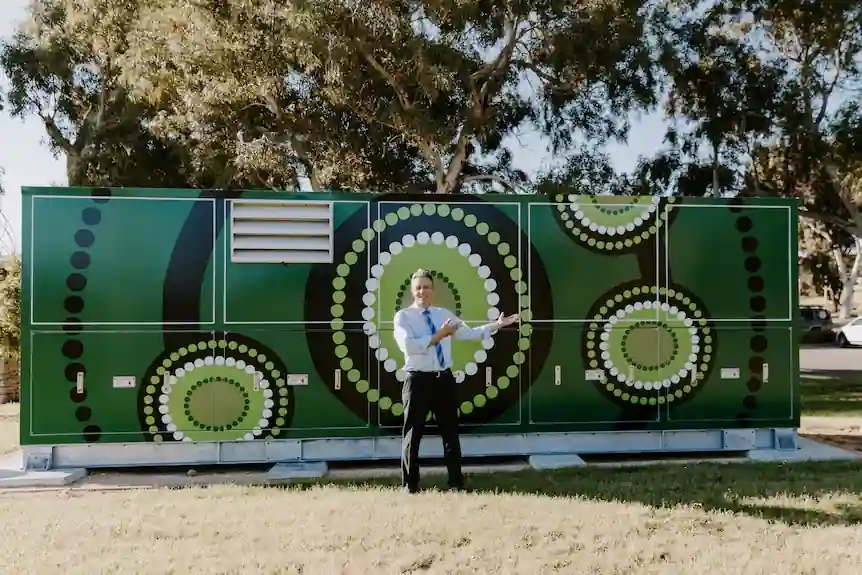

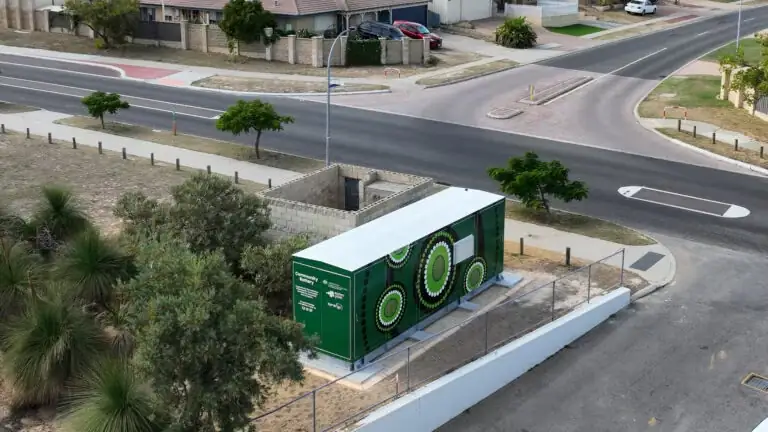
Western Australia is expanding its energy storage network with 18 new community batteries planned across Perth and Bunbury, a move designed to capture more rooftop solar power, strengthen grid reliability and support thousands of households as renewable energy generation continues to grow.
The $25 million project will be delivered by Western Power with support from the Australian Government, which is contributing approximately $9.3 million. Once operational, the batteries are expected to support around 5,300 households while helping the electricity network manage increasing amounts of solar energy generated during daylight hours.
The announcement highlights how battery storage is becoming a critical part of Australia’s energy transition. While rooftop solar adoption has surged across Western Australia, storing excess electricity and making it available during periods of high demand remains one of the biggest challenges facing the grid.
Where the New Community Batteries Will Be Installed
The rollout includes 13 locations across Perth and five batteries in the Bunbury region.
- Morley – Newington Reserve
- Canning Vale – Ranford Oval
- Cottesloe – Grant Marine Park
- Palmyra – Redding Reserve
- Winthrop – Somerville Boulevard
- Ballajura – Meadowview Park
- Atwell – Goodwill Park
- Atwell – Kurrajong Park
- Carlisle – Koolbardi Park
- Carlisle – Parnham Park
- Balcatta – Western Power Depot
- Byford – Cristonia Reserve
- Byford – Doley Road
- Usher – Mosedale Avenue
- Withers – Socceroos Place (two batteries)
- Withers – Wimbledon Way (two batteries)
The Bunbury installations are expected to begin operating before summer, while the Perth sites are scheduled for completion by May 2027.
How Community Batteries Support Renewable Energy
Community batteries function as shared storage systems connected to local electricity networks. Rather than serving a single property, they store surplus solar power generated by homes throughout the day and release that electricity when demand increases later in the afternoon and evening.
This approach helps address one of the biggest challenges facing modern power systems. Solar generation typically peaks during the middle of the day when demand is relatively low, while electricity use rises during the evening when solar production falls.
By storing excess energy locally, community batteries can improve grid stability, reduce network congestion and enable more households to continue exporting solar power without placing additional strain on infrastructure.
Why Battery Storage Is Becoming More Important in WA
Western Australia has one of the country’s highest levels of rooftop solar adoption. While this has helped increase renewable energy generation, it has also created periods of significant fluctuation in electricity supply.
During sunny conditions, large amounts of solar power can enter the grid, sometimes pushing wholesale electricity prices lower. However, when weather conditions change or the sun sets, supply can tighten quickly, leading to greater price volatility.
Energy storage helps bridge this gap by making electricity available when renewable generation declines. According to government officials, the latest battery rollout is intended to improve reliability while supporting the state’s broader decarbonisation goals.
The expansion also reflects a wider shift toward battery-backed electricity systems. WA already has more than 45,000 household batteries installed, alongside existing community batteries and large-scale storage projects in locations including Kwinana and Collie.
The momentum behind energy storage is also being supported through policy initiatives. Recent changes to Australia’s home battery rebate program are expected to encourage more households to invest in storage technology while complementing larger community-scale projects.
More Than 5,000 Homes Expected to Benefit
The Perth battery locations are expected to connect to around 1,700 households, while the larger Bunbury installations will support approximately 3,600 homes.
Although residents will not have a battery installed on their own property, they could benefit from a stronger local electricity network capable of managing higher levels of renewable energy generation and demand.
Community batteries can also help defer costly network upgrades by storing energy closer to where it is used, making the electricity system more efficient as solar adoption continues to increase.
Debate Continues Over WA Renewable Energy Targets
The battery announcement has also renewed discussion around Western Australia’s long-term renewable energy policy.
Climate advocates welcomed the investment in storage infrastructure but argued that the state should introduce a legislated renewable energy target to provide greater certainty for investors, businesses and workers.
Western Australia remains one of the few Australian states without a formal renewable energy target. Reports indicate the state government is considering future renewable energy targets for 2035 and beyond, although no final framework has yet been announced.
For supporters of renewable energy expansion, battery projects and policy certainty are closely linked. Storage infrastructure can help accommodate more clean energy generation, but long-term investment decisions often depend on clear policy signals.
What Comes Next
The Bunbury community batteries are expected to be operational first, followed by the Perth installations in 2027. Once completed, the project will add another layer of storage capacity to a rapidly evolving electricity system that is increasingly powered by renewable energy.
Read More
As rooftop solar installations continue to grow across Western Australia, projects such as these are likely to play a larger role in ensuring electricity remains reliable, flexible and capable of meeting future demand.
Additional information about community battery programs and renewable energy storage initiatives is available through the Australian Renewable Energy Agency (ARENA).

Make Swikblog your go-to source on Google for reliable updates, smart insights, and daily trends.