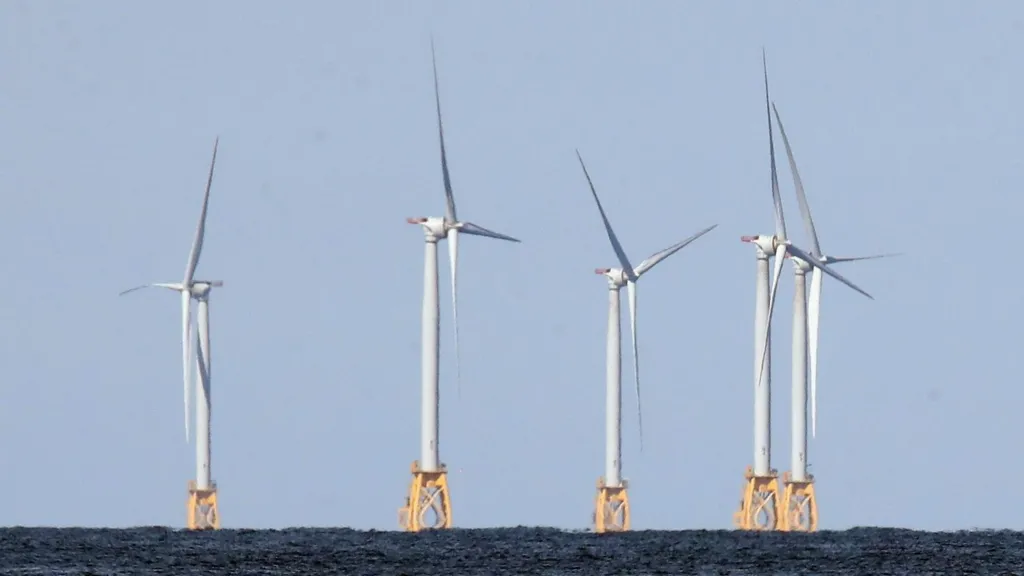

The Trump administration has agreed to pay German energy company RWE about $1.22 billion as the company gives up three offshore wind leases in the United States, ending planned projects linked to New York, California and Louisiana. RWE will instead redirect significant investment toward liquefied natural gas (LNG) and natural gas-fired power generation.
The agreement marks another major shift in U.S. energy policy under President Donald Trump. It is also the fifth offshore wind settlement reached by the administration this year, highlighting a broader move away from new offshore wind development in favor of conventional energy projects.
What the $1.22 Billion RWE Agreement Includes
RWE has agreed to surrender offshore wind leases covering the New York Bight, California and Louisiana. The settlement reimburses the company for the value of leases acquired during the Biden administration while also resolving potential legal disputes over the projects.
Explaining its decision, RWE said there was “no path forward to permit these projects in the U.S. for the foreseeable future,” making it impractical to continue investing in developments facing regulatory uncertainty.
The projects never reached construction, meaning no existing wind farms are being shut down. Instead, the agreement ends projects that could have supplied renewable electricity to coastal regions in the coming years.
The Bureau of Ocean Energy Management confirms the Community Offshore Wind project in the New York Bight remained in the planning stage without a final construction plan.
Why These Offshore Wind Projects Were Important
The New York Bight has long been considered one of America’s most promising offshore wind regions because of its proximity to major electricity markets in New York and New Jersey.
California’s offshore lease was expected to support floating wind technology, while Louisiana’s Gulf Coast location was viewed as an opportunity to combine offshore engineering expertise with renewable energy development.
Together, the three lease areas represented billions of dollars in future clean energy investment before federal policy shifted.
RWE Is Redirecting Investment to LNG and Natural Gas
Although RWE is exiting these offshore wind projects, it is not leaving the U.S. energy market. The company still plans to invest approximately €17 billion ($19.6 billion) in the United States over the next six years.
Its revised strategy includes a $900 million investment for an indirect 16% stake in an LNG export terminal in Louisiana, along with approximately $300 million for new gas turbines. RWE has also outlined plans to develop at least 15 natural gas peaking plants.
The investment shift comes as electricity demand continues to grow because of expanding data centers, artificial intelligence infrastructure and manufacturing. Rising LNG exports are also increasing the importance of domestic natural gas production. Market conditions remain closely linked to factors such as U.S. natural gas prices, storage levels and export demand.
Growing international demand for LNG has also encouraged companies to secure long-term supply arrangements, similar to recent long-term LNG supply agreements signed by global energy companies.
Trump Administration Continues Offshore Wind Rollback
President Donald Trump has consistently opposed offshore wind projects, arguing they rely heavily on subsidies while promoting oil and natural gas development under his “drill, baby, drill” energy agenda.
Interior Secretary Doug Burgum welcomed the agreement, saying Americans deserve an energy system built on “common sense” and stronger domestic energy security.
The RWE settlement follows similar agreements involving TotalEnergies and Duke Energy, making it the fifth offshore wind lease agreement reached by the administration in 2026.
ABB Buys Rotork in $5.5 Billion Deal to Expand Its Automation Business
French Telecom Giants Agree €20.4 Billion SFR Acquisition Deal: What It Means for the Industry
Visit the homepage for the latest business news, mergers, acquisitions and global market updates
Impact on the US Energy Sector
The agreement is unlikely to have an immediate effect on electricity prices because none of the RWE offshore wind projects had entered commercial operation. However, the cancellation removes future renewable generation that had been expected to contribute to the U.S. electricity mix.
States may eventually need additional natural gas, nuclear, solar, battery storage or transmission projects to meet rising electricity demand. At the same time, Louisiana could benefit from new LNG and gas-fired generation investments announced by RWE.
The deal also highlights how changing federal policy can influence where energy companies invest billions of dollars. While RWE continues developing renewable energy projects globally, its latest decision reflects a growing preference for investments that have a clearer regulatory path in the United States.
Why This Deal Matters
The RWE agreement represents more than the cancellation of three offshore wind projects. It signals a broader shift in U.S. energy investment as companies respond to changing federal priorities.
Offshore wind developments typically require years of environmental reviews, permitting and construction before generating electricity. By contrast, the Trump administration is encouraging greater investment in LNG infrastructure and conventional energy projects that it believes can move forward more quickly.
For investors, utilities and consumers, the settlement demonstrates how government policy can reshape long-term energy planning. Whether additional offshore wind developers pursue similar agreements will likely influence the future direction of America’s renewable energy industry.

Make Swikblog your go-to source on Google for reliable updates, smart insights, and daily trends.