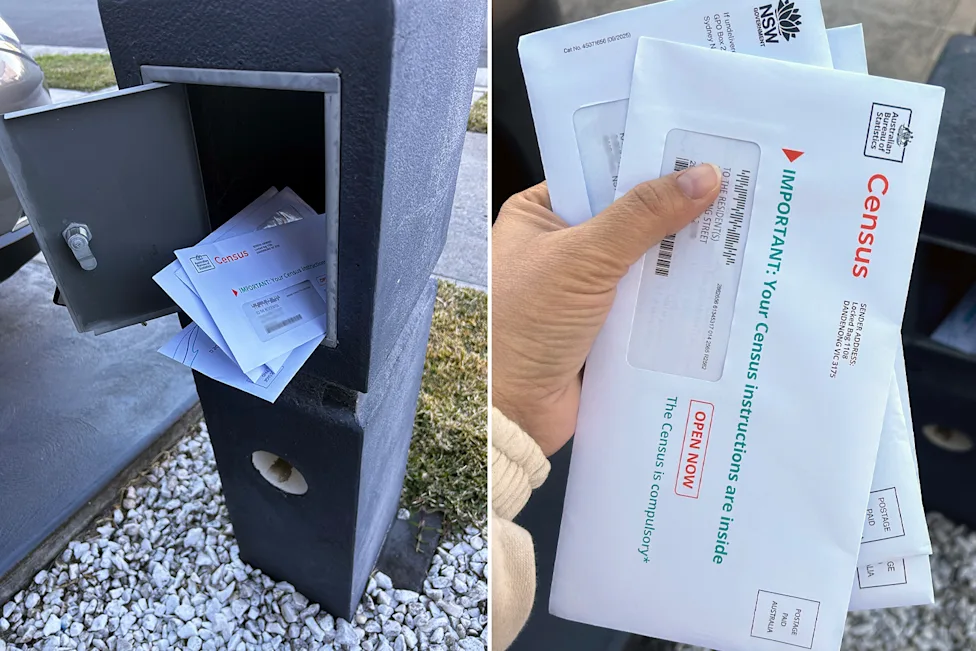

Australians are preparing for the 2026 Census on Tuesday, August 11, with people across the country required to be counted in the national population survey. The biggest point of confusion is the widely reported $364-a-day fine, which does not automatically apply simply because someone misses Census night.
The Australian Bureau of Statistics, or ABS, first seeks compliance through reminders and follow-up contact. Penalties can apply if a person continues to ignore a formal legal direction to provide Census information.
When is the 2026 Census?
Census night is August 11, 2026. The Census is held every five years and provides a snapshot of Australia’s population, households and housing.
Most households receive instructions explaining how to complete the Census online. Paper forms are also available. The ABS says an average household should take around 30 minutes to complete the survey.
Who must be counted?
People who are in Australia on Census night generally need to be included, including Australian citizens, permanent residents, temporary visa holders and visitors.
Usually, one person completes the form for everyone staying at the address. Someone who normally lives elsewhere should generally be counted where they are staying on Census night.
When can the $364 daily fine apply?
Missing August 11 does not trigger an automatic $364 penalty.
If Census information remains outstanding, the ABS can contact the household and seek a response. The Australian Statistician can later issue a formal direction under the Census and Statistics Act 1905 requiring the information to be supplied.
Continued failure to comply with that direction can become an offence carrying one Commonwealth penalty unit for each day the failure continues.
From July 1, 2026, one federal penalty unit is worth $364.
The process can therefore involve reminders, follow-up contact, a formal legal direction and, only after continued non-compliance, possible daily penalties.
Can false information lead to a fine?
Australians must provide accurate information. Knowingly giving false or misleading information can carry a maximum penalty of 10 penalty units, currently equivalent to $3,640.
What does the Census ask?
The 2026 Census contains 66 questions covering areas such as age, birthplace, ancestry, language, education, employment, income, household relationships and housing.
New questions on gender and sexual orientation apply to people aged 16 and over. Both include a “prefer not to answer” option. The Census also asks about sex recorded at birth.
The religion question is different because it remains voluntary. Australians can leave it unanswered without being penalised.
Official information about the survey and its questions is available through the Australian Bureau of Statistics 2026 Census guidance.
Why does the Census matter?
Census data helps governments understand where Australians live, how communities are changing and where services may be under pressure.
The information can influence planning for schools, hospitals, healthcare, roads, public transport, housing and community infrastructure. It also contributes to population estimates, government funding decisions and regional planning.
Those demographic pressures often overlap with wider financial changes affecting households. Australians can also review Australia’s July 1 tax, Centrelink, superannuation and minimum wage changes.
Population growth can also shape housing demand and local infrastructure needs. Recent property reforms are explained in our guide to Australia’s new property rules for home buyers and sellers.
Coles Job Cuts 2026: Roles Shift to India as Accenture Restructuring Expands
Meta Ordered to Pay $567 Million Over Claims Facebook and Instagram Harmed Teens
Visit the homepage for the latest business news, job cuts, technology and legal updates
Is Census information private?
The ABS says identifiable Census information is protected by strict secrecy requirements and is not provided to other government agencies for ordinary compliance or enforcement purposes.
Published Census statistics are designed to show population trends rather than identify individual households.
Names and addresses may be retained temporarily for statistical purposes. A separate voluntary Census Time Capsule option allows people to have their information preserved by the National Archives of Australia for 99 years.
What if you miss Census night?
People who forget, lose their Census letter or have difficulty completing the form should not ignore the issue. They should complete the Census as soon as possible or seek assistance from the ABS.
The main point for households is that the $364 daily fine is an enforcement penalty for continued failure to comply with a formal direction, not an automatic charge for being a day late.

Make Swikblog your go-to source on Google for reliable updates, smart insights, and daily trends.