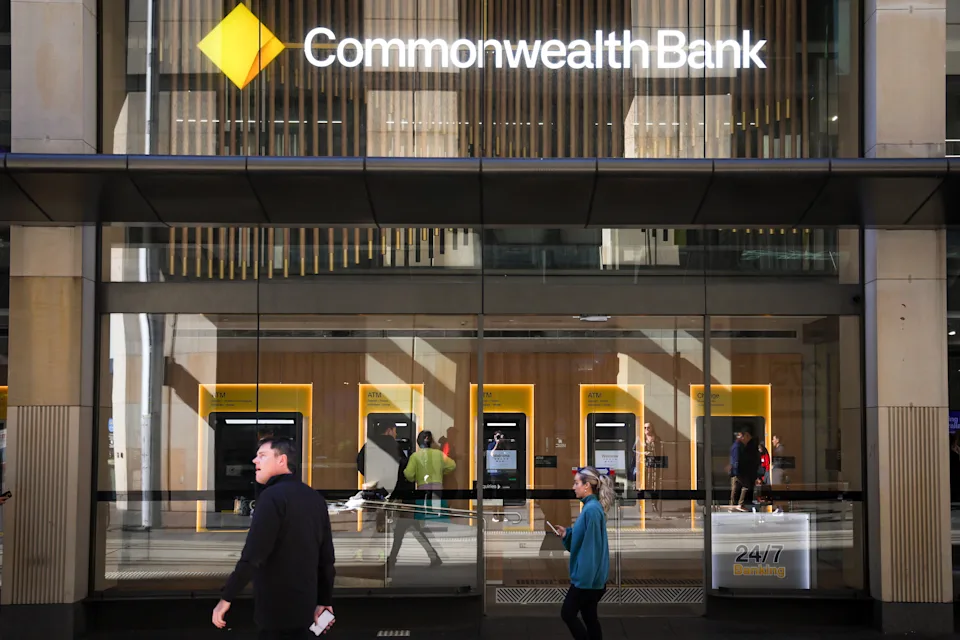

Australians who lose money to scammers could eventually receive faster reimbursement for smaller losses under new protections being developed by the federal government, but the proposed $3,000 threshold is not a refund customers can claim today.
The government believes verified scam losses below $3,000 should be handled through automatic or semi-automatic reimbursement. The proposal forms part of Australia’s Scams Prevention Framework (SPF), which will place stronger responsibilities on banks, telecommunications companies and key digital platforms.
The issue is back in focus as Commonwealth Bank says its customer scam losses fell 76% in the second half of FY2025 compared with their peak in the first half of 2023.
Who could qualify for the $3,000 reimbursement?
The proposed streamlined system is aimed at people with smaller, verified scam losses. Assistant Treasurer Daniel Mulino has indicated that cases involving amounts such as $500 or $1,000 should not routinely require lengthy and costly dispute resolution.
Importantly, $3,000 would be a threshold rather than a standard payment. A person who loses $700 would not receive $3,000. The scam would also need to be verified, with final rules still to determine exactly what evidence, eligibility requirements and exceptions apply.
Australians therefore cannot currently demand an automatic reimbursement simply because their scam loss was below $3,000.
What if you lose more than $3,000?
A loss above the proposed threshold would not necessarily mean the victim receives nothing. Larger and more complex claims are expected to go through dispute resolution, allowing the circumstances and conduct of the businesses involved to be assessed.
The Australian Financial Complaints Authority (AFCA) has been selected to provide external dispute resolution for eligible SPF complaints that cannot be resolved directly.
Banks, telcos and digital platforms face new responsibilities
The framework is significant because responsibility will not rest solely with banks. Banking, telecommunications and key digital platforms are the first sectors covered.
A scam can begin with a fraudulent social-media advertisement, move to phone or messaging contact and end with a bank transfer. The new approach is designed to make businesses across that chain take stronger action to prevent, detect, disrupt and respond to scams.
According to the Australian Government’s Scams Prevention Framework update, designated businesses are expected to be ready for the stronger requirements from March 31, 2027. The detailed $3,000 reimbursement arrangements are still being developed.
Australians reported $2.18 billion in scam losses
Scams remain a major financial threat. National Anti-Scam Centre figures show combined reported losses reached $2.18 billion in 2025 across major reporting bodies, from 481,523 reports.
Investment scams caused the biggest losses at about $837.7 million, followed by payment-redirection scams, romance scams, phishing and remote-access scams.
Financial information can also become vulnerable after cyber incidents. The Origin Energy data breach involving customer bank details is a recent reminder of why consumers should closely monitor accounts when sensitive information may have been exposed.
HIVE Stock: $350 Million AI Cloud Contract and What It Means
CommBank $68 Million Fee Refund: What Australian Customers Need to Know
CBA says speaking to someone can stop a scam
Commonwealth Bank’s latest behavioural research suggests isolation can make victims more vulnerable. Among victims who had not spoken to someone, 31% believed they could handle the situation themselves, 33% felt a conversation was unnecessary and 34% cited embarrassment.
Among business customers surveyed, 72% of people who were scammed had not discussed the situation with a colleague before realising it was fraudulent.
CBA’s Scams Awareness Week campaign also features comedian Jimmy Rees, who described a near-miss while selling a car when he was younger. A supposed interstate buyer offered to cover transport costs, but Rees became suspicious and spoke to his father. That conversation helped him recognise the scam before losing money.
Why scams are becoming harder to spot
Fraudsters increasingly use convincing impersonation, investment promotions, social media and AI-generated material to create legitimacy and urgency. Victims may be pressured to transfer money to a supposed “safe account,” provide authentication codes or allow remote access to a device.
Fake employment opportunities are another risk. A previous Commonwealth Bank warning about fake job offers highlighted how criminals can use seemingly legitimate work opportunities to obtain financial details or recruit people to move stolen money.
What should scam victims do now?
Anyone who believes they have sent money to a scammer should contact their bank immediately through an official app, website or verified phone number. Acting quickly may improve the chance of stopping or tracing a payment and securing affected accounts.
Keep screenshots, messages, transaction records, advertisements, email addresses and phone numbers as evidence. Victims can also report scams to Scamwatch and should immediately change compromised passwords or security credentials.
Customers should not wait for the future $3,000 reimbursement arrangements. For now, the proposal represents a planned faster pathway for smaller verified losses—not a guaranteed $3,000 payment for every Australian who reports being scammed.

Make Swikblog your go-to source on Google for reliable updates, smart insights, and daily trends.