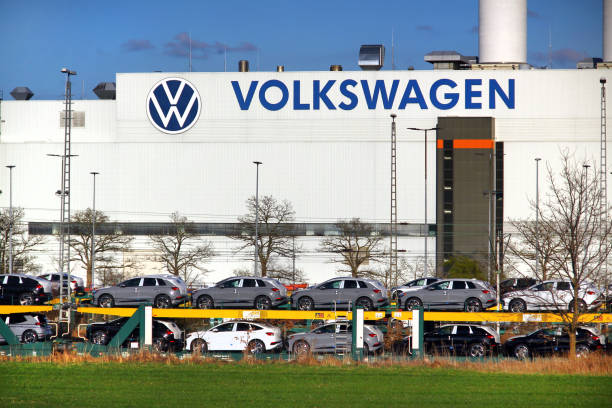

WOLFSBURG, Germany — Volkswagen Group has approved plans to reduce approximately 50,000 additional positions worldwide as Europe’s largest automaker launches the most extensive restructuring program in its history.
The new workforce adjustment comes on top of approximately 50,000 job reductions already being implemented, potentially taking the total number of positions affected by Volkswagen’s existing and newly approved programs to around 100,000.
Volkswagen’s supervisory board unanimously approved the company’s sweeping Future Plan 2030 on Thursday, September 3. The overhaul is intended to lower costs, simplify the group’s complicated corporate structure and improve its ability to compete with rapidly expanding Chinese automakers.
Key details:
- Approximately 50,000 additional positions could be eliminated worldwide.
- The reductions are separate from about 50,000 cuts already underway.
- Management positions will be included in the latest adjustment.
- Four German plants face an uncertain production outlook after 2030.
- Volkswagen plans to halve its vehicle portfolio by 2035.
- The company is targeting a 9% operating margin by 2030.
Volkswagen has not yet announced which countries, brands or facilities will bear the greatest share of the additional reductions. It has also not provided a detailed timetable or said how many positions could be removed through layoffs, voluntary departures, retirement programs or natural attrition.
The distinction is important because the company described the measure as a global “workforce adjustment” rather than confirming 50,000 immediate dismissals.
Why Volkswagen is cutting more jobs
Volkswagen said the automotive industry is undergoing one of the fastest and most fundamental transformations in its history. The company is facing weaker demand, technological disruption, expensive production structures and increasingly aggressive global competition.
Chinese manufacturers have expanded rapidly with competitively priced electric vehicles, putting pressure on established European brands both inside China and in their home markets. Volkswagen is also contending with weaker performance in China, previously one of the group’s most important profit centers.
In North America, tariffs and trade-related expenses have added further pressure. Volkswagen said its regional strategy will now focus more closely on the most profitable vehicle segments.
The company’s European factories are another major concern. Volkswagen estimates that its production capacity in Europe currently exceeds customer demand by more than 500,000 vehicles.
Under the Future Plan, the company intends to develop a more competitive structure for its European production network by the end of June 2027.
The group will also substantially reduce the number of vehicles and variants it offers. Volkswagen plans to cut its model portfolio by approximately 50% by 2035 while reducing the complexity of its overall offering by about 75%.
Producing fewer models and variants could allow Volkswagen to build more units of each prioritized vehicle, improve economies of scale and reduce development and manufacturing expenses.
The restructuring arrives as major corporations across several industries reassess staffing and operating costs. HCA Healthcare, for example, recently cited rising expenses and changes in its operating environment when it announced layoffs across corporate and support functions.
Volkswagen’s plan goes beyond employment reductions. It calls for leaner management, shorter decision-making processes, a common performance and bonus system for executives and a review of the group’s wide-ranging investments and businesses.
The company intends to streamline its portfolio of holdings and business interests by approximately one-third. Activities that do not provide a clear strategic or financial contribution to the core automotive business could be sold, restructured or repositioned.
What happens to Volkswagen’s German plants?
The future of four major German facilities—Emden, Zwickau, Hanover and Neckarsulm—is among the most sensitive elements of the plan.
Volkswagen said competitive future vehicle production cannot currently be secured for these factories on a staggered basis between 2031 and 2034. The company will therefore study alternative uses for the sites.
That does not mean the four plants have already been scheduled for closure. Their long-term production assignments remain uncertain, and negotiations involving management, unions, employee representatives and regional officials are expected to continue.
Worker representatives hold substantial influence at Volkswagen, while the German state of Lower Saxony is a major shareholder. The final agreement avoided an immediate confrontation between company management, labor representatives and the state government.
Daniela Cavallo, chairwoman of Volkswagen’s Group and Central Works Council, described the Future Plan as necessary for guiding the company into the next decade. However, she stressed that the burden of the transformation should not fall solely on employees.
Volkswagen CEO Oliver Blume called the supervisory board’s approval a strong signal for the group’s future, saying the company was accepting responsibility for its workforce, business partners and industrial jobs.
The automaker plans to invest €135 billion in capital expenditure and research and development between 2027 and 2031. Those investments are expected to support new vehicles, software, technology and future growth areas.
Volkswagen is targeting annual sales of approximately nine million vehicles and an operating margin of 9% by 2030. That margin would correspond to an operating result of roughly €31 billion, according to the company’s plan.
The scale of the overhaul reflects Volkswagen’s recent financial deterioration. The group reported an operating result of €8.9 billion in 2025, down sharply from €19.1 billion in 2024, despite delivering approximately nine million vehicles in both years.
Volkswagen employed around 663,000 people worldwide at the time of the announcement and operated 111 production facilities across Europe, the Americas, Asia and Africa. A combined reduction of approximately 100,000 positions would therefore represent about 15% of its global workforce, although the final total and timing will depend on how the programs are implemented.
Investors reacted positively to the board’s approval, with Volkswagen’s Frankfurt-listed shares closing 7.9% higher following the announcement, according to Reuters.
The approval marks the beginning of a difficult implementation phase rather than the end of Volkswagen’s restructuring debate. Measures that require agreements with employee representatives will now move into negotiations, while decisions concerning individual brands, countries and factories are expected to emerge gradually.
This is a developing business story. The article will be updated when Volkswagen releases a regional breakdown or detailed timetable for the additional workforce reductions.

Make Swikblog your go-to source on Google for reliable updates, smart insights, and daily trends.