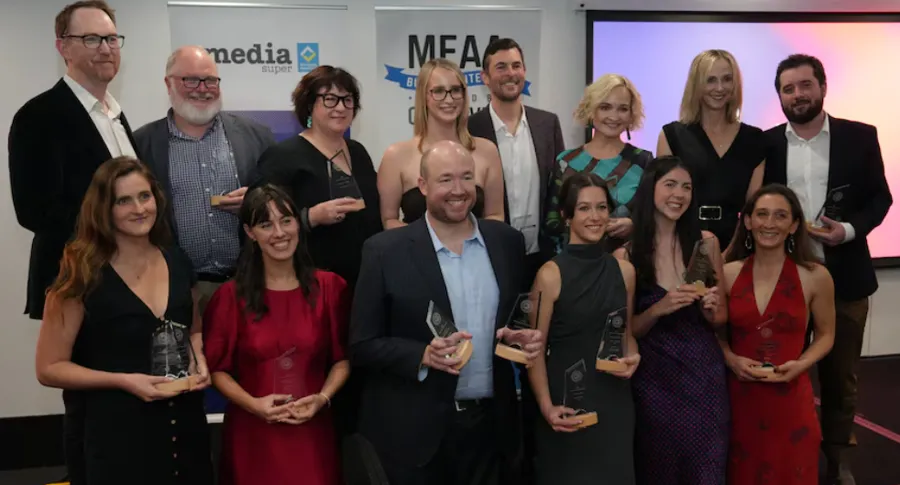

ABC journalists dominated the 2026 Tasmanian Media Awards after winning 11 out of 20 categories during a major night for Australian regional journalism at Hobart’s Hotel Grand Chancellor.
The annual Media, Entertainment and Arts Alliance (MEAA) awards recognised some of Tasmania’s most closely followed stories from the past year, including the state government’s controversial greyhound racing phase-out plan, the divisive AFL stadium proposal in Hobart, the salmon farming debate and investigations into Tasmania’s youth justice system.
While ABC secured the largest share of awards, WIN News reporter Brent Costelloe took home the night’s highest individual honour, Journalist of the Year, for his exclusive reporting on the government’s decision to phase out greyhound racing in Tasmania.
Judges described Costelloe’s work as a standout among a highly competitive field, praising not only the reporting itself but also the “relationships, hustle and consistency” behind the coverage. His greyhound racing investigation also won best coverage of a breaking news event.
ABC reporters recognised across Tasmania’s biggest stories
ABC journalist Chris Rowbottom won best print news/text story for detailed reporting on Hobart’s proposed $1.13 billion AFL stadium project at Macquarie Point — one of the state’s most politically divisive infrastructure debates.
Adam Holmes received the award for best video news story for his reporting on Tasmania’s troubled salmon farming industry, which has remained under scrutiny over environmental and sustainability concerns. Holmes also won excellence in legal reporting for his wider body of work.
Other major ABC winners included Sophie Jaggers, who was named best new journalist after strong court and exclusive reporting throughout the year. Kate Nickels won best TV camera work, while Morgan Timms secured best news image for photographs taken during the search for missing Belgian tourist Celine Cremer in remote Tasmanian bushland.
Timms and Louise Miolin also won the regional and community news category for a feature on Cape Barren Island’s Aboriginal community marking 20 years since the return of their land.
Fiona Blackwood received the health reporting award for coverage involving an artificial eye maker ordered to stop operating after complaints from patients. Madeleine Rojahn won the public service journalism category for reporting on children being held inside adult custodial facilities and government attempts to prevent information from being released publicly.
ABC arts reporter Ebony ten Broeke won the arts and culture reporting category for her broader body of work.
Read More
Industry veterans and other media outlets also honoured
The ceremony also recognised veteran political journalist David Killick from The Mercury, who received the Keith Welsh Award for Outstanding Contribution to Journalism. Judges called Killick a “leading light” in Tasmanian journalism for more than two decades because of his work holding governments accountable across party lines.
The awards night included a tribute to celebrated political cartoonist Jon Kudelka, a two-time Walkley Award winner who died earlier this year after being diagnosed with brain cancer in 2024.
Outside the ABC, Guardian Australia journalist Adam Morton won best comment or analysis for his coverage of the no-confidence motion against Tasmanian Premier Jeremy Rockliff and also secured the science, technology and environment reporting award.
SBS journalist Kerrin Thomas won the feature and documentary category for reporting on the restoration of Wybalenna on Flinders Island, while ARN journalists Ebony Abblitt and Olivia Hicks earned audio reporting awards.
Readers can see the official Tasmanian Media Awards information through the MEAA awards page.
Swikblog has also covered other major Tasmania developments shaping public debate, including the Bridgewater Bridge infrastructure controversy.

Make Swikblog your go-to source on Google for reliable updates, smart insights, and daily trends.