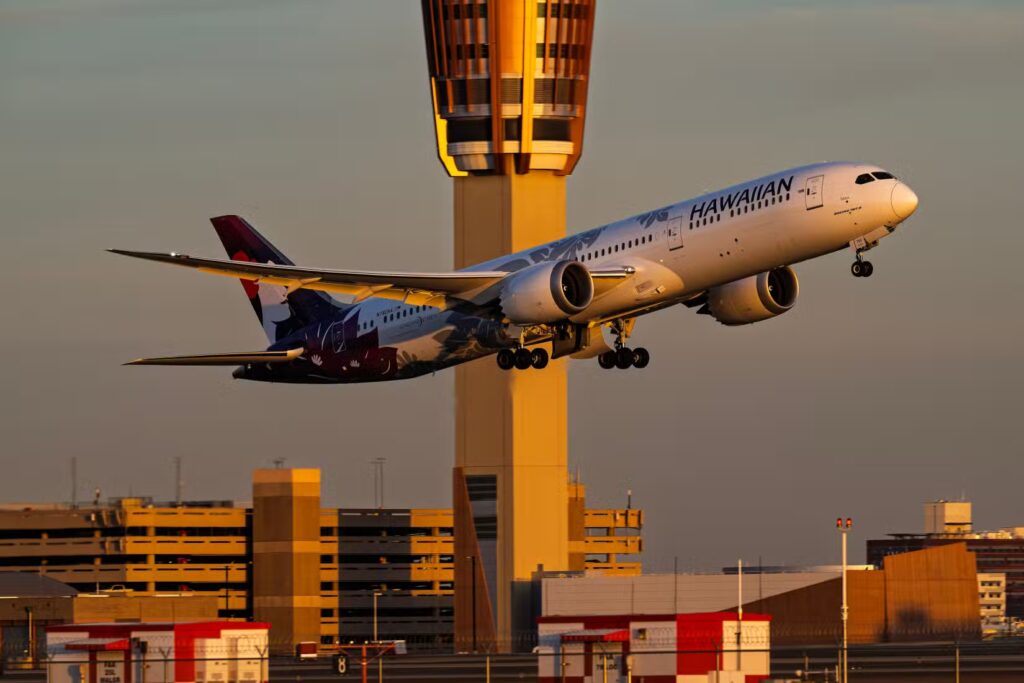

Alaska Air Group’s integration of Hawaiian Airlines is now hitting closer to the cockpit — and not everyone is happy. In a move that has sparked debate across the aviation industry, Alaska Air has ordered Hawaiian Airlines pilots to shave their beards, ending a long-standing exemption that had been allowed for cultural reasons.
The new rule, effective from April 1, is part of a broader update to the airline’s Flight Operations Manual (FOM), aimed at standardizing policies across the merged carrier. While Alaska Air insists the decision is rooted in safety and regulatory compliance, it has quickly turned into a flashpoint over science, identity, and the future of airline workplace policies.
End of a long-standing exception
Before the merger, Hawaiian Airlines stood out among U.S. carriers for allowing pilots to wear beards — a policy shaped partly by cultural considerations in Hawaii, where personal expression and tradition play a significant role.
That flexibility is now gone. In an internal communication, Alaska’s System Chief Pilot Scott Day made it clear that beards “will not be authorized” on the flight deck going forward. Pilots will still be allowed to maintain mustaches, but facial hair must comply strictly with FAA guidance.
The policy change also comes alongside other integration steps, including transitioning Hawaiian pilots operating Boeing 787 aircraft into Alaska Airlines uniforms starting later this month. Together, these moves signal a broader push toward a unified operational and corporate identity.
For many Hawaiian pilots, however, the beard ban represents more than just a grooming update — it marks a shift away from the airline’s distinct cultural identity.
Safety concerns drive the decision
Alaska Air has repeatedly emphasized that the policy is based on safety, not appearance. The central concern lies with oxygen masks used in emergency situations, particularly during rapid decompression.
According to aircraft equipment manufacturers and longstanding aviation guidance, facial hair can interfere with the seal of an oxygen mask, potentially allowing air to leak. In high-altitude emergencies, where oxygen supply is critical, even minor leakage could pose serious risks.
The airline has pointed to FAA Advisory Circular AC 120-43 — first issued in 1987 and still active — which advises against beards for flight crew for this exact reason. More details on these guidelines can be found via the Federal Aviation Administration (FAA).
Alaska also referenced its own internal safety assessments conducted over several years, as well as recommendations from the FAA’s Civil Aerospace Medical Institute (CAMI), which continues to support the clean-shaven standard.
A real-world incident has further reinforced the airline’s position. In January 2024, Alaska Airlines Flight 1282 experienced a mid-air emergency when a door plug detached from a Boeing 737 MAX 9 during climb. Pilots were forced to quickly deploy oxygen masks while managing the situation — highlighting how critical proper mask function can be.
For Alaska Air leadership, such scenarios leave little room for uncertainty.
Conflicting research fuels the debate
Despite the airline’s stance, the science behind beard bans is no longer universally accepted.
A 2024 study conducted by Embry-Riddle Aeronautical University found no evidence that well-groomed beards caused oxygen mask leaks, hypoxia, or increased exposure risks during testing with commercial aviation equipment. Earlier research from Simon Fraser University reached similar conclusions.
These findings have already influenced policy decisions elsewhere. Airlines such as Air Canada have relaxed their rules to allow beards under controlled conditions, while carriers like Emirates permit well-maintained facial hair without restrictions.
Even so, other airlines remain cautious. Australian carrier Qantas recently moved toward tightening its own beard policies, citing safety concerns — a decision that drew criticism from pilot unions who argue the science is outdated.
This growing divide has turned what was once a settled issue into an ongoing industry debate.
Cultural identity vs corporate standardization
For Hawaiian Airlines, the controversy goes beyond safety data.
The airline has long embraced elements of Hawaiian culture, from its iconic Pualani branding to more relaxed policies around tattoos — known locally as kākau uhi. Allowing beards was seen by many as part of that broader cultural flexibility.
Alaska Air executives have acknowledged these concerns. In communications to staff, leadership emphasized that the company has no intention of erasing Hawaiian Airlines’ identity and pointed to continued investments in the brand, including infrastructure upgrades in Honolulu and cabin improvements.
Still, the beard ban — along with other visible changes like livery updates on Boeing 787 aircraft — has raised questions about how much of Hawaiian’s uniqueness will remain after full integration.
For pilots, the issue is personal. Grooming policies may seem minor, but they often symbolize deeper questions about autonomy, respect, and workplace culture.
A wider industry question
The debate unfolding at Alaska and Hawaiian reflects a broader shift happening across aviation.
As new research challenges older assumptions, airlines are being forced to re-evaluate long-standing rules that were once considered non-negotiable. At the same time, the industry’s inherently risk-averse nature makes change slow and cautious.
For now, most U.S. airlines continue to follow the FAA’s conservative guidance, prioritizing proven safety practices over emerging evidence.
Alaska Air’s decision shows that, at least for the moment, regulatory alignment and risk avoidance still outweigh calls for modernization.
But as more data emerges — and as global competitors adopt more flexible policies — pressure on traditional standards is only likely to grow.
What started as a grooming rule has now become part of a much larger conversation about science, safety, and identity in modern aviation.
And for Hawaiian Airlines pilots, that conversation is no longer theoretical — it’s now part of everyday life in the cockpit.

Make Swikblog your go-to source on Google for reliable updates, smart insights, and daily trends.