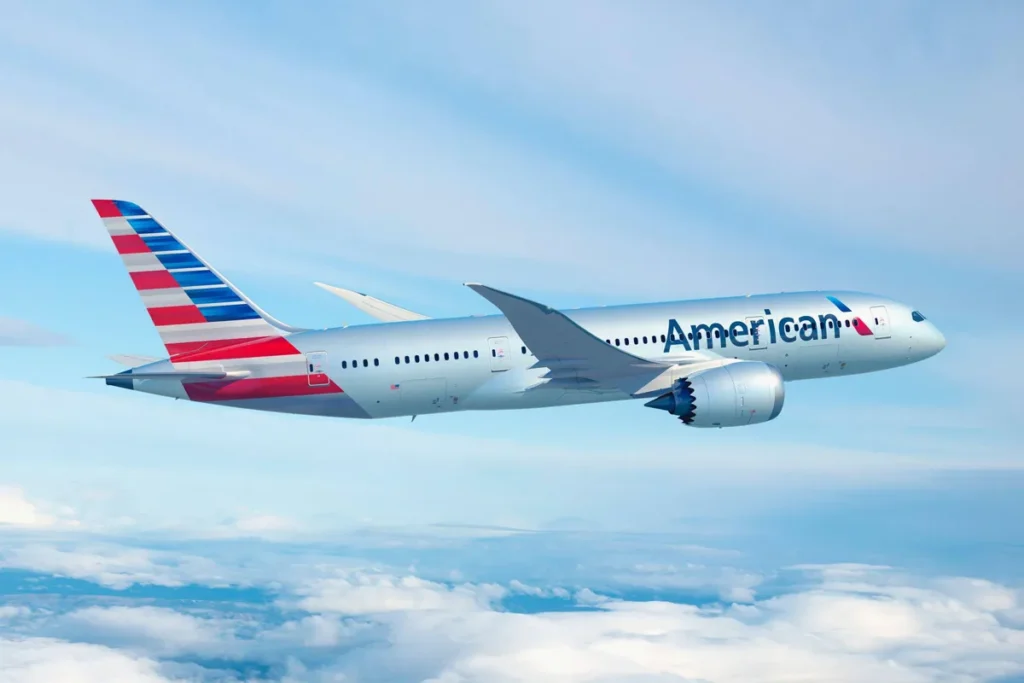

A routine American Airlines flight from Myrtle Beach to Charlotte turned into an emergency within minutes of takeoff Monday when the Boeing 737 struck birds and passengers saw flames flashing from the engine area.
American Airlines Flight 1760 ultimately returned safely to Myrtle Beach International Airport, but not before the crew declared a Mayday, emergency teams prepared on the ground and airport workers discovered bird remains scattered on the runway.
The pilot told air traffic control there were 181 people aboard. No injuries were reported in the information available following the landing.
From takeoff to emergency return
Flight 1760 departed Myrtle Beach, South Carolina, bound for Charlotte, North Carolina, on August 10. The trouble began during the initial climb when the aircraft encountered birds.
“Mayday, mayday, mayday. We’ve got a engine problem here,” the pilot reported over the radio, according to LiveATC.net audio cited in reporting on the incident.
Another pilot who witnessed the encounter reported seeing the aircraft hit birds and indicated that at least some appeared to enter the left-side engine.
Passenger Patrick Gotwalt captured video showing flames coming from the engine area as the aircraft flew over what appeared to be water. From the beach, witness Lindsey Mackey reported hearing several loud popping sounds and seeing orange flashes near the left wing.
Rather than continuing toward Charlotte, the crew circled back toward Myrtle Beach as emergency responders prepared for the aircraft’s arrival.
The flames looked dramatic — but what do they tell us?
Video of flames from a jet engine can look catastrophic, but the images alone do not establish that Flight 1760 suffered a sustained engine fire or complete engine failure.
A bird entering a turbofan engine can suddenly disrupt airflow and combustion. Depending on the circumstances, that disturbance can produce bangs, flashes or flames. The aircraft therefore needs a detailed maintenance inspection before the nature and extent of any damage can be established.
A separate Boeing 737 engine failure investigated after a Qantas takeoff illustrates how technical examinations can reveal causes that are not obvious from what passengers or witnesses initially see. That incident involved a turbine problem rather than a bird strike.
Clues were waiting back on the runway
While Flight 1760 was preparing to return, airport operations personnel found bird debris on the runway.
“We’ve got a lot of bird debris out here. We’re going to grab as many big pieces as we can,” workers said over the radio.
Those remains can become useful evidence. Material left after wildlife strikes is sometimes known as “snarge,” and recovered bird remains can be analyzed to identify the species involved.
The Smithsonian Institution’s Feather Identification Lab in Washington, D.C., works with aviation authorities on species identification. Knowing which birds are involved can help airports recognize recurring wildlife risks and improve prevention measures.
The FAA’s wildlife hazard program collects strike information and provides guidance for reducing wildlife risks around airports.
24,000 reports put the incident in perspective
Flight 1760’s experience was dramatic, but wildlife encounters are a continuing challenge for aviation. More than 24,000 wildlife strikes were reported in the United States during 2025, according to FAA data cited in reporting on the incident.
Many strikes do not result in serious accidents. The potential risk increases when an aircraft encounters large birds or a flock, particularly when a bird is ingested into an engine.
Takeoff and landing are especially important because aircraft are closer to the ground, where encounters with birds are more likely.
That also explains why airports actively manage habitats and wildlife around runways rather than treating bird strikes solely as an aircraft-maintenance issue.
Read More
An American Airline Boeing 737 hit birds while taking off from Myrtle Beach, South Carolina, Monday, leading to flames shooting from an engine and an emergency landing. https://t.co/BTFKpdcZ5x pic.twitter.com/BQLefxqKgU
— CNN (@CNN) August 11, 2026
Why the safe landing matters more than the video
A twin-engine commercial aircraft is designed with redundancy, and pilots train for engine abnormalities and other emergencies. Their first task is to keep the aircraft under control, followed by assessing the situation and choosing whether to continue, divert or return.
In this case, Flight 1760 returned to its departure airport. The aircraft landed safely after emergency services had assembled.
Different emergencies can demand the same rapid coordination between the cockpit and the ground. A separate Frontier Airlines departure emergency at Denver International Airport involved entirely different circumstances but similarly required an immediate response during the takeoff phase.
The Boeing 737 is now out of service
American Airlines said the aircraft landed safely and was taken out of service for its maintenance team to inspect. The carrier also said it was working to get customers to Charlotte as soon as possible.
The Federal Aviation Administration said the crew reported striking a bird while departing and confirmed that it would investigate the incident.
Three important questions remain: how much damage the engine sustained, which bird species was involved and what maintenance will be necessary before the aircraft can return to service.
For the 181 people reported aboard, however, the immediate outcome was clear. What began with a bird strike, popping sounds, visible flames and a Mayday call ended with the Boeing 737 back safely on the ground at Myrtle Beach.

Make Swikblog your go-to source on Google for reliable updates, smart insights, and daily trends.