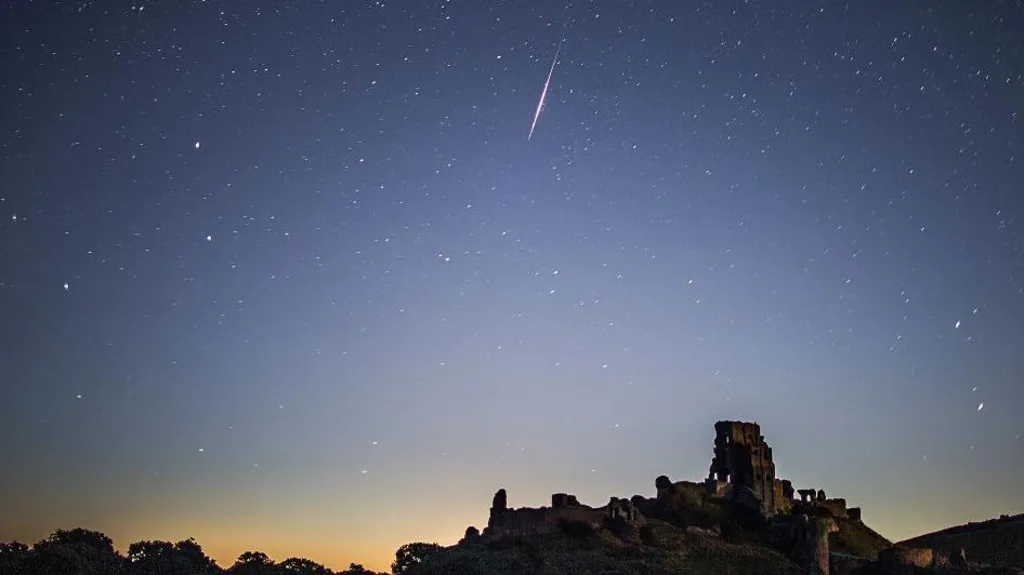

The Perseid meteor shower is heading toward its 2026 peak, giving skywatchers a chance to see bright meteors and occasional fireballs under particularly favourable conditions. The main display is expected overnight on August 12 into August 13, coinciding with a New Moon that will keep bright lunar glare out of the night sky.
The Perseids are active from mid-July into late August, but activity becomes much stronger around the peak. Under ideal dark-sky conditions, observers could potentially see dozens of meteors an hour, although cloud, haze and artificial lighting can sharply reduce the number actually visible.
Perseid meteor shower 2026: key details
Peak: August 12–13, 2026
Best time: After midnight through before dawn
Potential rate: Up to around 100 meteors per hour under ideal conditions
Moon: New Moon
Parent comet: 109P/Swift-Tuttle
Best visibility: Northern Hemisphere
Equipment: None required
What time should you watch the Perseids?
The best opportunity comes during the hours between midnight and dawn around August 12 and 13. Viewing generally improves later in the night as the meteor shower’s radiant in the constellation Perseus climbs higher in the sky.
You do not need to find Perseus to watch the shower. Meteors can streak across almost any part of the sky, so choose a location with a wide, unobstructed view rather than concentrating on one small area.
NASA’s Perseid meteor shower guide explains that the annual display comes from debris associated with Comet 109P/Swift-Tuttle.
Will you really see 100 shooting stars an hour?
Rates approaching 100 meteors per hour are possible under excellent conditions, but that figure should not be treated as a guarantee. Someone watching from a city may see far fewer because streetlights and illuminated buildings hide weaker meteors.
Cloud, haze, surrounding obstacles and how much of the sky is visible also matter. A safe countryside location with genuinely dark skies gives observers a much better chance of seeing the shower at its best.
Why the New Moon matters this year
The New Moon on August 12 is one of the biggest advantages for the 2026 Perseids. Bright moonlight can wash out faint meteors, but this year’s moonless peak should produce a much darker background.
The difference can be significant compared with showers affected by strong lunar glare. Our guide to the May 2026 meteor shower and night-sky events explains how the Moon can influence what observers actually see.
What causes the Perseid meteor shower?
The Perseids are created by debris left behind by Comet 109P/Swift-Tuttle, whose nucleus measures roughly 26km (16 miles) across. The comet takes about 133 years to orbit the Sun.
Earth crosses the comet’s debris trail every year. Small particles enter the atmosphere at high speed and create brief streaks of light. They are commonly called shooting stars, although they are not stars falling toward Earth.
Larger fragments can produce exceptionally bright meteors known as fireballs. A bright-sky event earlier this year prompted similar questions about natural and artificial objects; our report on the Wellington meteor and space debris sighting explains why some objects crossing the night sky can look dramatically different.
Read More
How to get the best view
No telescope or binoculars are necessary. Their narrow field of view can actually make meteor watching more difficult. Find a dark location away from streetlights and give your eyes around 20 to 30 minutes to adjust.
Avoid repeatedly looking at bright phone screens. A reclining chair or blanket can also help because watching a large section of sky for an extended period gives you a better chance of catching unpredictable meteor streaks.
If August 12 is cloudy where you live, the shower remains active on surrounding nights. Activity will generally be lower away from the maximum, but bright Perseids can still appear.
A solar eclipse arrives hours before the Perseids
August 12 brings another major astronomical event. A total solar eclipse will cross parts of Greenland, Iceland, Russia and Spain, with a partial eclipse visible across a wider region including the UK.
The two events are unrelated, but their timing creates an unusual night for astronomy. The New Moon required for the eclipse also provides the dark conditions that benefit the Perseids later that night.
Seeing a meteor during the eclipse would be extremely unlikely and would be most plausible inside the path of totality, where the daytime sky becomes darkest.
Anyone watching the solar eclipse must use certified solar-viewing glasses. Ordinary sunglasses are not safe for looking directly at the Sun, and binoculars, telescopes and cameras require appropriate solar filters.
Weather will ultimately determine what viewers can see. Check the latest local cloud forecast before travelling, choose a safe dark location and allow enough time for conditions — and your eyes — to settle. With minimal moonlight and no specialist equipment needed, the night of August 12–13 offers one of 2026’s most accessible skywatching opportunities.

Make Swikblog your go-to source on Google for reliable updates, smart insights, and daily trends.