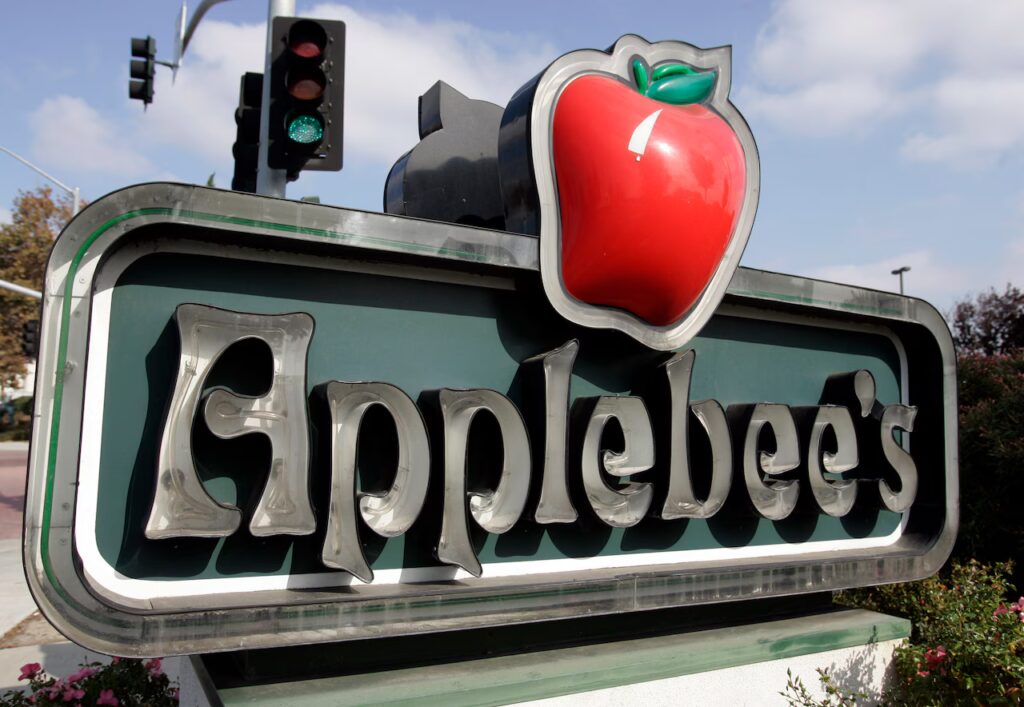

Applebee’s is facing a fresh wave of disruption—and it’s not just another routine round of restaurant closures.
A major franchise operator behind more than 50 Applebee’s locations has filed for Chapter 11 bankruptcy, triggering shutdowns across key U.S. markets and raising broader concerns about the health of the casual dining industry. For a brand long seen as a staple of suburban dining, this development signals a deeper shift underway.
The franchisee, Neighborhood Restaurant Partners Florida, filed for bankruptcy protection on March 24 in the U.S. Bankruptcy Court for the Northern District of Georgia. The company operates 53 Applebee’s locations across Florida, Georgia, and Alabama. But the filing has already led to closures—and more uncertainty lies ahead.
10 Applebee’s locations already closed in key markets
At least 10 restaurants have already shut down, primarily across Florida and Georgia. Many of these were located in high-traffic areas, including near Walt Disney World, SeaWorld, and the Daytona International Speedway—locations that would typically benefit from steady tourist demand.
The list of closed restaurants includes:
Florida: Casselberry, Celebration, Daytona Beach, Kissimmee, Orlando (two locations), Ormond Beach, Panama City, and Panama City Beach
Georgia: Albany
Some of these locations had already stopped operating before the bankruptcy filing, while others were still open as recently as last week, according to customer reviews and local reports. The closures reflect how quickly financial stress escalated for the operator.
Debt pressure and failed sale attempts
Bankruptcy filings show the franchisee is dealing with significant financial strain, with liabilities estimated between $10 million and $50 million. The company also reportedly owes more than $13 million to a lender.
In an effort to avoid bankruptcy, the operator attempted to sell its portfolio. Over a period of four to five months, it reached out to more than 80 potential buyers. While 17 parties initially showed interest, none ultimately completed a deal.
This lack of buyers highlights a key issue in today’s restaurant market: even established brands with recognizable names are not immune to declining investor confidence, especially when locations require operational fixes or carry heavy lease obligations.
According to court documents, the company had already been shrinking its footprint before the filing. Nine restaurants were closed in 2025, followed by five more in the first quarter of 2026, reducing its total count to 53 locations.
What happens next: Applebee’s steps in
Despite the closures, this may not be the end for all affected locations.
Applebee’s parent company, Dine Brands, has entered the process as a “stalking-horse bidder,” meaning it has the option to set the minimum price for the assets during the bankruptcy sale. This move gives the company a strategic advantage in potentially taking control of underperforming locations.
The bankruptcy process is expected to lead to a sale by mid-May. The goal is to keep the business operating as a “going concern,” which means many of the remaining restaurants could continue running under new ownership or restructured management.
Dine Brands has already been moving in this direction. Over the past year, the company reacquired dozens of franchised locations with plans to renovate stores and improve performance—an approach aimed at stabilizing the brand long term.
The company’s leadership has emphasized that the Applebee’s brand itself “remains strong,” even as franchise-level challenges emerge.
A longer decline, not a sudden collapse
The bankruptcy did not happen overnight.
The franchisee’s own filings reveal that performance began declining as early as 2015, following a period of strong growth between 2013 and 2015. Since then, the business has struggled with inconsistent strategies, shifting consumer behavior, and rising costs.
Several factors contributed to the downturn:
• Inflation driving up food, labor, and operating costs
• Changing dining habits, with customers opting for takeout or cheaper alternatives
• Lingering impact of the COVID-19 pandemic
• Declining foot traffic across casual dining chains
These challenges are not unique to Applebee’s. They reflect broader structural changes across the restaurant industry.
A warning sign for the global restaurant industry
Applebee’s still operates more than 1,500 locations worldwide, making it one of the largest casual dining chains. But the struggles of a single large franchisee highlight how fragile the system can be beneath the surface.
Franchise models depend heavily on local operators. When those operators face financial trouble, the impact spreads quickly—from employees and suppliers to landlords and customers.
The situation also reflects a wider shift in consumer behavior. Diners are increasingly choosing between two extremes: fast, affordable meals or premium dining experiences. Traditional mid-range chains like Applebee’s are caught in the middle, competing on both price and experience at the same time.
At the same time, digital ordering, delivery apps, and fast-casual competitors have reshaped expectations. Convenience, speed, and perceived value now matter more than ever.
For more context on how restructuring works in cases like this, the official Chapter 11 bankruptcy overview explains how companies attempt to reorganize rather than shut down entirely.
The next phase of this case will be closely watched. If the sale process succeeds, many of these locations could reopen under new management. If not, further closures may follow.
For now, Applebee’s remains a recognizable global brand—but this bankruptcy is a clear reminder that even the biggest names in casual dining are being forced to adapt to a rapidly changing market.

Make Swikblog your go-to source on Google for reliable updates, smart insights, and daily trends.